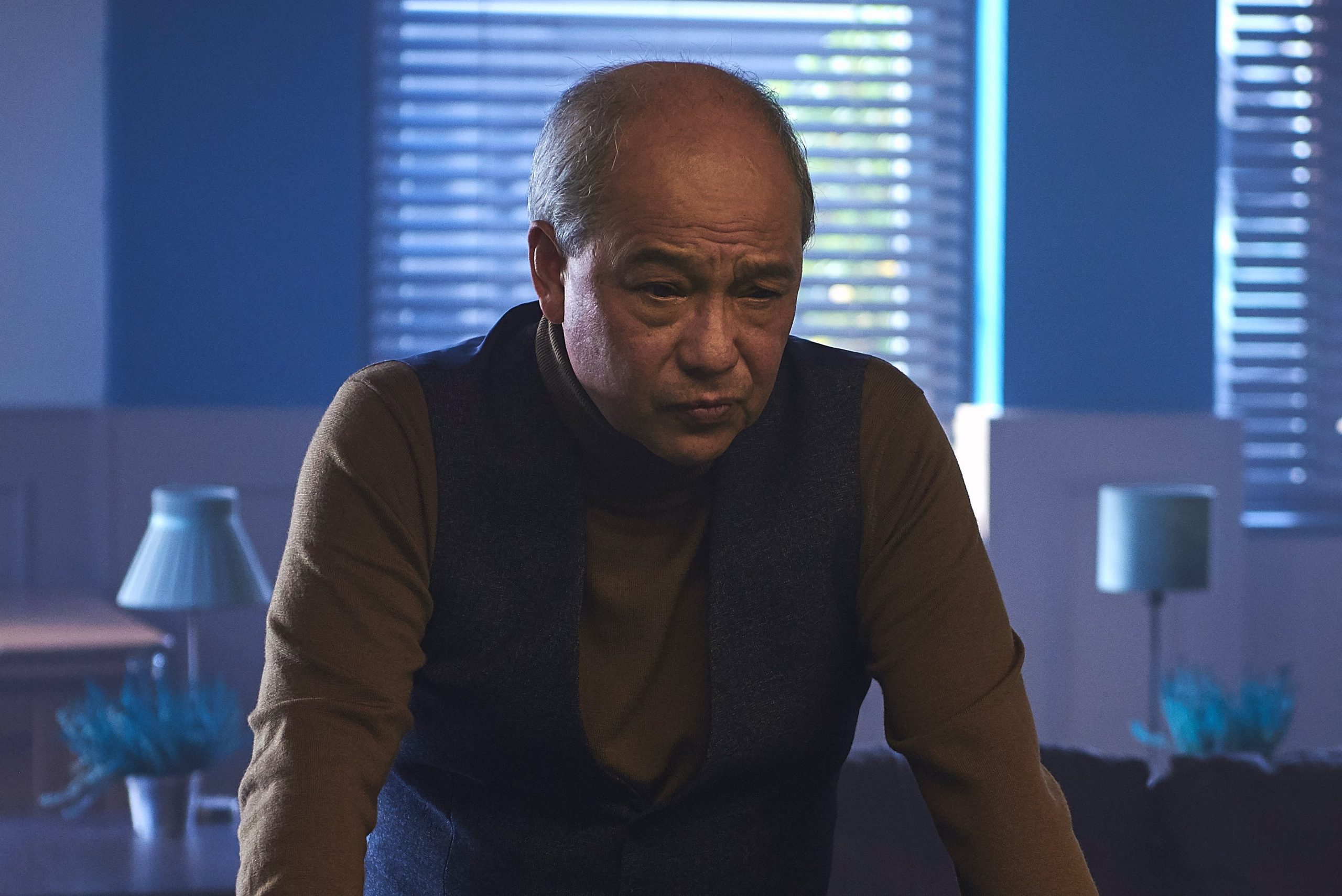


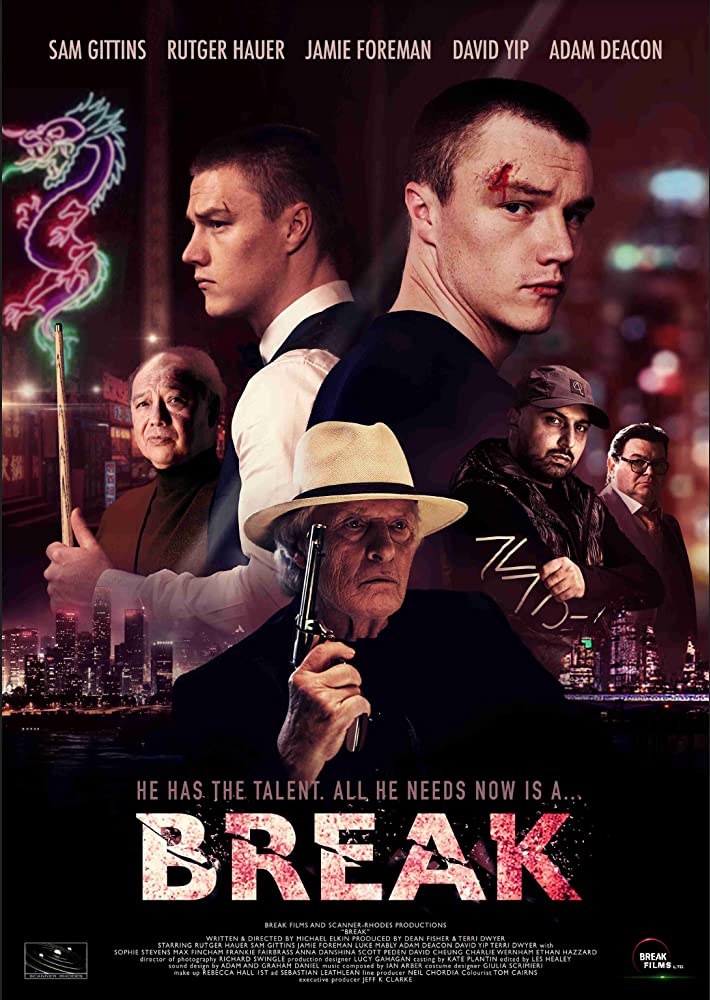
In my latest interview on Blazing Minds, I got an opportunity to ask veteran actor David Yip a few questions about the upcoming crime drama ‘Break‘. In the interview David discusses his career in film and theatre, the character stereotypes towards Asian actors and the challenges of guerrilla filmmaking in Beijing, China
A gifted inner-city kid, wasting his talents on crime, gets in over his head until a chance encounter with a stranger presents him with an opportunity to turn his life around. But is it too late?
How did you get into acting originally and was it something you always wanted to do?
Okay, well, you might have four hours here. I’m from Liverpool originally and I’m one of seven children. I was the first one to pass my 11 plus and I went to high school and my father thought I was going to be the next professor or Nobel Nobel Prize winner. I left school and became a shipping clerk for British Railways in Liverpool, from the age of 16 to 18. And at the age of 69 now I can honestly say it’s the only two years of proper work I ever had. Because when I was 18, I got the opportunity to work in the theatres in Liverpool, but not as an actor. Liverpool in the 60s was obviously music, football, but also was the scene of European theatre and the Everyman Theatre was an amazing place, but Liverpool had five working theatres. I still remember I took myself off once I left school, the Liverpool Playhouse, we’re doing a modern dress production of Two Gentlemen of Verona. They had scooters on stage and a lovely black actor who I got to know eventually was playing the Juke. I sat in the gods and I saw these amazing scooters then this black guy because being half Chinese, you didn’t see many non-white faces either on television or in the theatre. What that did, it didn’t inspire me to become an actor because I had no role models to become an actor, I just thought wouldn’t it be a great thing to work in theatre, as opposed to sitting in an office.
I started going around and asking if there were any jobs, not knowing what a job would be. And eventually, a lovely lady called Teresa Collard at The Neptune theatre said, “We’re looking for an ASM, an assistant stage manager, but basically you brushed the stage and cleaned up. And that’s how I started in theatre. I did that for a year and then the Everyman Theatre which I was saying was the centre of European theatre. Alison Steadman, Jonathan price had been there. I got to know them, obviously I got into the theatre world and I then got a job there for a year.
Whilst I was working there the Everyman I was also doing some doing some student theatre. The young Barry Kyle who ended up at the RSC (Royal Shakespeare Company) and now in America, was on a Granada graduate directors training at Liverpool Playhouse, and so I was directed by him in their Youth Theatre. I did two things. I joined equity a week before the closed shop came in. So, when I left drama school everyone’s going on about equity and I said, “Oh I think I have got one of those” and they couldn’t believe it. And they said, “If you like acting you should go to drama school. I didn’t even know what drama school was. They tell you that you have to go to London and apply, and of course everyone applied to RADA (Royal Academy of Dramatic Art), but I also applied to E 15, because a lot of the actors have been to. E 15 is the drama school which Joan Littlewood created. The first one to give you my audition was E 15. They said, you have to come down for the day and spend the day with us. So, I had to lose a day’s pay, go to London, stay overnight with some actors I knew, I did a whole day with them and then get back. My RADA audition wasn’t for another month and in the meantime, I got a letter back from the E 15. Saying you’ve been excepted. I thought, I’m not losing another day’s pay, I am going to E 15. To be quite honest, hand on my heart I don’t think I would have got in RADA but I do not care. I think he was brilliant. So that’s how I got into theatre.
I’ve always regarded acting as an incredible privilege, in the sense that and I’m not being immodest, but I’ve done it for 47 years and I’m quite good at it and what I do. I have my limits I know, that but I’m very good at what I do and I still find it amazing that people pay me to do it. My first love is theatre and prior to lockdown I was about to do a new play at the Bristol Old Vic and then go down tour it, but that stopped. I don’t know when I’ll be in the theatre again now. Film and television is great, but theatre is still the place for an actor because that’s where you have contact with your audience and once you finish rehearsals its you and the audience? Now sadly I don’t think we’re going to be having theatre, as I knew it, and as we all know it, I will think till next year, but I hope it comes quicker.
That brings me to your latest film ‘Break’ which gets a Drive-in premier at Brent Cross on the 22nd of July. For those who need to attend, you can tell us a bit about what we can expect from the film.
It’s really interesting because when Michael (Elkin) approached me and sent me the script, I thought, wow, interesting. I have to preface this by saying I’m half Chinese, but the East Asian presence in our industry has been very under done. In the past I have turned more work down than I do, because the parts they tend to offer are just terrible stereotypes. Don’t get me wrong, I’m not afraid to play a Chinese character with a Chinese accent, if it’s a real character.
When I got Michael’s script the character of Vincent Chen it just shot out. Because here is a man originally from China, but he’s made his fame and fortune funnily enough by being a pool champion. He is now in this country and he’s coaching top class snooker players and he has come from nothing himself. Suddenly he’s been asked by the dad of Sam Gittins character Spencer, who thinks he’s quite good at snooker. Luke Mably plays Terry his dad. He goes to see this boy and of course these boys on a south London estate, he’s running with his mates, there’s drugs, he’s into petty crime and his dads been in prison. But he’s got this talent and he doesn’t know what to do with it. When he’s approached, he thinks, tell me what to do. I think it’s a wonderful redemption story, because Vincent doesn’t say to him, you know, I’m the greatest and I can make the greatest. He just says, you know, you have a choice with what you want to do with your life. Basically, Snooker and things have done this for me, only you can make a decision. Funny enough, I’ve been a Buddhist now for 25 years and that’s what really attracted me because it’s a wonderful philosophy.
My character is based on a real guy who I met who looks after a lot of snooker players, and he was around when we were filming, and it was amazing to see. My biggest point is that the East Asian characters, including Vincent and all the snooker players, they are real three-dimensional characters. I said to Mike, I think your film is great. I really do. On a low budget, he’s done a great job. All the characters are good and it’s a Rocky rouse in a way, it’s a feel-good movie. And there’s some terrific performances all round and of course some sadness, because of Rutger Hauer, this was his last film. I’ve got to say I’m chuffed to look at the poster, as my pictures is right next to his and I think Wow, that’s great.
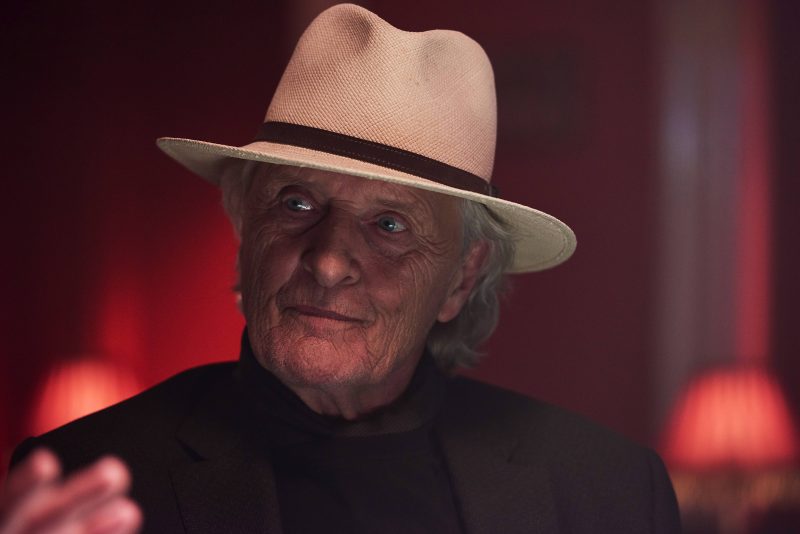
Did you get to work with Rutger Hauer on set during the film?
It’s a funny story because we filmed in 2018, towards the end October time, and at the beginning of that year my agent was approached by a programme on BBC called Porters (2017 -). Porters is set in in a hospital, literally hospital porters. They wanted me to do an episode in this and they said, Rutger Hauer in it. And this was an afternoon show, a drama. Anyway, they sent me some tapes and he was amazing. His character was a wise older guy and he was he was into all sorts of medication and things like that. On this particular episode Rutger’s character had this fantaIsy that he’s suddenly on the golf course with the Dalai Lama. He said, “Would you play the Dalai Lama?” I said, “Really? Okay”. I thought to do a scene with Rutger’s, so I said, Yes, I would. Anyway, sadly on the day when I got there. They told me that he was he wasn’t available. He wouldn’t go into too much detail, but obviously he got sick, because he never appeared again on the series, so when I started, I was really disappointed. I get the thing with the man young guy and it was terrific, but my heart was calling out, if I could put a scene with Rutger on my CV, I’d love it. So it’ still fun thing to do, because in this scene, they’re playing golf and he ends up with, with the Dalai Lama putting his ball into the into the water and cursing and fucking in the UK so go there you go.
On the date when he was shooting, I was shooting too, but again because it was a low budget film time was tight. You know, we always seem stretched, he’s in the next room and I was watching him on Michael’s monitor. I’ve got to say he was just a pleasure just to watch on the monitor for what he was doing, and he seemed to do nothing. I’ve always had that lesson in my career, less is more. I’m watching him, just his face and by the time he’d finished his scene, they were like an hour behind. We had to get on because we had to be out of this club. So, I have to go rehearse my bit and so he’d gone. To be on the same bill as him is a huge Honour because I think he is the most wonderful actor.
And what preparation did you do for the role itself?
One thing that was missing Michael said he’s a top-class snooker player. I last had a snooker cue in my hand about 40 years ago and I wasn’t very good and that was my biggest worry. Obviously, as we went round we had some professionals come round and clear the balls and they did some computer stuff. But the very first time they shot me, the black ball was over the pocket at one end and I had to hit the white ball so it went into the pocket. They said, “Do you think you can do that?”. I said, “I don’t know” and I did it three times. I couldn’t believe it.
That was my only worry. It’s a bit like football films. It’s all very well having actors do things, but it’s when you’ve got to see them with the ball. Now luckily with snooker you can cheat it so much. When we were originally going to premiere In April, they was going to tie up with the world champions in Sheffield and we were going to have a special screening there. Eddie Hearn had seen the film and really liked it. Best of all, Michael asked him if there were any embarrassing moment with the snooker and he said, “no, no”. Because professionals of course will say well that didn’t go in, but as far as I’m concerned, I never once went “Ooh no”. I’ve got to say when I watch the film, the last scenes in Beijing when Sam’s character Spencer has his final game. I’m sitting there watching it going “I knew he had a bit of coaching, but I didn’t realise he was that good”. Because that whole game was done on the computer. What we did, you can bend over the table and do lots of things and they got someone to clear balls. But for that one they did they use computerization. I gotta say, I’m Spending 10 hours around a snooker table while they film all the bits and pieces. I thought oh my god this is this is like pulling teeth this is, but it looks good. I’m very pleased about this because there’s not a dull performance in there.
I’ve worked with Steven Spielberg and people. I mean, when you’ve got all the money and time in the world, of course you can try this and try that. But I love the fact that necessity is the mother of invention. We had a wonder DOP Richard Swingle a wonderful crew and a great cast. Michael is very good as a director because he’s an actor as well. It can be a nightmare sometimes, if you’ve a director as an actor, they go you can’t change anything, you can’t do it like this or like that. Michael wasn’t like that at all and I loved his notes. I like being given direction and notes.

I did most of my stuff with Sam who’s terrific. There’s one time in one of the clubs we were in and Jamie foreman plays my opposition. He’s a white guy whose got a wonderful Chinese snooker player and we had a wonderful time with Jamie foreman. Jamie likes to improvise a lot, so it was great. It was hard work long hours, but I am so pleased for them because it’s a British film. I have said this to Michael, if I don’t make another film, if that’s the last film I ever make, I’d be very proud to say that that was my swan song.
It does sounds really good and I’m looking forward to watching it
I have to tell you something wife, Virginia, she’s in her 70’s now and she doesn’t like snooker. ] Michael sent me the link so I had to watch it on our computer and when I first watch something like that, I sit there as an actor and I’m looking to see if do anything embarrassing. You look at yourself and not anybody else because I’ve got a major part in it. So, I looked and thought thank God there’s no embarrassing moments in it. This was during lockdown, so I went to the supermarket which took five hours? And I said, “You (Virginia) watch it, because it would be very interesting to get your point of view. I came back and I thought she was gonna say, “Well, it’s okay”. She said, “It’s amazing”. She said, Dan her son would love it. Our oldest grandson would love it. Because Snooker is a metaphor too and she really, really enjoyed that. That amazed me and I said to Michael, “You know, never mind what I say. The fact someone like Virginia can watch it, and it’s not usually her cup of tea”, because it’s not just snooker. Snookers in it, but it’s not just about snooker film. It’s about human beings and redemption and taking opportunities, because in the film Sam’s character makes a decision and his life changes. One of his friends doesn’t make the right decisions and his life goes in a totally different direction which I won’t tell you now. But I am honestly pleased, because I have done movies which you say yeah it’s alright, but this is special.
Did you experience any issues during the filming at all?
As I say, we worked long hours we had problems with sound because it wasn’t a studio, that’s the joy of that sort of thing. I was also doing a play when I started filming, so I had to pick up first thing in the morning. I’d film to lunchtime then have a sleep, and then heading back to a theatre for about five o’clock. I was in Wimbledon doing a very emotional play called Eastern Style, I played the lead character. After a day’s filming and then doing this very emotional play sort of drained you, that was not easy especially as I’ve gotten older. Things happen things didn’t happen, but again they kept a very good ship. Of course, there were moments where people Swore at each other, but that happens in all walks of life and you know it was a great experience and I was very impressed.
When we went to Beijing, we couldn’t set dates to film otherwise they demand the script, so what we did was said, “We’re coming to recce for a film. So, we’re gonna shoot a bit to see what it looks like. We have five or was it three days in Beijing, and we were guerrilla filming. It sounds great, but this is China and in Beijing, sometimes we were very near. There is a shot of an accident and emergency hospital, you see the front of it. We were looking for this place and it was, it was it was about three miles away from Tiananmen Square. Anywhere near Tiananmen Square there is security and so much presence and we realised this when we did our recce day. If you walk down with a camera, they will jump on you. We saw this place at 10 o’clock at night and we just literally jumped out of a van, Sam and I got ready. The camera was pointing so you could see the sign, A&E blah blah, blah, Beijing, we did the scene quickly and we were gone. I’ve got to say for me, I just didn’t fancy ending up in a Chinese prison for 10 years. We did and I’ve got to say it looks terrific on the screen. Because we got to say we really did go to Beijing. We shot all the insights up in London, but that was the only scary moment, you just didn’t know if someone’s gonna tap you on the shoulder as they come with me.
You mentioned a few already, but what are some your favourite moments during filming?
Getting my Snooker right was pretty good. But it was a general thing. I’ve got to say the costume lady, a wonderful Italian who lives in London, Giulia Scrimieri. I’m an actor and I’m used to doing a lot of theatre as well. When I work on a script, I’ve got a clear idea of what my character is going to be like. Because to be honest it wasn’t difficult to find Vincent. He’s not a million miles away from me apart from the fact I can’t play snooker. But the fact is sometimes, especially in films, you can suddenly arrive on the day and this designer has got this great idea for you. You put the costume on you go, this is not right, I am really uncomfortable in this. Giulia and Ihad a bit of a conversation about a month before and the budget was tight, but the way she designed the clothes and we talked about it a lot and it was really good. It was one of those things that really helped me. So basically, every time I went and put the costume on I felt really good.
There wasn’t one standout moment of going that’s great. It’s just, when you make a film, especially when you’re on it all the time, it is like a band of brothers for a while. You are literally living with each other. You start first thing in the morning you end last thing at night, you’ve hardly any sleep, and you’re you’re at it again. It can be terrible if people don’t get on it, It can be the worst nightmare in the world. This wasn’t and without getting too gushing about it, it really was. Sadly, I wasn’t able to go to the cast and crew screening they had in London before lockdown. Because again, I was rehearsing a play, which I was meant to do during lockdown, but it didn’t happen. So that was a chance where you got to see everyone, thank everyone. I missed that because I would have really loved to have gone to that. I know we’ve got the premiere coming up and hopefully we’ll all see each other then.
What do you hope people take away from the film after watching it?
I hope they say, “isn’t Michael Elkins a really clever guy”. He’s written directed and this thing. But also, this is a British film made on a very low budget, but It’s got a good story, showcasing good talents in Britain. And I keep coming back to this point, as a British East Asian, it’s also the positive imaging that comes out of it too. For the East Asians in it and the Londoners.
I’m very proud of this and I’m not just saying that. I mean at 69, I was 68 when I did it, roles like that don’t come along for old guys like me necessarily, I promise you. I turned the film down recently. The content was so stereotyped it wasn’t true. My agent normally says to people, I’ll just say you’re busy. I said, “No, no, tell him Tell him I’m appalled by this script and I hope the film dies because it’s a disgrace”. I don’t know when another part will come along that way, we will see, but it has If this turns out to be the last feature film I make, then I’ll be very happy.
Going back to your sort of career here again. You’ve done some amazing projects over the years in in TV and film franchises such as James Bond, Indiana Jones and Dr. Who, as well as a lead role in The Chinese detective (1981-1982).
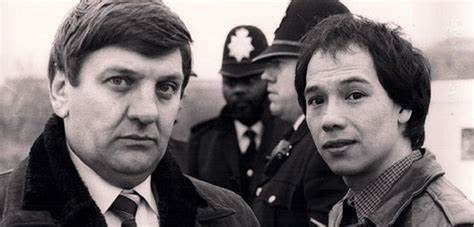
I’m lucky. I’ve had some great breaks. Yeah, I’ve made some good choices. And I’ve been able to keep going, keep going back to theatre and do television. Don’t get me wrong. The idea of being in an Indiana Jones film or Bond film and it’s shown around the world. It’s fantastic. But you have no control over that. But I equally like doing small films. I do a lot of short films and nowadays I like to work with students as well. And that’s for free. If they have a good idea there you go.
Looking back at your career and the characters you portrayed on screen. Is there any which you’d like to portray again, either as a continuation of the original story or in a different context?
I’d be a lot older (laughs). The funny thing is people keep saying to me. “Why don’t they remake the Chinese detective?” and I say, “Well, what I’m what am I going to be, his grandad?” The Chinese Detective was a fantastic idea. The beauty of The Chinese Detective when it came out, it was it was amazing in that in a period, the 80s. There had never been anything like it. Ian Kennedy Martin was a top writer of television and we became great friends. The BBC got a lot of kudos for that, but the moment it finished, they went back to showing Charlie Chan, the American one. My joy of that was I knew that non-white kids suddenly have a hero who they could associate with and that was important. The sad thing is we’re in 2020 today, East Asians are getting better representation, but to this day, there still hasn’t been another British East Asian actor who has led their own series. Now people like Jeremy Chan and others coming along and I’ve got starred in things, but it’s a sadness that I have turned down more work than I do on screen because the portrayal of East Asians is terrible. The younger generations are coming up, but that’s why I go back to the portrayal of Vincent Chang particularly. It’s so positive, but he’s a human being. He is not perfect, he’s a real character. As I say, I’m not. I am not afraid to play characters with Chinese accents and things, as long as they’re real people, not stereotypes.
What advice would you give to someone who’s looking to get into acting.
I would say you really, really have to want to do it. What happens to me occasionally, especially when I talk to groups of young people. Someone will say to me, how do I become a film star. I say, “Are you interested in acting or do you want to be a star?” “I want to be a star”. So, I say, “Well, you know, to be a star, you have to be able to do something, don’t you?”
When I trained, I went to drama school in the early 70s, we were only trained in theatre. Television was looked down upon, video you didn’t really think about, and film was very rare. So, you were trained in theatre and you were trained to speak in big theatres. Nowadays I believe in drama schools they have a choice, they do film, they did radio, they do television, a piece of theatre. And I’ve got to say the voice technique isn’t particularly great at the moment. But the point being that the chances of a young actor coming out of a drama school, or starting up, or being in a theatre is remote now. You’re more likely to be in a video, television, film whatever and because of the internet you can make your own. And I applaud that.
The other thing I say to a lot of young writers, directors, or actors. It’s amazing what’s on the internet. I suddenly get sent a link by a group of friends I go look at that and they’ve made this little film, and we’ve all heard the stories of suddenly starting on YouTube and suddenly becoming a Netflix series or something like that. Really want to do it because it’s not going to be easy. Okay, the occasional person suddenly becomes a star and is grabbed overnight, and you know like Harry Potter people something like that. But acting is hard work, and you’ve got to have a toolkit. When I left drama school. I wasn’t an actor but I was someone with a toolkit, which enabled me to work on my talents to become an actor to work on my voice and everything else.
I always say to young actors, if you get an opportunity go to live theatre. I don’t care whether it’s in a pub theatre. It’s better to start there rather than the National Theatre. Do it because it’s the only place that you, as an actor, through rehearsals and everything else and then eventually in front of an audience have some control. I love doing radio and everything else. But somewhere in those in those other fields, someone makes a decision. They can edit the view, they can edit you, they can put you out, put you in.
Never stop learning is the other thing never stop learning. Also, the biggest thing I say is, get into the position to say no. I’m lucky, in 47 years I’ve only ever acted really. When I was a young student, I did jobs in between trainers, the session to drama school. I’ve never had another job really. I have never had to have another job. I’ve earned my living and got through. But I say to people now, go to university and get a degree or get something, have another qualification. Be an electrician, because then you can do something else. Wait tables, be a chef, because if you can do something else when they also come along and will offer you peanuts for doing something, you can say no stick it up your bum. I’ll do this for a living.
So, unlike when I left drama school, you need to have other skills, and I admire immensely so many of the younger generation now, because it is really tough. But also, there are some amazing things that are happening in the world of AR, now. I mean, I don’t know what my grandchildren will be watching in 10-20 years’ time. My grandchildren make their own little YouTube things, because they love it they just do it. It’s amazing. And they’ve all gotten hooked on amazing American accents and they live in the middle of Oxfordshire. And it’s because they watch YouTube. If I had to play an American, I had to pay quite a lot of money to a voice coach to get coaching. Now I go on Youtube and go, I’d like someone on these five blocks down from Manhattan. You find someone and you listen to them. You know, you still need a voice coach eventually, but possibilities are there.

Published in various websites, Philip is a reviewer who is best known for his interviews and media coverage of independent projects including; films, books, theatre and live events. Always on the lookout for something different to cover!