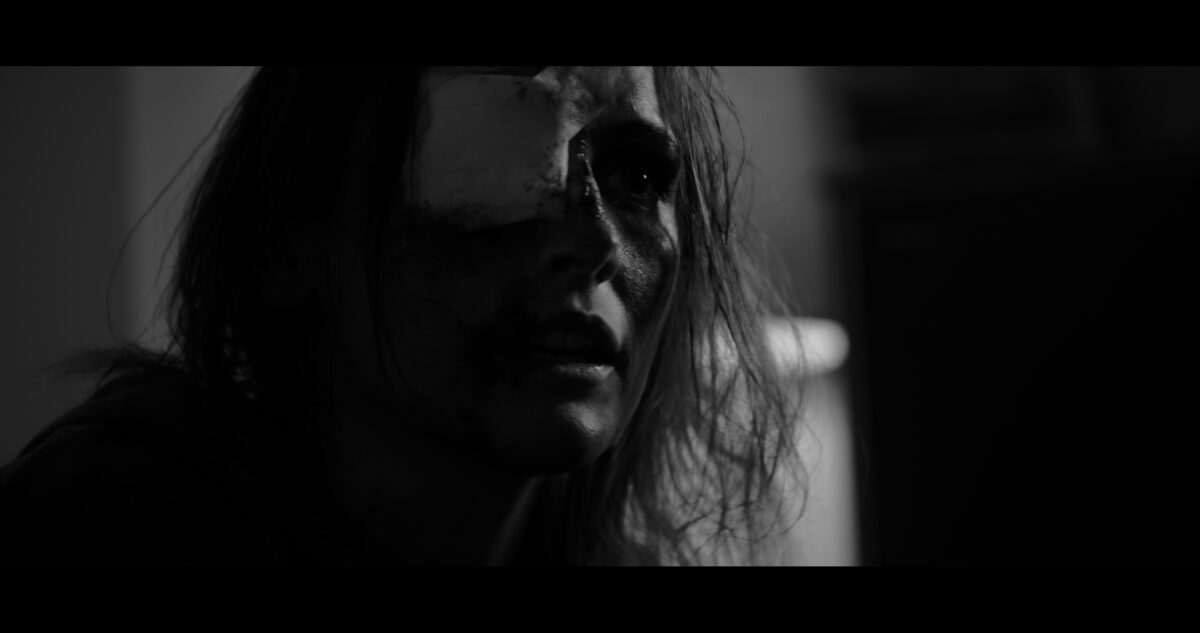


Director: Jonathan Zaurin
Writer(s): Kat Ellinger, Michael Mackenzie, Todd Rodgers, Jonathan Zaurin, Sarah Zaurin
Actor: Ayvianna Snow, Dean Kilbey, Nick Cornwall, Stuart D. Latham, Darren James King
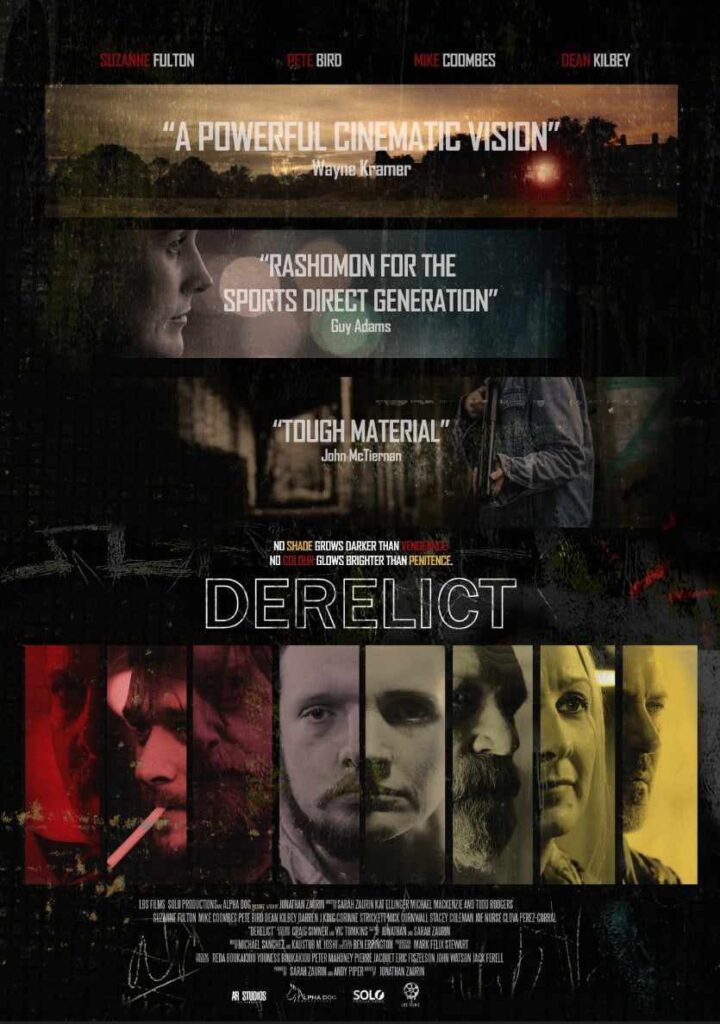
In a new Exclusive Interview on Blazing Minds I got a chance to ask Writer-Director Jonathan Zaurin & Producer Andy Piper a few questions about their new revenge drama ‘Derelict‘.
Can you tell me a little bit about your film Derelict and what we can expect from the film?
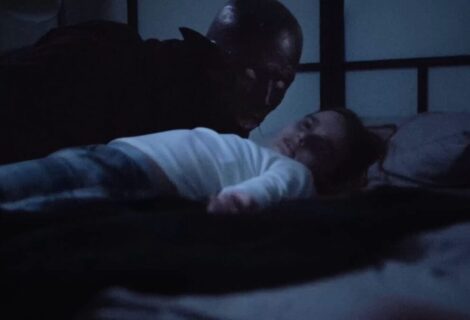
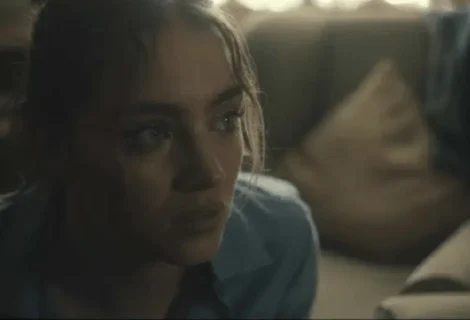
Andy – Derelict is a dark, bleak revenge thriller, which concentrates on a young girl called Abbey, and how she deals the loss of her father, whilst also exploring the relationship with her father’s killers.
Jonathon – It’s a film that we shot for a very low amount of money and was only a 26-day shoot. When you see the result, it doesn’t look or sound like a thirty-five grand film. We mention it because people don’t believe you can make something that looks and sounds this good for that amount of money.
Andy -You are also keen to push that you don’t need a million dollars to make a good film. It’s not necessarily about the budget, it’s about the effort and passion that goes into making it.
Jonathon – For me, I am saying, low budget films do not need to be slashers or shot in the woods. These are fine, but we can do drama, we can do action films, horror films, sci-fi films. It’s just about finding a way to do it with not a lot of money.
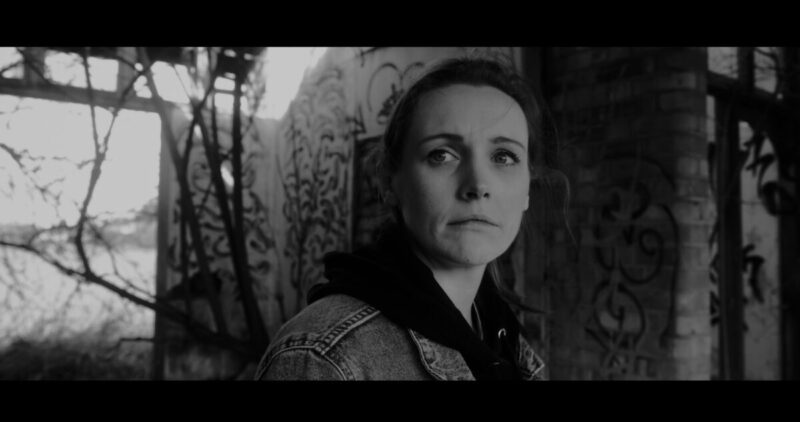
Part of this is shooting in real locations for example. That’s why I like the gritty stuff, you don’t have to lie, it’s there. You just need to know what locations to use, how to frame your actors in those locations. It’s maximising everything and knowing your tools. You don’t use a hammer to screw a screw into the wall, you use a screwdriver.
With the digital revolution, people just want to pick up a camera, point it that way, and press the button. But you need to know about lenses, lights, depths of field and how these things interact with each other to tell a story. And of course, what camera movement does, and how to use it to make the story better. It’s knowing your tools to maximise everything you do in the best possible way.
Johathon, you wrote the film. What were some of your influences behind the script?
Jonathon – I don’t know if there are influences, as it is based on a true story. The reality of what happened was the driving force for writing the script. I think of films in terms of visuals, I have visuals in my mind a long time before I get to the writing, so the writing is free of influences. Then when we make the film, I think we want it to be like that. There were quite a few writers on this, and we never discussed any influences. We weren’t “let’s write a scene like in Get Carter (1971)”, there wasn’t any of that, just the reality of that story.
Talking about locations and the visual aspects of the film, did you have locations and actors in mind when you were writing the script?
Jonathon – I write for location, because that’s the way you save money. Filming is a long process, everything you do up to the point of the editing, you need to commit to. You can’t write a battle with 6 armies and then turn up with thirty-five grand and say how am I going to do that, because you can’t solve it. You have to think about the budget when you are writing. I could probably raise around thirty-five grand, what can I write for that amount of money? So, you write with location and budget in mind.
It’s the same for actors, you can write thinking you will get someone like Michael Caine, but you won’t. You write the best character possible; you don’t necessarily write for anyone in particular or you set yourself up for disappointment.
Andy – I wasn’t involved in the script, but it’s interesting that a lot of the dialogue that you did write, you almost threw out of the window when you shoot. A Lot of this was voiced by the actors just to get the point of the scene comes across, rather than just reading each word verbatim.
Jonathan – Why say a line when you can get the same thing from a facial expression. When you write it you might have a line there so it’s clear, but when you have a great actor, you don’t need to say that line, because this is enough. You can’t focus on a particular area of the process, without going into the next or the previous. You have to start thinking about your editing when writing the script, and how you are going to shoot it.
Coming back to the script. Did you make any changes from the original script which you had written?
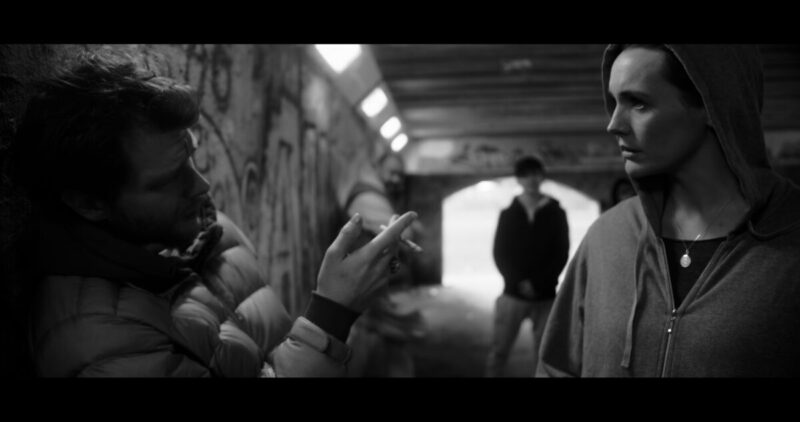
Jonathon – It evolved quite a bit over time, even on set it was a very collaborative process with actors. There were points where you wanted the characters to get from here to here, during the scene. You don’t really care how it’s acted or what words they say, as long as it ends in this position.
It’s an idea I have had for a long time, so of course it is going to change a lot, but once we had the final draft it didn’t really change that much. It went through multiple writers, so they are going to bring some of their own stuff to it, but the story hasn’t moved all that much. You write your script and story, you get focused on certain things, but when you send it to someone else, they go, “That bothers me”. You would never consider it because, to you, that’s not a big deal, but they go, that’s the part they don’t like. It was calculated and I wanted Michael Mackenzie, because I knew he has an eye for certain thing and Katherine Ellinger has an eye for something else. I had Sarah (Zaurin) write the prologue which we didn’t use unfortunately. I knew all these people had different strengths and different things they would be looking at. Michael Mackenzie wanted the plot to be slick, he would say “Hang on, I don’t get that exactly”, so things would get explained through his rewrites. When Katherine looked, it was about realism and how people talk, what they would say. You have a team of people with different strengths which changes things.
Did you experience any issues during filming?
Jonathon – Someone decided to cook 800 nuggets.
Andy – I was thinking nuggets. Shooting day to night was interesting when you are shooting in what is pretty much a greenhouse. That was interesting trying to shut out the light from every window in a building you can’t reach.
Jonathon – I did the location scouting on this one, and I thought the space was great, it’s striking when you see it in the film. What I didn’t consider was the super high ceiling with glass windows, with no way of accessing the windows to block them. All the scenes take place at night, so I was like “How do we do this?” We lost a good half a day doing that, with maybe 60 bin bags all tapped together to cover the ceiling.
Andy – I think it was more like 120, we had to cover the whole ceiling and then every window. A couple of locations fell out, including a hardware store, which let us down last minute, but there were no major issues.
Jonathon – No major issues, everyone was on point and the method proved itself. It’s a feel good, organised chaos.
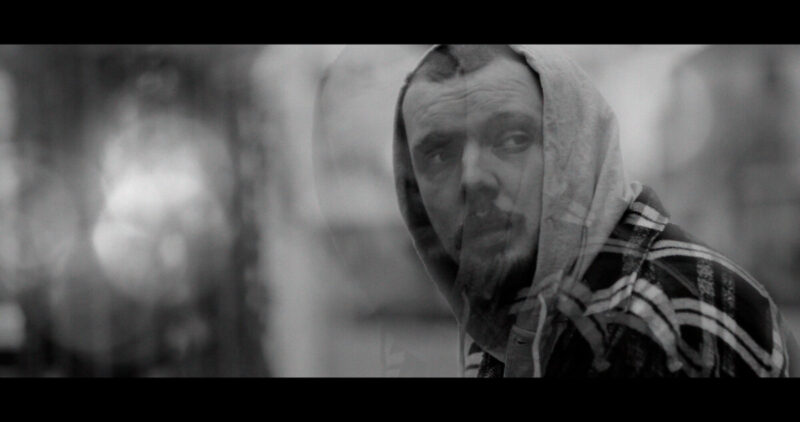
Andy – It was an amazing team, everyone worked so hard every day, on set when they should be, and put everything they could into it. With that sort of team behind you, and everyone committed to putting in the best performances and getting everything right, I can’t think of any major issues that set us back.
Jonathon – When I say organised chaos, I don’t want you to think crazy in a way that we don’t know what we are doing. We know what we are doing at all times, but you want to get things possible, so you have to keep it loose enough so if it does not fit your expectation, move on and do something else.
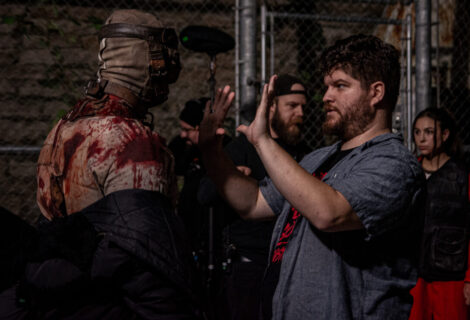
Andy – I was amazed when I first came on set as Jonathon doesn’t storyboard, he has a set list, but it’s all in his head which is amazing. He is shooting, directing and editing it so he knows which shot is which as we are going through. We are not using a clapper board or any stuff at all, so when he says organised chaos it feels like chaos, but when we come out of it, and he knows exactly what shots he wants to use.
Jonathon – It’s knowing your tools. What does a clapper board do, it will sync your sound if you need that, and it will tell your editor which is the best take. I’m my own editor, the sound these days, you take the video file, audio file and Premiere will sync it for you. You don’t need that. If I had an editor I would use it, but each time you have to reset the clapper board and you lose 30 seconds. 30 seconds after 20 takes adds up. So, at the end of the day, once you remove that you probably managed to shoot 6, 7 shots that you would have been able to do otherwise. Of course, if I had an editor, these are tools I would bring back.
Andy – I’m not sure you’re giving yourself enough credit there, because it is quite amazing to watch, and being there for the whole process from filming to the editing.
Jonathon – I think at first, it’s worrying for some people, because they turn up and don’t know what’s happening.
Andy – It’s a concern, but when I see you go from shooting something and knowing which take to use. Taking part of this take and that one, without any markers, any real notes other than what’s going on in your crazy head, it’s impressive.
Jonathon – Again it’s all part of a process. The reason I know which take is the right one, is because once I get it, I don’t do another take. So, when I look through all the takes, there might be a bit I know was better in another take, but overall, the last take is the best one. Unless it’s improved, then you can tell the actors, “Do one for you,” and sometimes they come up with something interesting.
Andy – I will stand by my original point; I think he is a very skilled filmmaker and very modest.
Jonathon – It’s not that, It’s by default. Being working class, never having had any funding, people wanting to back me. So I go, I want to make a film, but how do I do that? You have to hire a DOP, and an editor, but how am I going to hire these people? So, I am going to buy a camera and learn how to use a camera. I can’t pay an editor, well, I am going to grab an editing software from a Russian website and learn to edit. It takes years, and I started when I was 19.
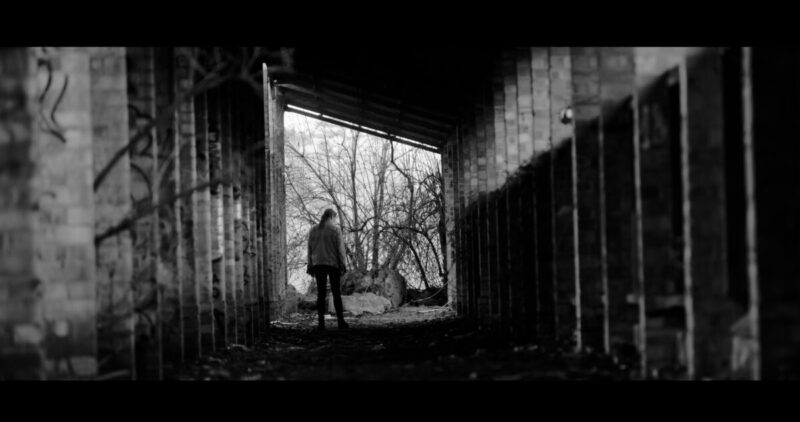
What were some of your favourite moments during filming?
Jonathon – My favourite day was when you were on set.
Andy – The adlibbing was very funny.
Jonathon – That was one of our biggest days with a lot of people there, and that felt like a big epic day. We shot a lot, which was a long day, and we shot very late. We went for curry at the loft, people blocking the roads to stop people coming in. That was an exciting day. Also, the day in the prison, which was an epic day. All of us looked at it there, with all the extras, and we went “we are on another level now!”.
Andy – The production values really jumped massively, and the scenes in the prison looked fantastic.
Jonathon – And how we lucked out. They had forgotten that we were coming, so then we had a problem and started 2 hours late. But the guy who came to open it was an ex-prison guard, so he knew the realism of it.
Andy – He knew exactly what you should or shouldn’t do. How would you react in an instant, which happens in the film. The way we thought they would handle it was totally different. We thought there would be manic, crazy, alarms going off left right and centre. But that’s not what happens, its dealt with very quietly as it is in the film.
Jonathon – That’s realistic. Also, when you have a good energy and you have a lot of excitement on the set, you get a natural positive reward. This guy turned up, and because we were listening, he was excited to be involved and let us stay as late as we wanted, so we got back the 2 hours we had lost.
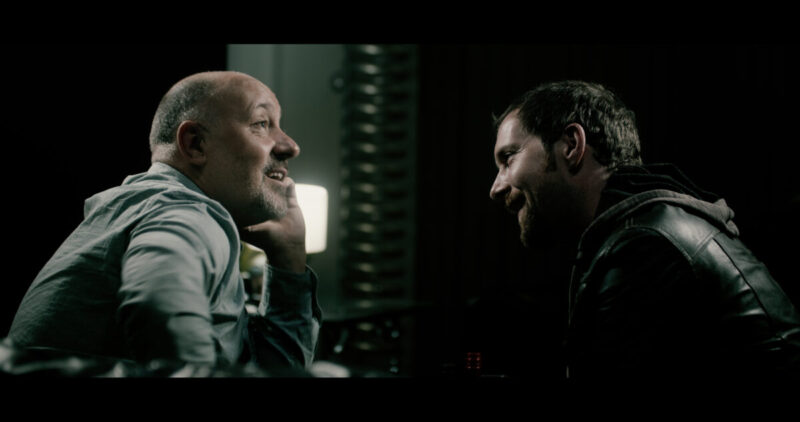
Andy – Another great day was in the flat with Dean Kilbey pretending to be drunk. Dean is a funny guy anyway, but he was just ad libbing like a crazy man for hours. It was different and hilarious every take.
Jonathon – And the funny thing is you can’t even hear it in the film.
And what’s next for Derelict?
Andy – We are concentrating on international festivals and looking to get the film out for distribution next year.
Do you have any other projects which you are currently working on?
Jonathon – We are working on some stuff as always but, being genuinely indie you never know where you are going to go next, what doors are going to be opened when. And we have not even finished with Derelict yet.
Andy – Derelict has opened some doors already, we are talking to some people that we weren’t talking too before. There are things happening and offers, so we are hoping to use those to move forward and increase the budget for a bigger budget.
Jonathon – When you see what we can do with thirty-five grand, imagine what we can do with three hundred! Not three hundred quid, three hundred thousand.
If someone was looking to make a film, what advice would you give them?
Andy – Don’t!
Jonathon – Like I said, learn the tools, it’s not about getting the tools. You can get cheap digital cameras these days, editing software is £17 a month. If you get a Black Magic, you get Davinci Resolve with it. But it’s not getting the tools, it’s also learning them, and I would say if you cared about the film you want to make, make a few films before the film you want to make. Learn your tools, learn your craft, learn who’s doing what on set.
Andy – I agree with that, like he said, the tools are there if you want to make something, I think it’s getting the experience on a real set, working with other people to realise how you do it. It’s connecting the dots, knowing how to get from one place to the other, and it’s all experience. As Jonathon say’s, you need to keep making something until you can do it properly, then do what you want to do.
Jonathon – The other advice I would give to anybody, is don’t listen to me, don’t listen to anybody. If you think you have got it figured out and you know you can do something great, then fucking do it. Don’t listen to people who are going to tell you to do it that way or like that, because they can only tell you how they have done it. I don’t think I have any lessons to give to anybody, but the way I did it was, I learnt all my tools and took on all the different jobs because that was the only way it was going to get made with no money. And if that’s the way people want to make it, then do that, but learn your tools. Outside of that, do what the fuck you want. There are too many people out there telling other people how to make films, just make your film, just do it. At any duration you want to, in black and white, in colour, in a 2:35 or 1:33 film ratio. Do whatever the fuck you feel is the right thing to do for your film.
Andy – Stand by it, be proud of it and get it out there.

Published in various websites, Philip is a reviewer who is best known for his interviews and media coverage of independent projects including; films, books, theatre and live events. Always on the lookout for something different to cover!