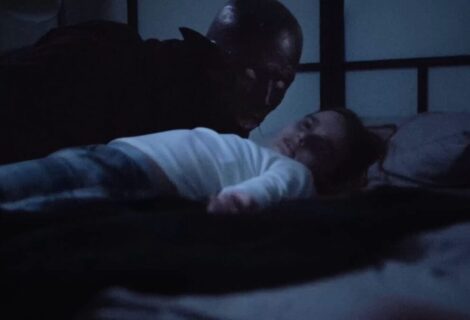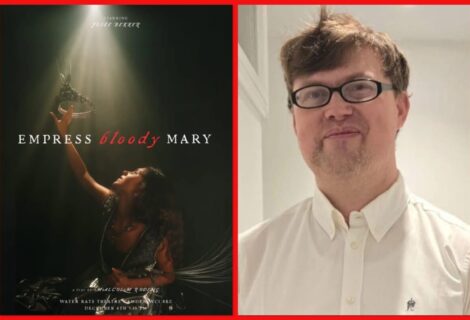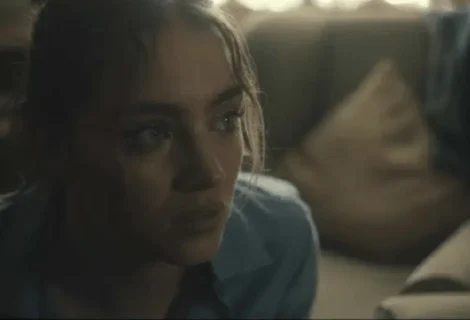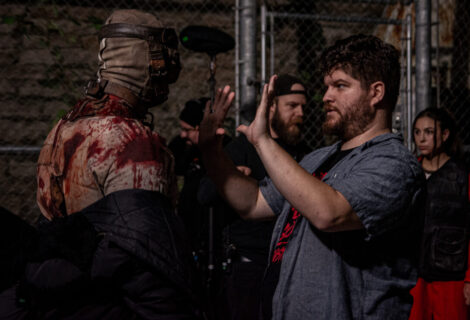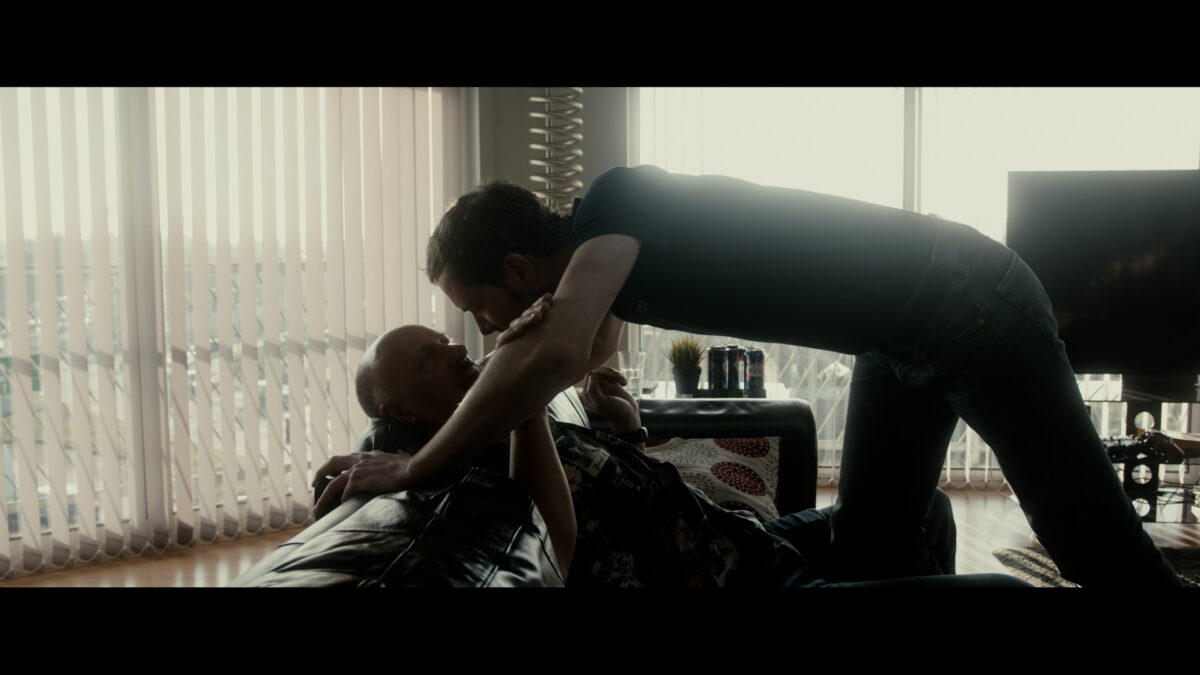


In a new exclusive interview on Blazing Minds ahead of the film’s Blu-Ray release from 101 Films, I got a chance to ask Director / Co-Writer Jonathan Zaurin a few questions about his award-winning British Vengeance thriller ‘Derelict‘
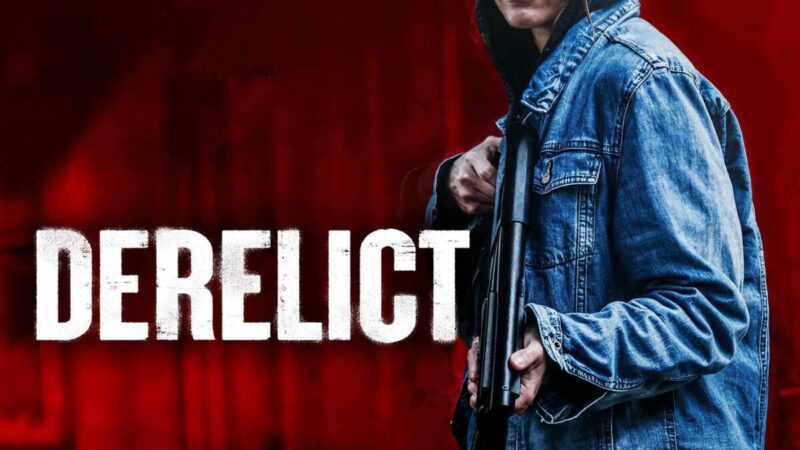
Q. Following a successful festival run, your film Derelict is now getting a release on both digital and Blu-Ray. Can you tell me a little bit about what we can expect from the film?
A. Expect a bleak British modern noir that is both socially realistic and not afraid to touch the textures of genre cinema. Expect an odd, contemplative crime drama which explores grief, the price of revenge and the nature of guilt!
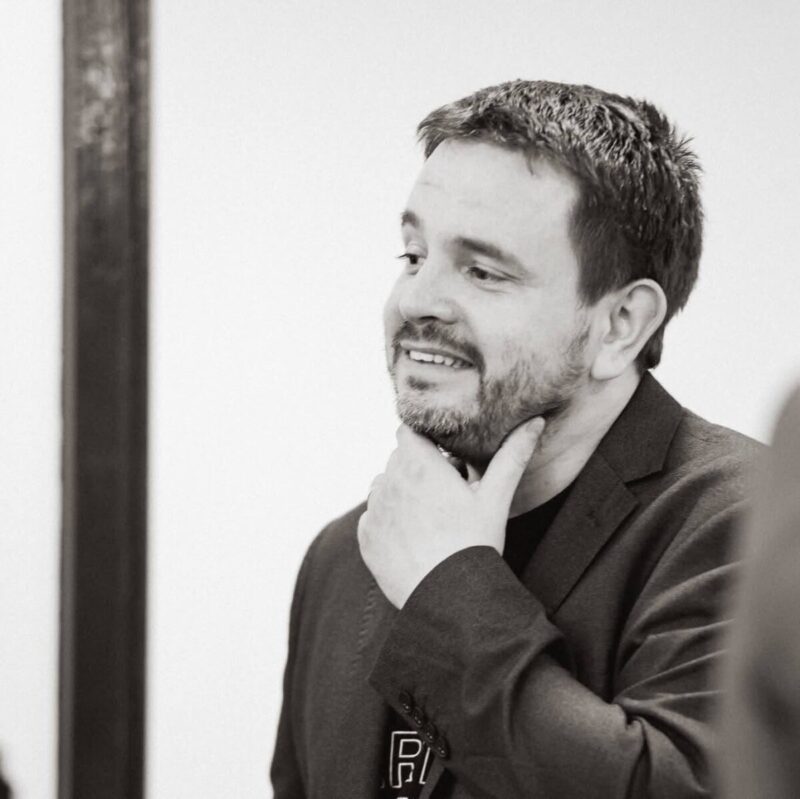
Q. You share the writing credits for the film with Kat Ellinger, Michael Mackenzie, Todd Rodgers and Sarah Zaurin. How did the original idea for the film come about and what was the process for collaborating on the script?
A. The idea originally came from a true crime which happened in my Hometown in France. It was a horrendous, heinous murder that shook the region, a working class, industrial region at that. At the time the thing for me was that I had gone to high school with one of the perpetrators and I had a genuinely difficult time reconciling the crime with the boy I thought I knew.
Skip to 20 years later and the idea has had time to exist in my head. In that time I had learned that my father had lived most of his life as a closeted gay man and that he had hidden it because he feared the reactions of those he loved. This is important because, crucially, it turned out that my father was entertaining a decades long love affair with a man; who was, as it happens, the third brother of the two perpetrators (he had nothing to do with the crime directly). Of course, it turned out my father was
wrong to fear our reactions, we loved him unconditionally until he passed away three day after
seeing the first cut of Derelict.
The film is dedicated to him and the subtext of hidden homosexuality was written with him in mind. But the key element to how the story became what it became is that, knowing what I knew about my father. It struck me that since the victim in the true crime was selected for reasons that were ambiguous at best. (He had told his neighbour of this new job he had been employed to do, and things spiralled from there trying to get their hands on his perceived financial gains). I had started imagining that the victim could have been my father. This lead me down a rabbit hole of research into the family of the victim, who, twenty years later still seemed stuck, frozen in time by grief. That’s how the character of Abi was born. Let me be clear, the film is merely inspired by the reality, but its aim was to remain truthful to the elements of the crime and the wider truth of grief in such extreme circumstances.
I finally felt ready to write this story and I must have done at least 20 drafts before I got both Michael Mackenzie and Kat Ellinger involved. Both brilliant writers, both with incredibly different skills, experiences and tone. I felt Michael could really help oil up the plot, make it flow, make it make sense in terms of Britain’s social dynamics (I am French ultimately!), and then I thought that Kat could really bring truth to the dialogue, to the experience of being a working class woman, to the reality of council estates and working class life in modern Britain.
There’s also a whole prologue concerning Uncle Henry which we never got to film, it kind of played like a mix of First Blood (1982) and Dog Altogether (2007), and it focused on the character of Uncle Henry and his own struggles with violence. The aim was to lead the audience down a path where they are wondering at which point this part of the story will connect, only to realise that it is indeed connected and that Henry’s experiences have led him to a path down which Abigail is about to go. This was written by my wife and producer Sarah Zaurin, with a draft done by Todd Rodgers as well. It was going to star a brilliant actor named Leigh Barwell and I will forever be heartbroken that we never got to film it… but realistically it would have extended the film another half an hour!
Q. The film has some strong performances especially from the main leads who are captivating throughout the film. Where any of the characters written with any of the actors in mind?
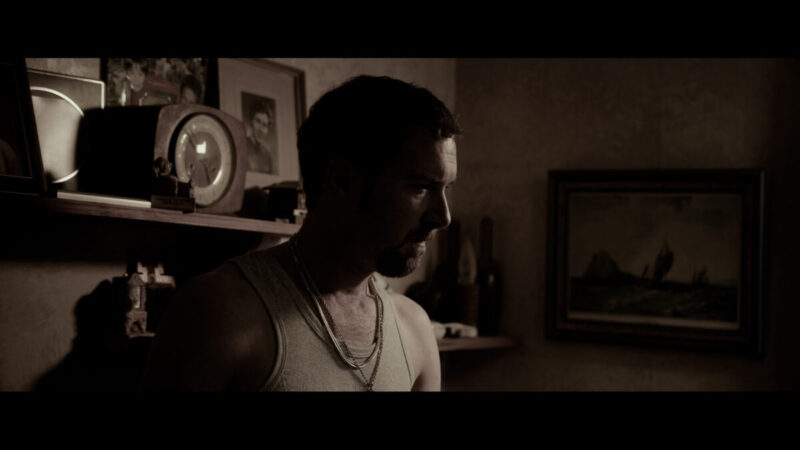
A. In terms of cast we knew we were going to work with Pete Bird, the role was written specifically for him, likewise the character of Matt was written specifically for Mike Coombes, and James written for Joe Nurse. I had worked with these guys before and I knew what they could do. I knew they would deliver which, in turn meant we could also take some swings on casting the others. Which we did! It paid off I think!
Sarah is the one who spotted Suzanne Fulton on Mandy and I remember sending her a message out of the blue promising I wasn’t some weirdo. Her self tape came in very late, but it was very obvious to
everyone involved that she was the one.
From there we sent out casting calls for each of the roles, used friends and family to do extra roles and I think we really lucked out with the cast. Though if we’re honest we kind of made our own luck by being extremely patient and thorough. Ultimately though, I am so proud of the cast in this film, I did not want any false notes because the drama depended on it.
This is the thing for me I think, I don’t expect everyone will love the film, how could they? But our tiny budget (£35k total!) went into making sure the actors delivered.
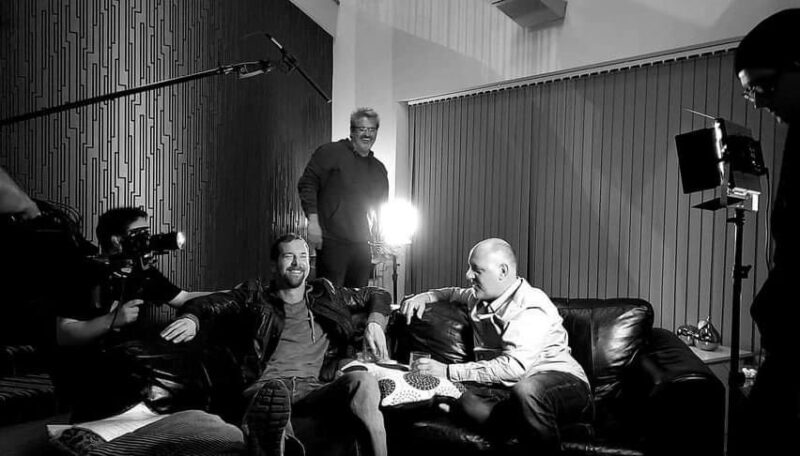
Q. What were some of the influences for the look and style of the film?
A. I was born in France in 1984 in a council estate in an industrial town. I guess I grew up kind of pissed off! Haha One of the films that had the biggest impact on me at that time was Matthieu Kassovitz’s La Haine (1995), because it spoke to me and my experience of class.
Outside of that I am a huge cinephile, I love cinema of all genres of all countries, of all budgets, my only ask is that they’re good! On this film the clear influences were Shane Meadows of course, but also Mike Leigh, Park Chan- Wook and his stunning use of black and white in the director’s cut of Lady Vengeance (2005), Mike hodges who I met WEEKS before shooting Derelict. John Carpenter of course, Jeremy Saulnier and his stunning take on the revenge film Blue Ruin (2013), which in many ways is the exact opposite of Derelict (it’s a film that works on the strict principle of adopting only the protagonist’s point of view. What he doesn’t see we do not see!). These films and many more are all parts of the DNA of Derelict.
Q. Whilst you have a script, there are moments where you allow actors to ab-lib scenes or take it in a different direction. Did any of these moments change how you originally intended the scene and were there any moments which worked particularly well or not at all?
A. Great questions. There were times I literally threw the pages away and we worked on creating
together from the ground up. I think these were moments where I felt that no matter what we had put on the page, it would not have been far enough into the feeling of reality we were trying to find. Sometimes the cast hated me for it, sometimes they fought me over it but I can safely say it always worked out how I imagined it.
I remember a scene between Uncle Henry and Abi. I ripped the pages, I setup the camera and I told both Nik and Suzanne: “Ok this is what we’re gonna do. Forget the script, forget the lines. I want you to be made of pure instinctive response. Su, you want the gun! Nick you don’t want to give her a gun. Shout. Scream. Get pissed off at each other. Fight. Talk over each other!”
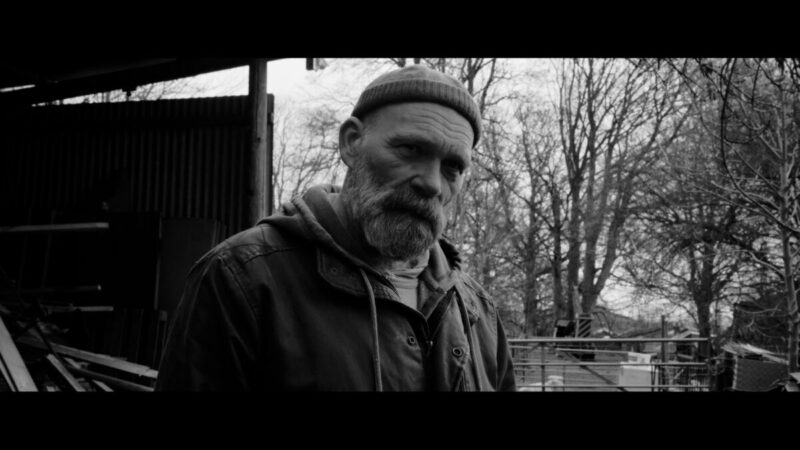
They kind of looked at me with a slight air of worry but I explained that we had two full days to shoot that scene and that provided we could, together, find a scene by the end of the day, the cameras didn’t even have to roll. That’s when it’s really important that the cast is game! And they were! They went for it, there’s 60 different versions of this scene, all truthful. Could we have found it without the improv? Without the kind of volatile nature of letting an actor make it up as they feel it? Maybe it’s possible, but I also think it’s important to search on set, or at the very least, since this is a low budget. The financial stakes are low, so low financial stakes usually means more room for trying things out. I will never understand no budget indies who try so hard to conform.
Q. The visual style of Derelict on screen moves between colour and monochrome throughout the film. Why did you choose to incorporate this look to the film?
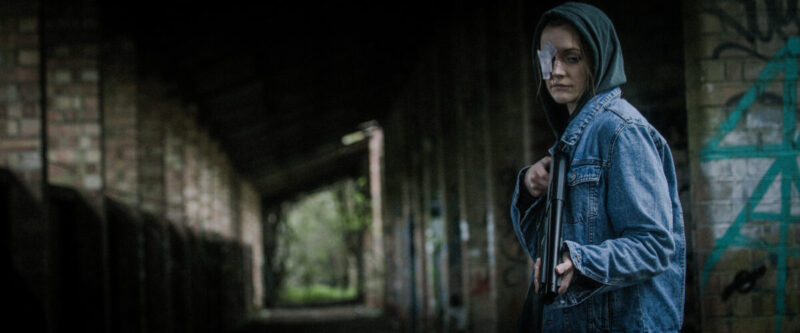
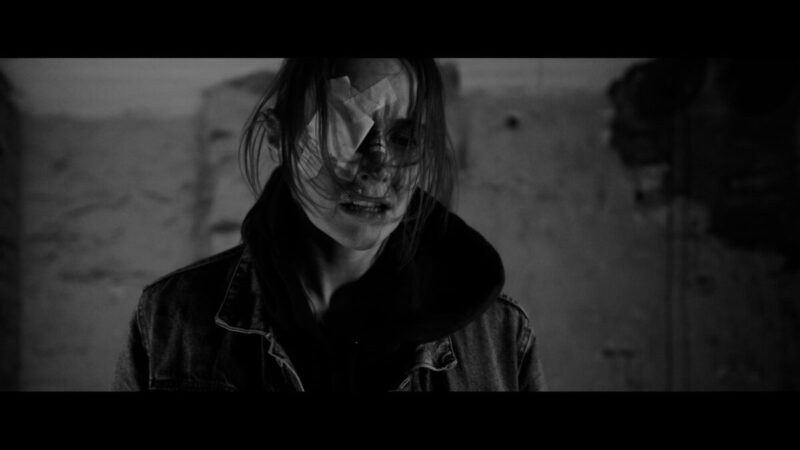
A. I thought it would genuinely reflect the sense of despair that comes with grief. Particularly the kind of violent grief that both Abi and Matt are experiencing. Their worlds are essentially void of colour. There’s a before and an after the crime.
I was very aware we were not using colour and black and white in a way that is traditional, so I made sure to encrypt it from the very opening credits, images of a brighter, more colourful past are edited along with the discovery of a still, dead body, in black and white.
There also three moments in the film where we switch from colour to black and white mid movement. I wanted the audience to ask themselves: Why? Why are these the specific points where life changes? I won’t answer the question here but I wanted the audience to ask it.
There’s also two different nods to the Wizard of Oz (1939) that kind of serve as a Coda and a specific shot
that plays in colour at a time where it shouldn’t, and again, those were very calculated aspects that were even written in script form. There’s a coherent train of thought, but it needs a little work to be deciphered.
Look, this is the thing, I believe in treating audiences with intelligence, I believe in giving them the keys, but not opening the door for them. The keys are here. It’s all about making the effort to walk through that door. I think, for the most part, it was right to treat the audience that way; most people love to think a bit, to figure it out for themselves.
It’s the same with the subtext of the film… look, there’s a very annoying tendency of modern cinema to explain subtext, to make subtext TEXT, and it drives me insane. That is the point of subtext: it exists underneath. If you dig it up for the audience, then it’s not subtext at all. The thing is, the entire subtext of repressed homosexuality and what it means in a working-class environment is kept as subtext because there are still parts of our social strata where being openly gay is difficult. The fact that it is subtext, the fact that you need to read the images and look underneath the surface to obtain it is exactly why it is realistic.
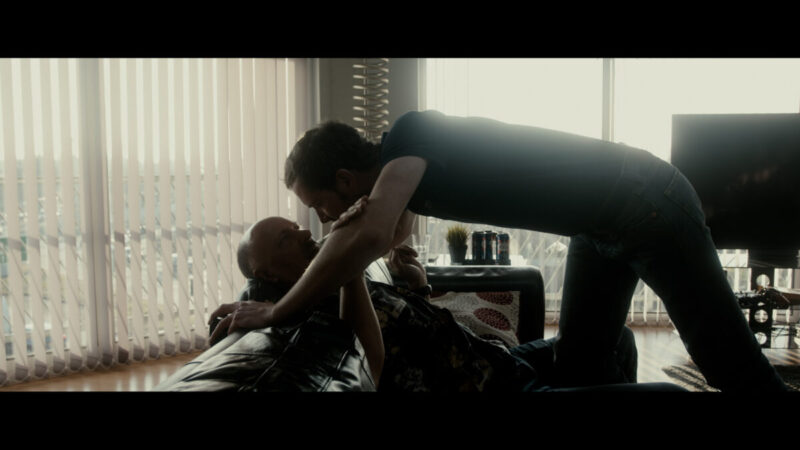
For example, look at Pete’s character Ewan, we worked endlessly with Pete to make sure he was layered, that his motivations were complex. Part of that is looking at whether Ewan is himself a closeted gay man who, due to his social circumstances, was unable to live his sexuality the way he wanted to. Crushing his brother’s own is part of what motivates him, beating it out of him.
Again, though, it’s under the surface, I want the audience to earn it a little. I think they can, and I think they want to! In fact, funny story, but you yourself, Phil, told me you hadn’t realised how much the scene between Pete and Andy feels like a kiss when taken out of the context of the scene, and I remember telling you that this is exactly how we conceived it on set!
Anyway, I’m rambling now! But yes, the look of the film serves to bring as much complexity as
possible to these characters and their world.
Q. What were some of your favourite memories of making the Film?
A. Man, there’s so many. The first shooting day where we realised Suzanne was a powerhouse was one. The day in the prison was crazy, we had extras everywhere and an incredible setting that made us feel like we were shooting a real film (if that makes sense).
Q. Did you experience any issues whilst making the film?
A. Ha, Well… you know how I told you the prison was amazing? It was! But they also forgot we were coming, and we ended up starting 2 hours late, with extras coming from all over the place and only ONE DAY to shoot an entire 5 minutes worth of film. It was a real challenge, but everybody pushed together and it ended up being a great day.
Q. What do you hope people will take away after watching the film?
A. I hope that they can see that it was made with blood, sweat and tears, that this was made entirely outside of the system, and that it has a rich, layered story of grief, guilt, revenge and forgiveness imprinted upon layers and layers of subtext and carried by an absolutely extraordinary cast.
Q. Do you have any other projects which you are working on?
A. Yes indeed! I’m working on a screenplay we’re looking to fund right now. The script is almost ready, and it is a kind of modern reimagining of Frankenstein set within a criminal odyssey and starring a punk woman as our protagonist.
Q. If someone is looking to direct their own movie, what advice would you give them?
A. Don’t! No, I’m joking. Look, I don’t like giving advice per se, and I’ll tell you why: it’s always wrong. Advice always comes from a place of having succeeded, I suppose, and that comes loaded with all sorts of personal factors. What’s right for me might not be right for anyone else, you know? We each have to find our own way.
But I’ll say this, in this day and age, you no longer have to wait for people to give you big money to make something worthy, you have more tools than any generation before you, they’re available, they’re getting cheaper, the way that worked for me is that I got tired of waiting for someone to back me up financially.
So I spent a decade learning to shoot, to edit, to grade, to do sound editing and as many jobs as I could learn. It’s very possible. Hopefully, one day I won’t have to wear so many hats, but in the meantime, I made sure that I can carry on telling stories. So I guess that is my advice: don’t listen to anyone. Find what works for you.
Derelict is available to stream on all major platforms and now and will be getting a Blu-Ray release from 101 Films in the UK and the US on 22nd September. You can pre-order now using the links below:
UK – Derelict (2024) (Blu-ray) – 101 Films Store
US – Derelict (101 Films UK) (Blu-Ray Region B) Preorder – DiabolikDVD

Published in various websites, Philip is a reviewer who is best known for his interviews and media coverage of independent projects including; films, books, theatre and live events. Always on the lookout for something different to cover!