Film Name: Seed of Doubt
Director: Daniel Daniel
Writer: Daniel Daniel
Starring: Nadav Burstein, Elizabeth Connick, Edmund Dehn, Lisanne Falk, Stephen Israel
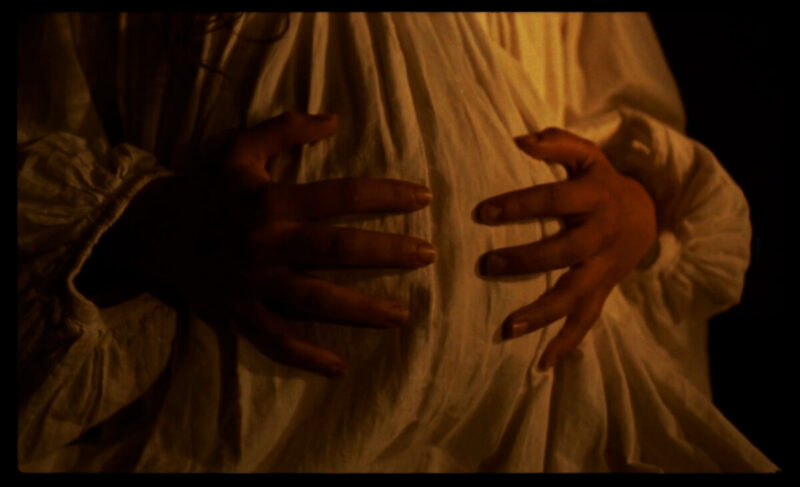
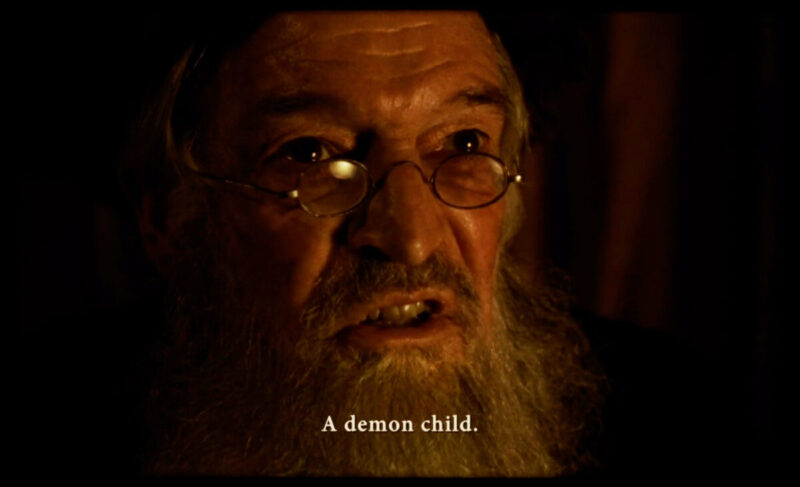
After the death of her husband, Hadassah has lost her faith. When her parents invite the Rabbi over to help, he warns that she must find God or risk giving birth to an unimaginable terror.
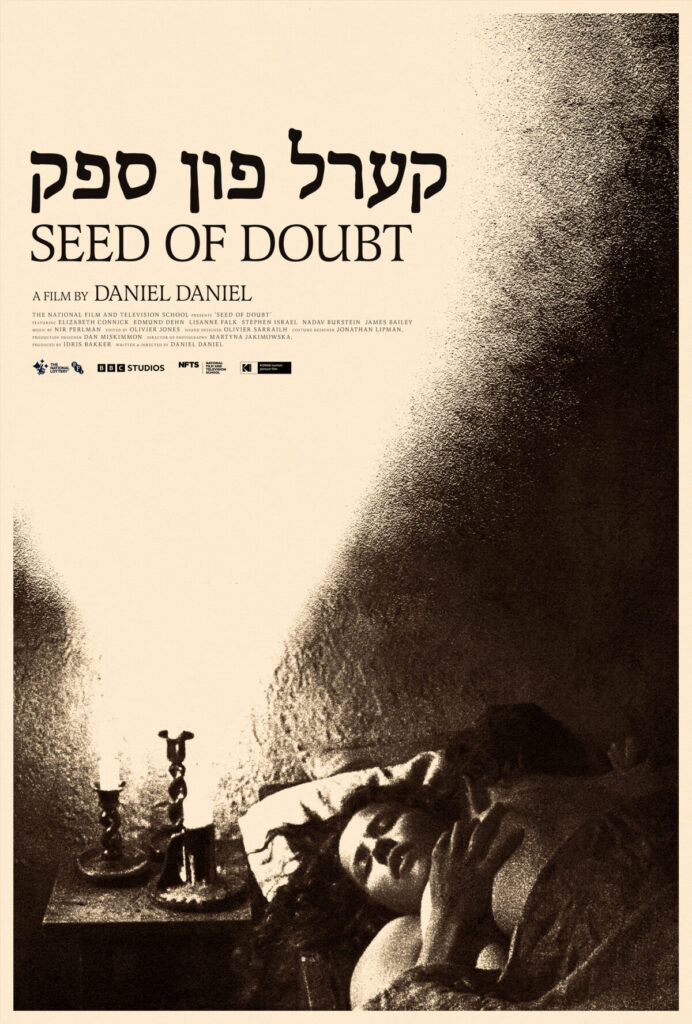
Q. Your film has been selected to play at the Romford Horror Film Festival. Can you tell us what we can expect from Seed of Doubt?
A. Sure! Seed of Doubt is a Yiddish folk-horror film set in an 18th-century shtetl – one of the many Jewish towns that existed across Eastern Europe for centuries. It follows Hadassah, a young woman reeling from the sudden death of her husband, Dovid. Left pregnant and struggling with a crisis of faith, she turns to her community for guidance – only to be warned by the local Rabbi that, because of her doubts, what she carries might not be a baby at all…
The film is deeply rooted in Yiddish folklore, a world rarely explored on screen, and blends historical authenticity with unsettling horror. While it embraces the genre, it also plays with its boundaries, blurring the line between reality and the supernatural in a way that lingers with you. At its core, Seed of Doubt is a story about faith, belief, and the terrifying power of uncertainty.
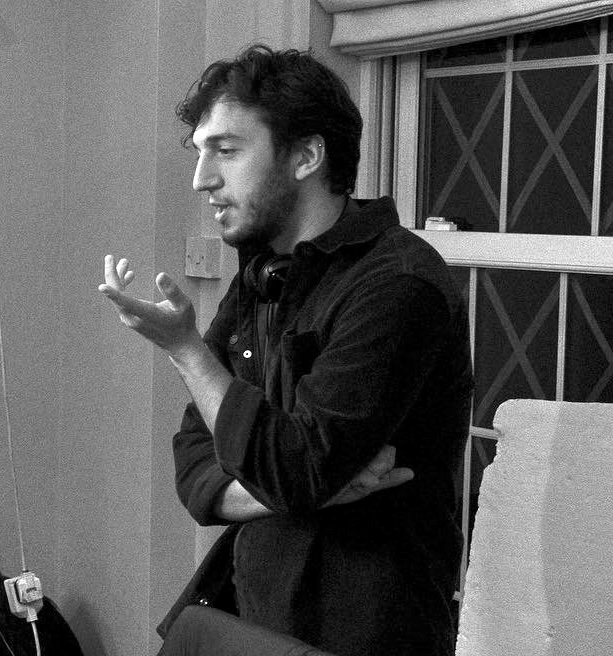
Q. What were some of your influences when writing the script?
A. The script was born out of my fascination with Yiddish folklore, something I grew up with in a Jewish community. The most famous stories involve dybbuks and golems – supernatural beings that reflect deeper fears about faith, exile, and identity. I wanted to write something set in that world, where these superstitions felt as real and inescapable as the physical hardships of shtetl life.
A huge influence was Isaac Bashevis Singer, the Nobel Prize-winning writer who grew up in a shtetl and later emigrated to the U.S. His stories – dark, disturbing, and steeped in faith and existential dread – were exactly the kind of tone I wanted to emulate. That influence can be seen in the fairy-tale structure of Seed of Doubt and its heightened dialogue, which leans into a more mythic, timeless quality.
The Yiddish language was also crucial – not just for authenticity, but for its folkloric texture. In English, the film would have felt too immediate, too modern. Yiddish creates a slight distancing effect, allowing the audience to be fully immersed in this world while also feeling that “once-upon-a-time” quality – like a story passed down through generations.
Q. What were some of your influences for the look and style of the film?
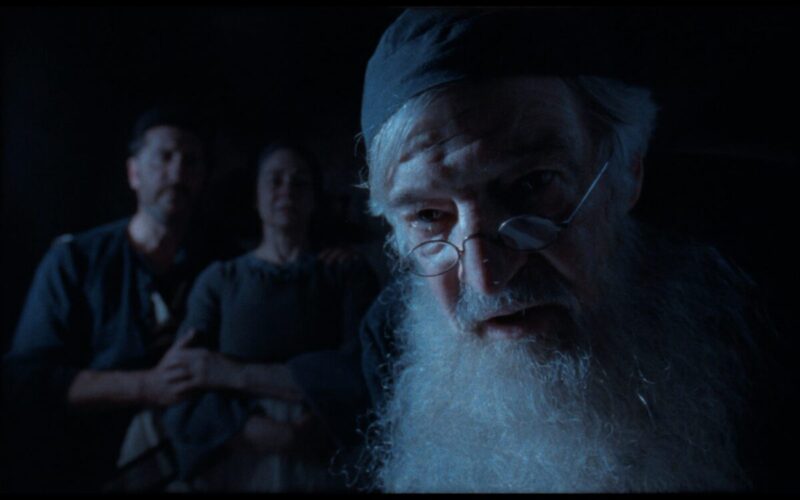
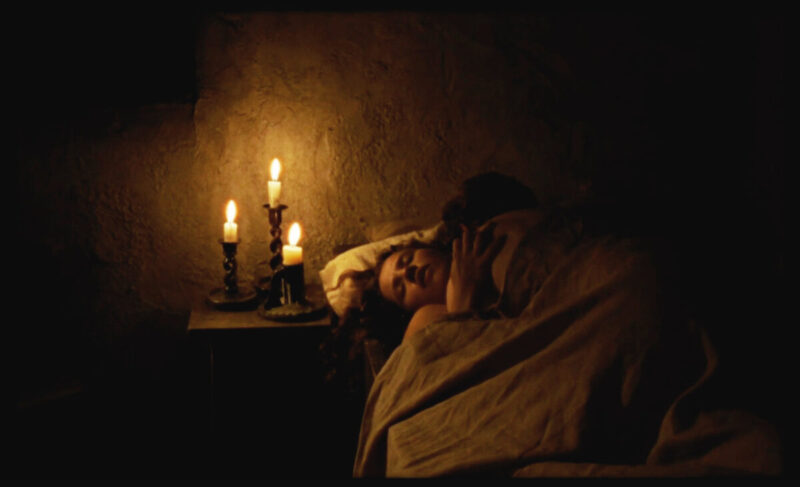
A. Robert Eggers’ The Witch was a huge influence, especially in the first half of Seed of Doubt, where we relied heavily on candlelit interiors. We wanted characters to emerge from the darkness, embracing shadows and using our low budget to our advantage.
We also borrowed from Darren Aronofsky’s Pi – specifically, the scene where a Hasidic rabbi looms over the protagonist after kidnapping him. That shot has always stuck with me, and I was excited to pay homage to it in our exorcism sequence. Another key reference was the first five minutes of A Serious Man by the Coen Brothers – the only modern equivalent I could find for our exact setting. However, while the Coens lean into absurdity and dark humour, I wanted something more lived-in and authentic.
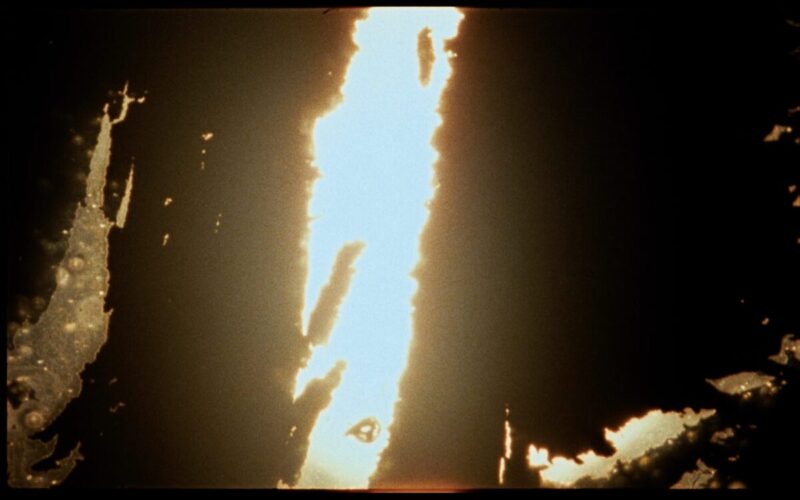
For the film’s climax, we looked at psychedelic sequences from 2001: A Space Odyssey, Embrace of the Serpent, and Enter the Void; but the less said about this sequence before being seen, the better.
But beyond cinematic influences, I wanted to capture something true to Yiddish folklore itself – yes, it’s eerie and dark, but it can also be lively, sensual, even colourful. Think of the dreamlike paintings of Chagall, for example. That’s why I consciously avoided black-and- white, 4:3 aspect ratios, and other period-piece clichés that might make the story feel too restrained. Instead, I followed a more intuitive visual approach – one that blends the psychosexual fever dream with the demonic folktale, all in service of the film’s central questions about faith and belief.
Q. Did you make any changes from the original script during filming?
A. Not really. I wrote the first draft of the script six years before we finally shot the film, so by the time we got to production, it had been through countless revisions and had really solidified into something we were confident in.
The biggest change was the trip sequence. Originally, it was meant to be a purely abstract freak-out, but during the edit, we found that audiences weren’t fully grasping its intention. Adding the Genesis-inspired voiceover helped anchor the sequence, giving it a clearer connection to Hadassah’s journey while still preserving its unsettling, hallucinatory feel.
Q. What were some of your favourite moments during filming?
A. One of my favourite moments was arriving at the forest in Oxford, where we were filming the mystical Hasidic dance sequence, and seeing around 15 extras – dressed in full period costume – practicing their dancing in the car park. It was such a surreal and heart-warming sight: a mix of friends and volunteer extras all coming together for something that, in the moment, felt both ridiculous and wonderful.
The sequence was choreographed by Margo Roe, and watching them dance around a huge bonfire at 2 AM, deep in the forest, was genuinely magical. Otherwise, the whole experience is a blur – a rush of anxiety, excitement, and emotion. So much happens so fast when you’re making a film that it becomes hard to separate individual moments. But that night in the forest is something I’ll always remember.
Q. Did you experience any issues during filming?
A. Hell yes. This was by far the most difficult shoot I’ve ever done. One of the biggest challenges was our forest location—after a night of heavy rain, the ground had turned into thick mud, and all our vehicles got completely stuck. We lost at least an hour just trying to figure out what to do, with barely any signal in the middle of the forest.
Then, out of nowhere, our producer Idris Bakker turned up with a tractor—she had somehow found a man in the forest who owned one! One by one, he hauled our vans out of the mud, and we eventually got them to a safe spot. From there, we had to carry all our equipment on foot to the location and rush to get everything we needed.
And honestly, that was just the tip of the iceberg. But that’s the fun of filmmaking – the constant problem-solving, the unpredictability, and the adventure. Incredibly stressful in the moment, but those are the stories you remember most.
Q. What makes it stand out as something different in the horror genre?
A. Beyond its unique historical and cultural setting, Seed of Doubt likely stands out because it doesn’t sit comfortably within the horror genre – it plays with horror, blurs its boundaries, and by the end, transforms into something else entirely. I like to think it makes sense when you watch it, but if you go in expecting a traditional horror film, you might be surprised by where it actually goes. In fact, it’s a very fair discussion to ask, by the end, whether it is in fact a horror film at all. It’s probably not conventionally scary, but I hope it’s provocative, deeply unsettling and psychologically disturbing.
Q. What do you hope people take away after watching the film?
A. First and foremost, I want people to have a completely immersive and gripping 20 minutes in the cinema—to feel transported by the film and completely caught up in its world. Beyond that, I hope they leave feeling unsettled, carrying the right questions about faith, belief, and the deeper emotions or voids that drive people to invest in them. I want the film to linger—not necessarily providing easy answers, but stirring something that stays with them after the credits roll.
Q. Do you have any other projects which you are currently working on?
A. Yes, I’m currently working on a feature adaptation of Seed of Doubt, which has felt like a natural progression. There’s so much within the world of the film that could be explored in greater depth, and expanding it into a feature allows me to dive deeper into the themes and characters.
I’m also writing another feature set in London, centred around young Christian street preachers. It’s a story that explores faith, identity, and the complex dynamics of belief in the modern world, and I’m excited to see where that one goes.
Q. If someone was looking to write and direct their own film what advice would you give them?
A. If you’re just starting out as a filmmaker, my first piece of advice is to know that people are incredibly willing to help. When I was beginning, I thought no one would care and that it would be impossible to find support. But I reached out to DPs, VFX artists, and editors on LinkedIn and Facebook, and found so many people who were willing to lend a hand—either for free or for very little. That’s how I got started, and prior to the NFTS, I made about four short films for under £1k. So, forget the “shoot on your iPhone” mentality – unless that’s really the intention you’re going for – but there are plenty of resources out there, and you can access professional cameras and equipment if you’re willing to put yourself out there and
ask.
Beyond that, when you’re faced with tough creative decisions or crossroads, trust your gut. It’s profoundly cliché, but it’s the one thing that makes you unique as a filmmaker. It seems simple, but with the pressures of so many collaborators who each have their own vision for the film, and the stress of time, and people you trust telling you what you should do, knowing what you want is the only real job of yours as a director. Keeping that vision clear is fundamental.

Published in various websites, Philip is a reviewer who is best known for his interviews and media coverage of independent projects including; films, books, theatre and live events. Always on the lookout for something different to cover!