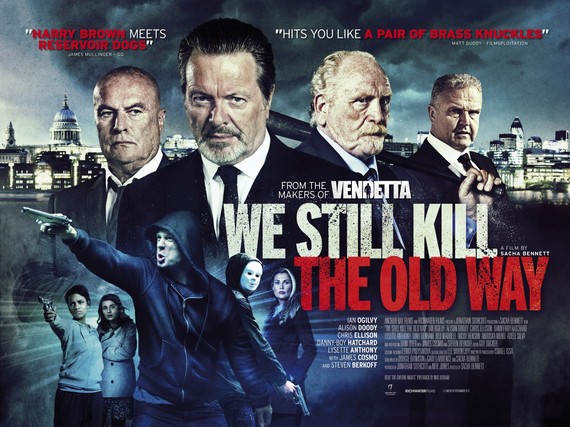


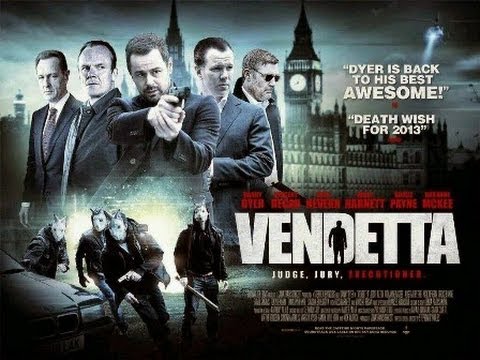
Jonathan Sothcott may not be a household name in the UK, but as a producer he has established a firm foothold within the UK independent film industry. With a focus mainly on action-thrillers and old school British gangsters, he has established a market for the sub genre and continues to deliver what the public wants. Films like Vendetta, We Still Kill The Old Way and the sequel We Still Steal The Old Way developing a strong cult following.
With his production company Hereford Films, Jonathon has several new projects already in the works including a third film in the series with We Still Die The Old Way, it doesn’t look like he is slowing down any time soon.
I got an opportunity to ask Jonathon a few questions about how he got into film making originally, why gangster movies have continued to be so popular with audiences and what can we expect in the future from Hereford Films?
Q. How did you get into film making originally and was producing something you wanted to get into?

Yes, it was always my passion and ambition. Literally as a kid. I think I can trace it back to the age of about 4 when my parents recorded a ‘Making of Return of the Jedi’ TV special which I would watch endlessly. I understood that movies were created in an elaborate and fascinating process and that this was done by very smart people. Something people often say to me is “knowing how films are made must really take the joy out of watching them” but it doesn’t for me at all – I can totally switch off and enjoy the experience. Anyway, back to young me… I always had film books going back to the age of about 7 I guess – all those big old hardback books about horror movies by Dennis Gifford and Alan Frank. I was horror mad, especially the Hammer films. I used to tick all the ones off in pencil that I’d seen and longingly pour over stills from ones that eluded me in the days when you were pretty much reliant on what appeared on TV. I guess aged around 12 I started sneaking copies of a horror film magazine called The DarkSide – my Dad was never keen on it – and that was where the idea of being a film journalist came from. Fast forward four years and I was writing for the magazine every month (I wasn’t particularly good at school, but I could write). You know, when you’re passionate about something like film, schools rarely seem to encourage it. My English teacher always encouraged my writing but the rest of them offered zero encouragement. I remember a particular arsehole of a physics teacher writing on a report “a little more science, a little less science fiction” on an end of term report, something I enjoyed recounting on the set of my film Airborne starring Mark Hamill, whilst having never applied physics to anything in my adult life. So, my mid-late teens were spent writing tones of articles about old horror movies and interviewing actors and directors. I tried to combine this with A Level Film Studies, but I lasted a term – I had seen all the films and I didn’t for one second buy all the arty farty nonsense the teacher was insisting was behind them. So I never went to University, but through Allan Bryce, the editor of The Darkside, I met some lads from Nottingham, David Gregory and Carl Daft, who had made a documentary about The Texas Chainsaw Massacre and via Bill Lustig (director of Maniac Cop) were now charged with creating all the supplementary features for the American DVD releases of the Studio Canal library of British films. For a few years, well into my early twenties, I worked on DVD extras – I worked with everyone from Ken Russell to Christopher Lee. I pushed hard to give one of my favourite films, The Man Who Haunted Himself, the deluxe DVD treatment and roped in Roger Moore and Bryan Forbes for a commentary. I was proud of that; it’s such a good film. Eventually I ended up producing all this stuff myself – I worked for MGM and Paramount and was producing documentaries about cult films such as The Beast Must Die and Blood on Satan’s Claw. The thing I’m most proud of in this period was a documentary profile of producer Euan Lloyd, the man responsible for two of my favourite films – The Wild Geese and Who Dares Wins. It was called The Last of the Gentleman Producers, which was later the title for the eulogy I gave at his memorial service. Euan, along with people like Bryan Forbes, Brian Clemens and David Wickes were all huge influences on me. They were all entrepreneurial, successful guys in the film business who understood it was exactly that – a business.
In 2003 I read that some guys in Gateshead were launching a dedicated Horror Channel on Sky. I immediately reached out to them offering my services and after a couple of meetings they brought me on board as Head of Programming (I genuinely had a business card with a spider on it, about which I had mixed feelings). I believe I was Britain’s youngest Television Executive. The Horror Channel was a huge learning curve – these guys had zero money really and even less idea about the genre, so I was trying to programme a network with 50p and some biscuits (which is why, if you cast your mind back, they endlessly screened all those ropey old public domain films throughout the day). Somehow the channel launched in 2004 and of course today it is a huge success, having been on air for over 15 years and grown exponentially in popularity. Eventually the novelty of broadcasting Nosferatu every other day wore off and I moved on from THC and ended up back on the door step of David Wickes, legendary director of The Sweeney and The Professionals, who went on to write, direct and produce the huge mini-series Jack The Ripper with Michael Caine. I admired Wickes hugely, he was an absolute hero of mine and it was he above all others who pushed me towards being a film producer. He’d just done a development deal with a Canadian financier to work up a movie about The Siege of Mafeking and he invited me to come and work for him on it. Essentially, I was his bag carrier, but I learned so much, he was such a smart, shrewd guy and I often find myself unwittingly quoting him. We had an office just off Parliament Square and although the script he wrote was excellent, it never got off the ground. Working out of the Wickes office also gave me a chance to develop my own projects and one of these was finding finishing funds for a friend of a friend’s horror movie. The film was Wishbaby, I found the funds, and somehow put together a distribution deal in the UK and suddenly I was an Executive Producer. It all sort of happened without me realising.
One of the projects I was developing was sent to Martin Kemp’s agent and I was called in to meet him. I thought Martin was brilliant, The Krays is and was one of my favourite films, and he agreed to do the movie. I then learned an incredibly valuable lesson. The chap who was supposed to be putting up the money turned out, as they so, so often do, not to have any money. This happens a lot in the independent film arena – you get these deluded fantasists who are desperate to be involved and play it all out right up until the moment when they decide the game is up (normally when you’re asking for the cheque and disappear). It must happen in other businesses but there’s something peculiarly attractive about film to this particular type of idiotic tyre kicker. Anyway, this self-styled Greek shipping magnate sloped off back to the pub and I – being naïve – thought that was the end of my film career. Thankfully Martin called and suggested lunch – as an industry veteran he knew how often this happens. We met for the lunch – we had liked each other immediately, so it was no hardship – and Martin told me that what he really wanted was to direct. So, we cooked up a plan – I had a short film script by a writer called Phill Barron called Karma Magnet and we cobbled together some money and made a short film. It starred Gary Kemp and Adele Silva and was a lot of fun. We made virtually all of it out of the tiny office we had in Charlotte Street, calling in favours for locations and extras (Martin’s wife Shirlie and kids Roman and Harley all appear, as do I!). I had lunch with Martin last week and we were reminiscing about how easy it was back in those days!
Off the back of Karma Magnet I convinced one of the guys who had helped finish Wishbaby to invest in a micro budget feature film. This eventually became Stalker, written and directed by Martin and starring Jane March, Anna Brecon, Colin Salmon and Billy Murray. Billy and I had met the previous year and bonded over a very boozy lunch. He’d just come out of Eastenders and at the time was in partnership with another producer, Terry Stone and they were making Rise of the Footsoldier. I really admire Terry – he has incredible tenacity and determination and we have been friends a long time. Anyway, Terry and Billy parted ways and I said to Martin maybe Billy could join us – Martin and agreed and we three became Black and Blue Films. Billy was very entrepreneurial and outgoing, and Martin was very switched on creatively, but I was probably the weak link. I was inexperienced and learning on the job and my core instinct was steering us towards horror whereas Billy, quite rightly was pushing for British crime and gangster stuff. Billy and I have been best friends for over a decade – he’s such a great guy and has helped me with so many things in so many ways. He’s such a good actor too, I always feel we wasted him in a lot of the films back in the day, though he had a good part in Stalker and was of course brilliant. We made a couple of movies, maybe half a dozen, mostly co-productions, and this was definitely a crash course in film production for me – you know they say you can only learn to make an omelette by breaking a few eggs? Well I must be the best omelette maker in the world! But nonetheless, that’s how I became a movie producer!
Q. There is often a misconception about how much a producer does on a film. How would you describe your role as a producer?
You do all the work but get none of the credit! In a producer-lead business like mine, you source the project, either by commissioning or optioning a script, you package the project with cast, director etc, you raise the finance (the hardest part of making a movie), you oversee the production, you sell the film to distribution and you work hard to promote it. There isn’t one area of that process that I don’t micromanage. Sometimes I come up with the concept of the film too, but my busy schedule outweighs my delusion that I could also be a writer!
Q. You created the production company Hereford Films which specialises in crime and gangster movies. What made you decide to form the company?
I’ve had 3 film companies since I became a producer. Black and Blue Films with actors Martin Kemp and Billy Murray, which we shut down because we were pulling in different directions (we remain best friends, however) then Richwater Films, which had a huge deal with the American company Starz to make films for its UK subsidiary Anchor Bay Entertainment, which was wrapped up when Starz sold Anchor Bay. I was gutted when that happened as it really was a landmark deal in terms of inward investment in the British film industry. I then decided to set up Hereford Films. The name came from a road I used to live in during my salad days in Notting Hill – there was no special attachment to it, I just thought it sounded rather British. I made the last two films as part of the Anchor Bay deal through Hereford, Bonded by Blood 2 and We Still Steal The Old Way. Specialising in crime and gangster movies is a reaction to the market – we’ve made horror movies too and will be making an increasing amount of gangster films.
Q. You are primarily involved in the production of action-thrillers, often with a backdrop in the world of gangsters or football hooliganism. Is this something which interests you or are you following the trend of what the audience wants at the moment?
Well, you don’t run away from success. Action is probably my go-to genre. I grew up loving very sort of macho entertainment – Stallone, Arnie, Steven Seagal, Robocop. I loved that stuff and still do. Although my films are often typed as ‘gangster’ or ‘geezer’ movies I think my best ones – Vendetta and We Still Kill The Old Way are really action thrillers that happen to be set in London. Someone told me once that I have produced more football hooligan movies than any other producer… I hate football let alone football hooliganism so that was definitely a commercial decision rather than following my heart! I do love gangster movies though and I’m proud to make films that people enjoy.
Q. Why do you think gangster films have remained so popular with the audiences?
I think in prim and proper England we love a bad boy and audiences enjoy the thrill of watching naughty people doing naughty things. It’s the same reason Martina Cole’s books sell in such huge quantities. Our organised crime in the UK is never going to give the mafia any sleepless nights (which is why America has never been impressed by films about The Krays or the Essex Boys) but we like to think there’s a certain code of honour amongst British gangsters (there isn’t) – you know, that silly philosophy that the crime rate would be down if Ronnie and Reggie were still around. But we also have an incredibly rich heritage of making this type of film incredibly well – Get Carter, The Long Good Friday, Mona Lisa, Lock Stock, Snatch, The Business, Rise of the Footsoldier. It’s sort of the British equivalent of the Western and really the last clearly defined genre in British film. We all know what a British gangster film looks like but is there such a specific image if someone refers to a British horror film or a British romcom? Probably not.
Q. The upcoming We Still Die the Old Way will be the third film in the series. Were the sequels always planned?
Well, we certainly left the first one open for a sequel – there’s a scene at the end setting up another film where the Archer gang take down some evil bankers. It was grabbing headlines when we made ‘Kill’ but I never really thought old guys in suits chasing slightly younger old guys in suits had the legs to be a whole movie, so it sort of top and tailed a prison break film. I was disappointed with the second film; it was too light in tone and a bit jumbled (it was redeemed by a brilliant performance from Billy Murray as the villain though) so I sort of uhmmed and ahed about a second sequel. There was a throwaway scene at the end where Ogilvy returned what looked like a pound shop Maltese Falcon to a mafia guy but won’t be the basis of the third film (it does have a payoff though). To be honest when I’m looking at genre script, one of the questions I always ask myself is does it have franchise potential.
Q. Without giving too much away what can we expect from the latest film?
It will be better than the last one! It’s actually been in development longer than any other film I’ve made – we’ve been through half a dozen writers and a few potential directors because I’m determined to get it right. It’s hard by the time to get to a second sequel because you’re juggling a heap of returning characters with new ones plus a self-contained story. We are definitely getting there though. Oh, and the cast will blow your mind.
Q. If the film remains popular with the fans of the series could we see a fourth film?
The hard part of this series is that the cast weren’t exactly in the first flush of youth when we started so I’m aware that its length is finite. We went through quite a long development stage of trying to introduce Martin Kemp as Richie Archer Jnr for We Still Die The Old Way but it just didn’t fit. Of course, you’re assuming enough characters will not die the old way to make another sequel! I think the third one will be the final chapter – but we are certainly exploring other avenues for the concept beyond this particular series of films.
Q. What do you look for with any new projects that are coming in?
Very simple – can I sell them, and do I think people will want to watch them. I make films for audiences, not for reviews or laurels. So, a high concept story that I think I can cast good actors in which people will want to see. The old ‘one-line pitch’ might be a cliché but it sure holds up in practical terms. In terms of gangster and horror, some ‘based on a true story’ angle always helps.
Q. Having produced over 40 movies you have also worked with some big names in the industry including Mark Hamill, Ray Winston, Martin Kemp and Danny Dyer to name a few. Are there any big-name actors, actresses or directors who you would like to work with in the future?
Yes absolutely. Actors – I’d love to work with Stallone and Steven Seagal. I know Seagal has been in a lot of less than stellar films of late, but I think he has at least one good one left in the tank. And Stallone is just brilliant, I can’t wait for the new Rambo. Robert Downey Jnr is probably my favourite actor right now, I would buy tickets to watch a film of him reading the phone book. In terms of British actors my list definitely has John Simm, Sean Bean, Hugh Grant, Marc Warren, Sir Michael Caine, Stephen Graham, Ashley Walters, PH Moriarty, Noel Clarke, Ben Kingsley. In terms of actresses, Sigourney Weaver, Sharon Stone, Scarlett Johanson, Angelina Jolie and in Britain Dame Helen Mirren, Kate Beckinsale, Parminder Nagra, Samantha Janus, Billie Piper, Emilia Clarke. I mean, one thing we’re not short on in this world is great actors!
Directors – I’m developing projects with Nick Moran and Ronnie Thompsin right now, so they are the next two on my list. I can’t wait to work with those guys. I’m also a really big fan of Jesse Johnson, whose new film Avengement is out in the UK July 1st. I think he’s probably the best indie action director out there right now.

Q. With digital downloads and streaming services such as Netflix and Amazon, it is becoming easier to find a film to watch without even leaving your home. Has this changed the way you look at the industry and how you both release and market your films?
Well it has, and it hasn’t. We have Netflix and Amazon Prime and all I ever hear in my house is “there’s nothing to watch on Netflix” or “Amazon Prime is so dead right now” – because yes, the series are great but the catalogue movies are rather limited, especially on AP which has some real crap on it. People talk about the decline of physical media but in my business, it hasn’t declined all that much – last year The Krays Dead Man Walking did virtually the same Home Ent business as Age of Kill back in 2015. With the problems with HMV, physical releases have just become more selective: the supermarkets only have so much shelf space so will only stock the films they actually think will sell. Let’s be positive, not negative – a physical release for an independent film is the new theatrical release – you know it’s a proper movie that a distributor is willing to spend money on. One of our strengths as a company has always been our embracing and deployment of online marketing – from creating the first 3D motion poster for a Brit indie with Vendetta to our considerable and active presence on social media. I don’t care how people consume our product (except piracy obviously!) so long as they can access it via the platform they want, whether it be physical or digital.
Q. With the market constantly changing are you looking to make any changes to the content which you are producing at the moment?
After The Krays – Dead Man Walking I found myself at a cross roads. Either carry on making super low budget films like that which could be made to look as good as our other films (it wasn’t a very good movie and not a patch on Vendetta, We Still Kill The Old Way etc) and become a brand akin to The Asylum, or – having established there’s a still a market for our product focus on quality. That means great writers, directors and actors. I want people to see the Hereford logo and know they are buying a certain type of film that they will enjoy. We might not be changing the world but if we can give people a bit of escapism for an hour and a half then I’ll feel like my job is done.
Q. Do you have any other projects which you are working?
Yes, a LOT. We always have 20-30 projects in development at any one time, across both film and television. Upcoming highlights on the British crime front include another Krays film, We Still Die The Old Way, gangland home invasion movie Reckoning Day, Trappers, Knifer (based on the best-selling book by Ronnie Thompson) and we have film rights to Roy Shaw’s autobiography Pretty Boy. In terms of bigger, more international action stuff, prison riot movie Operation Tornado is shaping up to be something special, Nick Moran’s Man of War is like a British Die Hard and my personal pet project Assault On Hazard Rock is a cinematic love letter to 80s action movies. We’re also looking at a couple of feature documentaries and some television.
Q. What advice would you give to someone who is looking to get into producing themselves?
Forget your silly idea and do something else: I don’t want the competition! Seriously though – get out there and make a film: anyone can make a film and have it on a major online platform these days: there is no excuse. But if you don’t go out there and knock on doors, it just won’t happen. Nobody is going to give you an opportunity on a plate so get out and make your own. Making films gets easier and more accessible every year. My maxim is don’t make the films you like, make the films people want to see. If you do that, the audience is there. And good luck!

Published in various websites, Philip is a reviewer who is best known for his interviews and media coverage of independent projects including; films, books, theatre and live events. Always on the lookout for something different to cover!