Director: Phil Davis
Writer(s): James Bannon (original story), Vincent O’Connell (screenplay)
Actors: Reece Dinsdale, Richard Graham, Perry Fenwick, Philip Glenister, Warren Clarke
Synopsis: When a cop goes undercover to infiltrate a gang of hooligans, he finds himself being drawn to the other side.
With The Southend-on-Sea Film Festival will be returning once again from 26th – 29th May, I got an opportunity to ask Director- Actor Phil Davis a few questions about his 50-year career as an actor and his film ‘ID’ which has been selected to play at the festivals closing gala on Sunday 29th May at 9.00 pm.

Q. The closing film of the Southend Film Festival is ‘ID’, a film which you not only acted in but also directed. How did you get involved in the film as a director and what attracted you to the film as a director?
A. I got involved in ID initially because I’d directed a short film, ‘Life’s a Gas’ by the same writer Vincent O’Connell. One of the purposes of the short film scheme was to nurture relationships between writers and directors. We got along ok and the short turned out well so when he was developing the script for ID I was in the frame.
I was interested in the story (which was based on a true story) less as an account of 80’s football hooligans but more because of the transformation of the young copper who sort of loses his identity over the period that he’s undercover. He embraces this alter-ego so completely that he gets lost. This was psychologically interesting for me. I’m an actor, my job is pretending to be other people, so there were echoes and cross overs.
I only appeared in the film by accident. An actor dropped out for the tiny part of the station sergeant. We were shooting in Germany, and it was cheaper and more convenient for me to step in than fly someone over.
Q. The film still feels as powerful today, what do you think makes the film hold up so well?
A. I’m pleased that you think it still feels powerful and holds up well. Some films age well, and others don’t I’m not sure that I know why.
Q. You have only been behind the camera 8 times during your career, having directed both film and TV. Would you like to have directed more behind the camera and is it something you would consider doing again?
A. When I got going as a film and tv director I was still working as an actor. For about 12 years I juggled with both. I never considered stopping acting, my first love. But it was very difficult. I would become attached to a project and the money was there, then not, it was on then off, a precarious business and if an acting job came along, I wanted to take it. I made a decision after the year 2000 that I had to prioritise one or the other and I was doing well in front of the camera, so I gave up the business behind it. I did (do) miss it. I doubt that I’ll direct another feature film now, I’m in my late 60s and aside from a short film (Midnight of my Life, about Steve Marriot) I haven’t directed anything for 20 years.

Q. You are however best known for your acting having built up an impressive resume of over 50 years on stage, in film and on TV. How did you first get into acting?
A. How did I get into acting? I wanted to be an actor from a very young age. I was from an ordinary working-class family and lived on a council estate in Essex so it seemed, when I was a kid, like a hopeless dream but I wouldn’t let go of it. Drama school was out of the question for financial reasons, but I got into the National Youth Theatre and that was a start although I wasn’t marked out then as one to watch. I was lucky. I answered an advert in the back of The Stage newspaper, auditioned for and was taken on by the wonderful Joan Littlewood at Stratford in East London. It was meant to be for one show only, but she liked me and I stayed with her company for a year. This was my start. 50 years ago, in 1972.
Q. What do you look for when selecting your roles now and has this changed over your career?
A. What do I look for when selecting roles? Is the character interesting, is it something I haven’t done before, is it a good part? All that. I suppose my range has broadened as I’ve got older. But in truth, you can only play the roles that are offered. I’ve tried to avoid typecasting.
Q. In your career, you have often become synonymous with playing notorious characters. Do you enjoy playing the villain or are these just the roles which you found most interesting?
A. I do enjoy playing the villain. I guess with a face like mine it’s inevitable that I’m more likely to be the bad guy than the hero. I suppose that I’ve always felt a bit like an outsider and that’s reflected in the parts I’ve played. I’m a character actor. I love losing myself in the roles I play. Villains are great. Bring ‘em on!
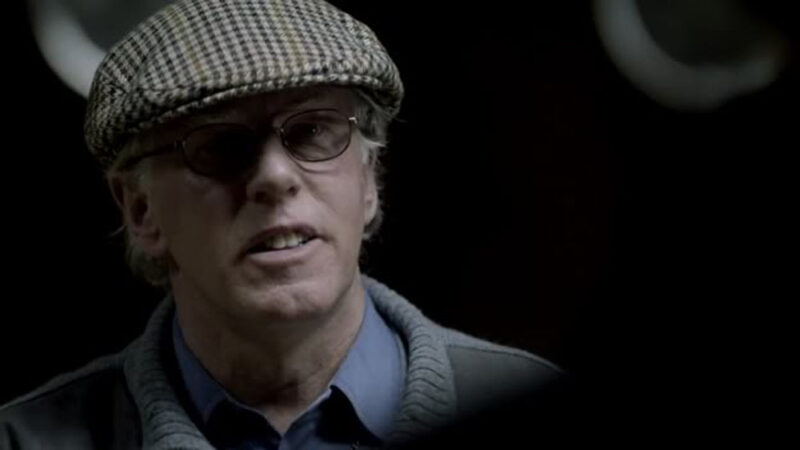
Q. Are there any characters which you have portrayed on screen that you would like to play again?
A. There aren’t really any characters I’ve played that I yearn to do again. Look forward not back. Some roles (like Peter Mcleish in North Square) could have gone on longer, another season or two but if it’s not recommissioned it’s over.
Q. Are there any directors who you would like to work with either for the first time or again?
A. I have some directors I admire, but the character is more important for me than the name of the director. I’ve worked on and off with Mike Leigh since the 70s, I’ve always enjoyed collaborating with Mike, he’s unique, and would jump at the chance to do another film with him.
Q. You have become a familiar face on UK TV featuring in several hit shows such as Merlin, Doctor Who, Sherlock, Being Human and Whitechappel which have gained a huge fan base. How does it feel to be involved with such popular shows and do you get recognised much for the characters you portray?
A. It’s great to be associated with popular shows on TV. Shows that hit the spot. I do get recognised. I’m not uncomfortable with it, people are lovely and mostly just wanting to say well done which is gratifying. Some shows and films I’ll be forever associated with. I suppose Quadrophenia tops the list, kids who weren’t born when it came out have discovered it on DVD and love it, actually kids whose dads weren’t born when it came out. It has legs. Bleak House has its champions, Whitechapel was popular and Sherlock of course.

Q. Are there any real life or fictional characters which you would like to portray on screen?
A. I’m a big fan of Charles Dickens and there’s a long list of his, mostly villainous, characters I’d love a crack at. But most of my work has been new stuff, so it just depends on what the writers come up with.
Q. Do you have any other projects you are working on at the moment?
A. I’m about to start shooting a new series for Ch4 with Julie Walters, Clark Peters and Sue Johnston. Great fun.
Q. If someone is looking to get into acting, what advice would you give them?
A. What advice would I give budding actors? Phew! I don’t know, it’s such a different world from the one I was in when I started. I suppose I’d say that you need to be absolutely set and determined to pursue it. It’s going to be tough. And if you get an opportunity, if a chance falls into your lap, make the best of it. Be as good as you can be.
The Southend-on-Sea Film Festival runs from 26th – 29th
You can find out more about the Southend Film Festival and purchase tickets on the website here: https://www.southendfilmfestival.com/

Published in various websites, Philip is a reviewer who is best known for his interviews and media coverage of independent projects including; films, books, theatre and live events. Always on the lookout for something different to cover!