

Writer-director Bernard Rose may be synonymous with the horror genre, with films such as Candyman, Paperhouse and a modern day re-imagining of Frankenstein; but his latest film offers something very different.
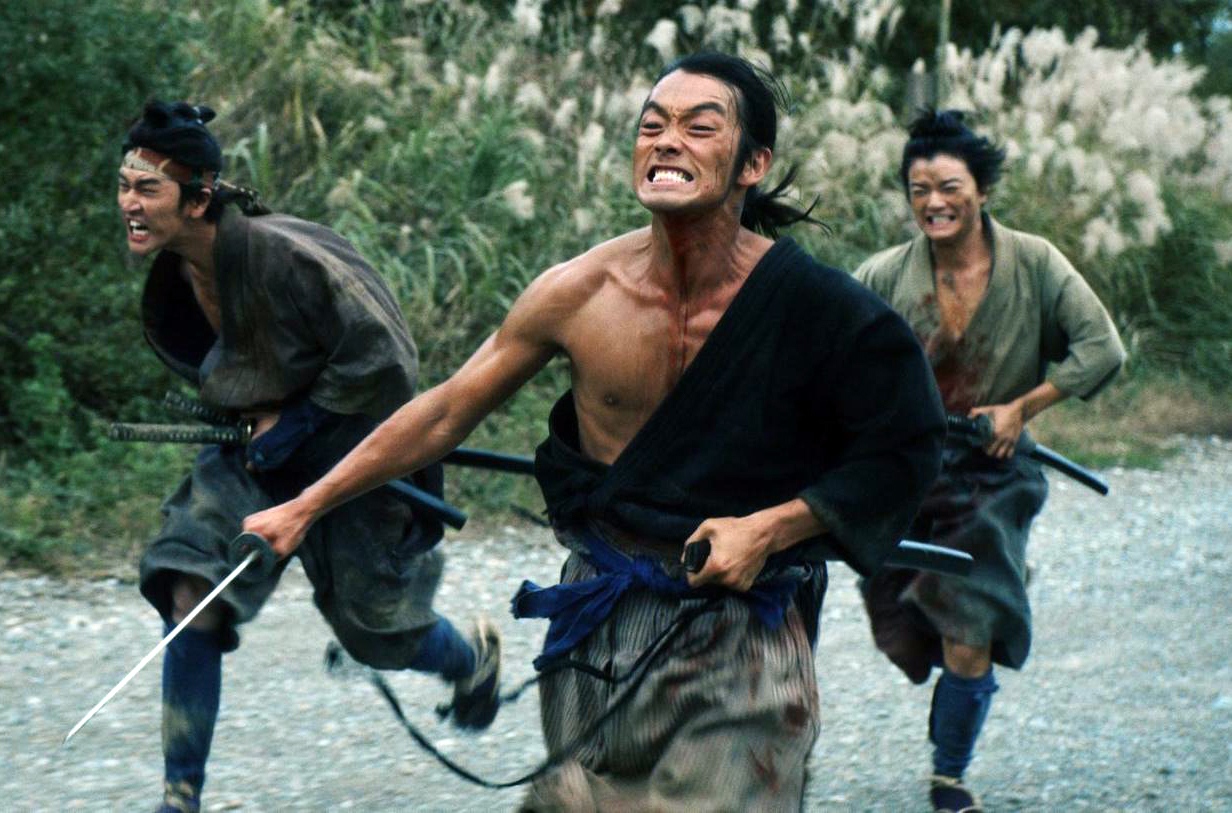
Inspired by a real-life race that is still held annually in Japan, Samurai Marathon is an epic sword slasher from the team behind 13 Assassins and The Last Emperor. In the late feudal era of Japan, a young ninja (Satoh) is operating undercover in the court of an aging Lord during a peaceful era of Japan that is on the brink of change. After the Lord challenges his lazy samurais to a punishing marathon to toughen them up, the ninja finds his loyalties put to the test. Facing impossible odds, this unusual band of characters is running a race to win or die.
I got a chance to ask Bernard a few questions about how it got involved in the film, recreating the a historic period film and working with a full Japanese cast and crew.

How did you get involved with the project Marathon Samurai originally, which you co-wrote and directed?
Well, I was actually asked by Jeremy Thomas, if I was interested, he had his production going in Japan. They had a screenplay and he asked me if I wanted to go to Japan and get involved with it and I said “Yes”. I then went and met with Toshiaki Nakazawa the Japanese producer. We worked on the screenplay, I rewrote it in English, and then it was rewritten in Japanese, not translated because you can’t really translated because you can’t really translate English into Japanese and Japanese into English. It just doesn’t work like that. So basically, it was a kind of tripartite process like that. During that time, I went down a number of times and did research and saw locations and then we just made the movie. It was relatively straightforward, but it was a fairly intensive, long collaboration getting it to that point.
I can imagine. Obviously, it’s based on a book, have you read the book?
I have actually never read the book. Unsurprisingly, because it’s not available in English. But I read the screenplay that was based on the book, which was translated into English and I read a synopsis. My vision is somewhat different than the source material. So, in a sense, it was it was kind of reinvented, but there were there certain things that were the same. Obviously, the story is kind of an ensemble piece, some of the scenes I didn’t change but some of them I changed considerably, it was kind of a mixture.
What sort of changes did you do to the original sort of story and what were the reasons for that?
Well, the struggle the story was always the same with the race, but the character of the princess I altered considerably. She was pretty passive in the original, I basically gave her more to do and made her into one of the central characters. That was primarily it.
She’s becomes quite a strong character considering she’s quite passive in the original book?
She was more traditional. I always liked the character princess Yuki in The Hidden Fortress (1958) in the Kurosawa film, which of course is really the template for princess Leia in Star Wars (1977). That’s one of the things that fascinated me about this, the cross fertilisation between Kurosawa and Western films and then bringing some of that back into Japanese films. It’s kind of a weird circular thing, which is interesting.
I assume you don’t speak Japanese as you couldn’t read the book, did you experience any issues trying to translate it at all whilst you were working out there?
I can speak some conversational Japanese. But speaking is one thing and reading is quite another. It’s very hard to read Japanese. Obviously, there are definitely language and cultural barriers, but overcoming them was a really positive part of the challenges in doing a project. I had a very, very good interpreter and he had this earpiece that you put in your ear and no one could even see it. He would do simultaneous translation into a microphone, so people would be talking to me and I would get this simultaneous translation in my ear. It was a bit like watching the world subtitled, it was quite interesting.

Especially when it is so instant. There is a part in the film where the translation is an issue when they are speaking English, but he is perceiving it as Dutch?
He is speaking Dutch because at the time the only westerners that the Japanese had contact with were the Dutch, so they assume all westerners spoke Dutch. Japan was Isolated so the only foreigners that were allowed anywhere near Japan were 20 Dutch sailors on the bay and Tomoaki Seki. Never 21, only 20 were ever allowed there.
Only 20?
Yeah, that was that was enough for them.
The film itself is a samurai film, which is different to what you’ve done before. What were your influences for the look at the style of the film?
I like the way the fights are always dealt with in the old Kurosawa in the way they actually try and kill each other, rather than do a kind of balletic dance. There is Japanese chanbara. The formula of chanbara, there is always somebody in the middle with people around them and they go around the clock and kill them all. Which is a fun thing, but it’s kind of a dance. If you want to kill 50 people around you, they will probably kill you.
For Kurosawa films they’re fooling around in the mud and trying to whack each other, it’s messier and I wanted to do that. That was very much my theory of dealing with it – to show the lethality of the katanas. If you ever hit somebody with it, they’re going to lose a head or limb, or you get can run through. It was a funny different thing in that, and I was interested in the characters primarily with the film and the different and the humour as well that I wanting to bring out, I don’t like when it is too serious. It’s a flaw of a lot of period films I find, is that people have this weird idea that somehow people in the past didn’t tell jokes. I think that’s unlikely.
There is some slapstick humour in the film. Was the humour from the original book or is that something which you bought in yourself to the script?
The original script had all the comic elements and I like the idea of combining a serious and comedic story. That always seems to me the best way to go about these things.
It works really well in the film, to keep the pace up and keep it going. You went to Japan to film Samurai Marathon; did you use any of the original locations?
Actually no, because you can see the end of the movie where we actually did shoot is a modern marathon and is built up and quite urban, like a lot of Japan. We were out up in the mountains which was much further north northwest with these very beautiful thousand-year-old forests. There are some very beautiful mountains around the actual place now, but we had a set there with a samurai town.
So, you had to recreate the sort of environment yourself.
Exactly.

Did you experience any issues whilst bringing it together
It’s always uphill making a movie and certainly wasn’t a Western production going into Japan. I was kind of fitting into the Japanese production. So, in that sense, it was it was interesting and was very different because people were not shy about telling me when they thought I was wrong. (Laughs) but given the situation, I thought it would be smart to listen to them, you can be very wrong about Japanese stuff. I had basically 100% Japanese crew and cast to stop that from happening which was good.
Was that for the traditional side as well with the style to keep it very Eastern?
It comes down to everything, including the way People move, open a door or drink a cup of tea. Everything is ritualised in the ancient period of Japan. The actors don’t know all that stuff, so you have people who literally teach it to them which is interesting.
Like when they are running and the different characteristics, it’s quite amazing to watch.
That’s right, they don’t run like normal people, they don’t use their arms and run with their hands on the swords; and they run with their swords of course. Everything is kind of ritualised, stylized in that way, it’s a wonderful thing to watch. We have people who, essentially instructed the cost in doing that correctly.
And what were some of your favourite moments during filming?
The film was done on a relatively short schedule and during that time when we were up in in the mountains, there were actually three typhoons that blew through. It was Unbelievably wet. If you notice the torrential rainstorms in the film, they’re not special effects. They’re real, actual typhoons, so we were actually shooting in there. When you use fake rain on the film, it only tends to look like someone just turned the shower on, even when it’s really raining hard you never quite get as wet as people get in movie scenes. What was great is you can see that the rain is coming parallel and it’s coming down from the clouds, sometimes it’s really blowing about. It was great for me to see all the nature there and this amazing beauty of the Japanese landscape, its just a great environment to be in.
It’s great to capture it when you can, but it can obviously cause issues as well if you’re trying to move about and get certain scenes, it can often be a hindrance.
The biggest problem is when it stops raining and your halfway through the scene. Luckily it didn’t, it worked out, so we were ok.

And what’s your favourite moments from the finished film?
I really enjoyed a lot of the actors, especially Nana Komatsu who plays the princess, she was just great to watch. Also, a lot of the actors were kind of adapted to doing this physical stuff, these guys can really fight properly. It’s really wonderful to shoot that stuff, there’s a kind of beauty and poetry. Obviously, I think the final battles, the race and when it climaxes were a lot of fun to shoot but I like doing some of the other quieter things too, with Yuki by the by the river and stuff like that. I really enjoyed doing it, it was just such an unusual environment to be in, It was fun to not have the crutch of English dialogue and be able to actually really just concentrate on the picture like that.
Visually the film is stunning in the way it incorporates the surrounding areas, but just touching on what you said there about the fighting itself, when you see the action hasn’t got that quick editing, that flashy violence, which you mentioned earlier. It really showcases their fighting skills you hold into the action rather than cutting into it.
For me if somebody can really fight you want to see that, it’s much more dangerous looking with people wielding these swords. The way they wield these swords you think that look is pretty dangerous. There’s a lot of precision involved in not killing each other. As you say speeding things up and cut, cut, cut, cut has become such a cliché and I get the feeling that people want something a little different now.
Although this is an action film with the Samurai, you actually concentrate a lot more on the drama, it’s the connections and relationships?
Yeah. I always saw it as a kind of drama and comedy, going between those things, rather than just being one thing or the other. That was what I really saw in those 60s, Kurosawa films, like Yojimbo, they are very funny. They’ve got action, they’ve also got a lot of humour and a lot of character. And I think that’s why they lasted so well, because they have those elements. In the end I think humour character stuff makes the action more interesting.

What were some of your favourite scenes in the final film?
I really liked the whole battle sequence and the final race when they finally get there, and the whole sequence with the bear and when they were falling down the ravine is pretty cool. That was a fun thing to do. I also like the stuff with the boy and the old man, that was really sweet.
That relationship works really well both with the drama and the comedy between them.
They have a really good relationship those two, it was interesting.
And how long did filming take In Japan?
I would say about six weeks. Not very short or very long shoot it is somewhere in the middle.
And would you consider going back to Japan to do another film in the future?
Absolutely if it was the right movie. It was so much fun working with the crew, the actors and everyone just being there. I would certainly go and do another one, why not? There were so many wonderful people Emi Wada who did the costumes on Kurosawa’s Ran (1985) she’s in her 80’s and she is such a master, everything is so detailed, so precise, it was fabulous to have a people like that, they are such a joy to work with.
You do have some fantastic costumes throughout the film which capture the period, but another thing I really liked was the soundtrack as well. It has that amazing orchestral sound.
It’s Philip Glass who I have worked with since Candyman (1992), which was the first score I done with Philip. Philip has scored some of my films before which have a kind of Asian influence. he works in those tonal ranges too, in the 60s Philip was Ravi Shankar’s assistant which not a lot of people know. He just thought the film was fun and he really did a great job with it. There really is something about his music and I really couldn’t imagine anyone else doing it honestly.
It worked perfectly. You have the subtle beginning with the character introduction, then marathon and the finale at the end is just phenomenal, the orchestral sound really makes the film for me.
Well it was very much conceived Philips with music in mind and it was great that he was happy with it. Some of the stuff he did and some of his stuff he rearrange with some other pre-existing stuff, but it was a really nice combination that we ended up with.
When preparing for film itself did you have anyone in mind to play some of the characters before you went to Japan?
No, I mean, a lot of the people in the film are really big movie stars in Japan, like Komatsu and Satoh the two leads and Takenaka the old dude is a very famous comedian in Japan. Also, Moriyama who plays the guy with the two swords on the horse. They are all very well-known Japanese actors, so it was just a pleasure that they wanted to be in the movie. They were all just so great to work with, they were full of energy and life.
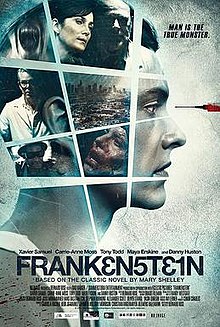
Another book you had translated the big screen was a modern-day reimagining of Mary Shelley Frankenstein which was 2015. Are there any other books that you would like to translate into film.
I’m sure there are, but at the minute I would rather not say (Laughs). That’s one of my favourite movies by the way and I think it’s a shame that it wasn’t more widely there
I’m not sure why because it played at Fright Fest didn’t it
I did and was very successful there and its available if anyone wants to check it out.
I guess you can never know what’s gonna work sometimes, you can make a great film which doesn’t quite get the audience
I think the problem, there was a bigger budget Frankenstein movie that came out the same year?
Continuing with themes of adaptions you wrote and adapted Clive Barkers Candyman, from the original story The Forbidden. With the current popularity of reboots and sequels at the moment, would you consider returning to the Candyman franchise at all?
You know they are making a sequel right now, so in a sense I feels its being done. Jordan Peele wrote the screenplay and its his take on it all which I think is very interesting so we will see how that turns out.
And do you have any other projects you’re working on at the moment?
I certainly do, but I can’t tell you.
And if someone’s looking to get into filmmaking, what advice would you give them?
Don’t! I think the best advice you can give anybody, especially nowadays with the technology which is much more available to people to make a film. I really want to see that film Bait (2019), it looks to me like somebody just shot on a clockwork bolex you know? But you don’t have to do that you can make one on your telephone. If you’ve got something to say, find a way of putting it together.
Samurai Marathon is available on Digital HD in the UK Now!

Published in various websites, Philip is a reviewer who is best known for his interviews and media coverage of independent projects including; films, books, theatre and live events. Always on the lookout for something different to cover!