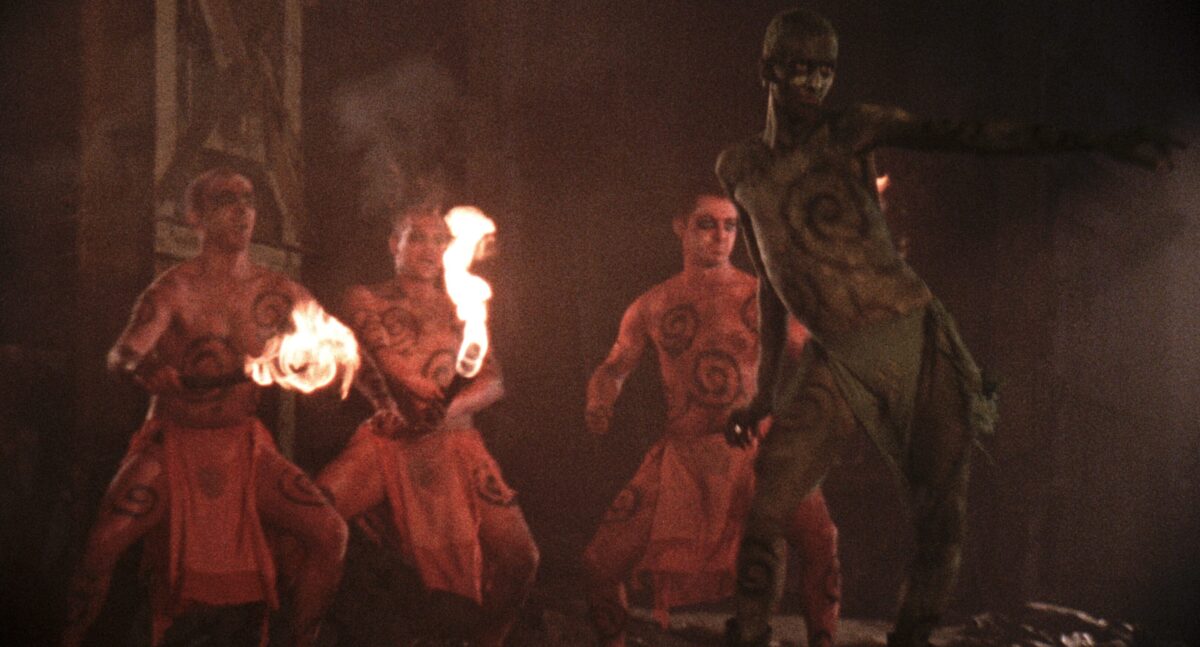
Film Name: Darklands (Directors Cut)
Director: Julian Richards
Writers: Julian Richards, David Mitchell
Starring: Craig Fairbrass, Rowena King, Jon Finch, Roger Nott, Dave Duffy
A newspaper reporter is lured into a mire of pagan rituals and human sacrifice.
In a new interview on Blazing Minds ahead of Horror-on-Sea I got a chance to ask co-writer/director Julian Richards a few questions about the remastered Darklands (Directors Cut).
Darklands (Directors Cut) will play at Horror-on-Sea on Sunday 19th January at 5:30pm
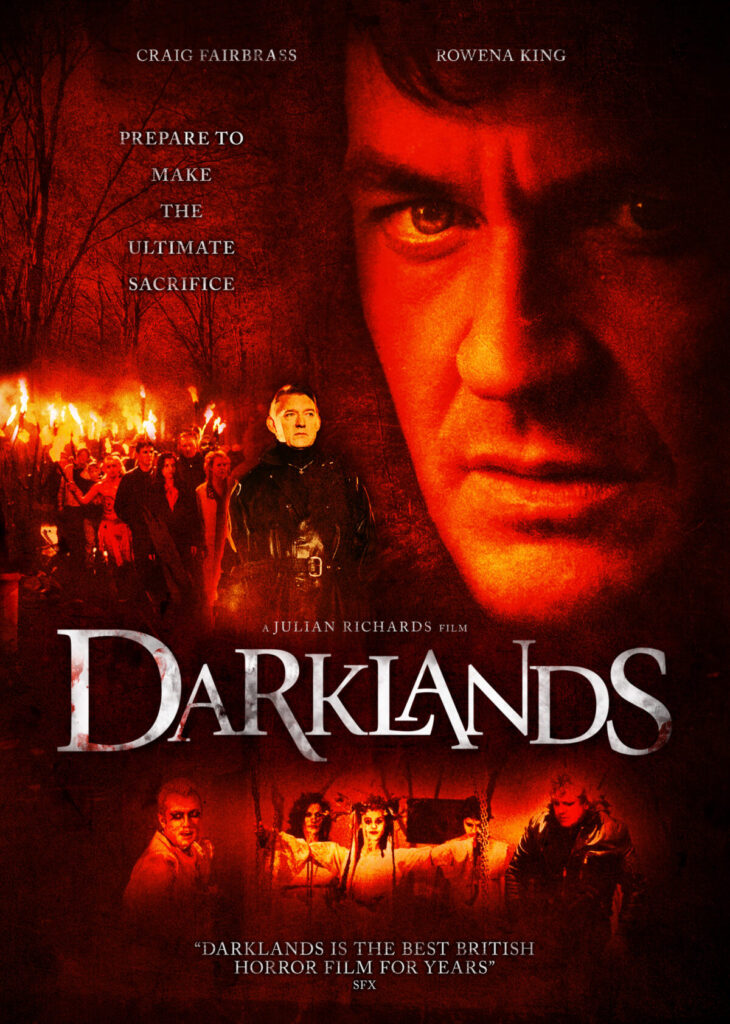
Q. Your film has been selected to play at the Horror-on-Sea Film Festival. Can you tell us what we
can expect?
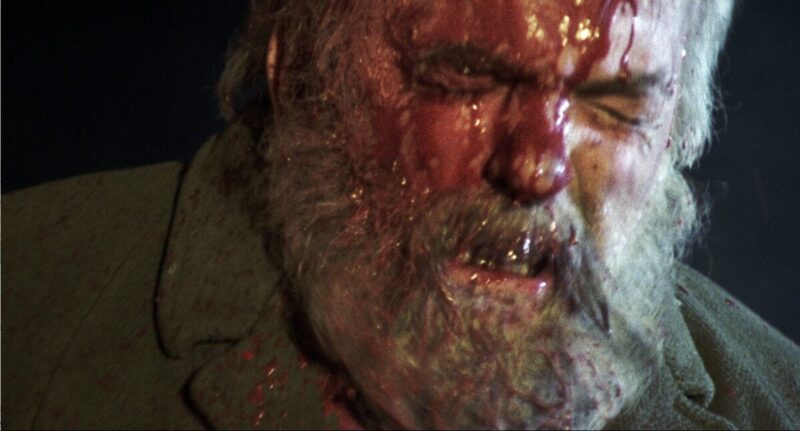
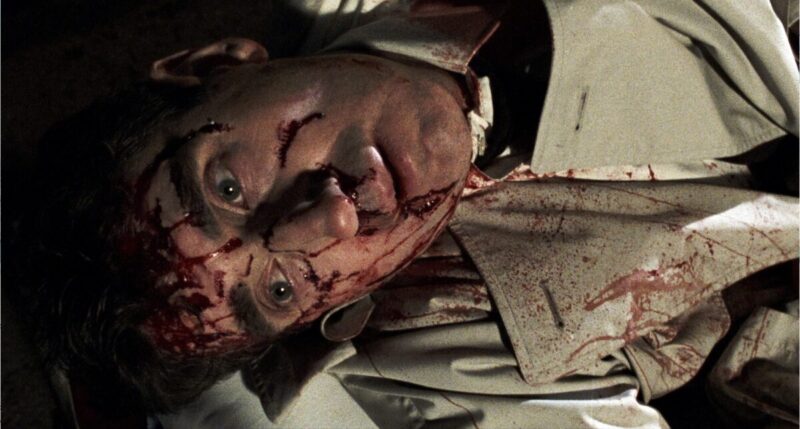
A. Darklands is my debut feature which I wrote and directed in 1996. It’s a folk horror inspired by The Wicker Man, The Omen, Rosemary’s Baby and Angel Heart, but it also delivers an original spin on the genre by placing the story in contemporary South Wales where the failing harvest is industrial instead of agricultural. Darklands is the first indigenous Welsh horror film, produced by Welsh filmmakers and financed by the Arts Council of Wales. It delivers the core ingredients of the genre (mystery, suspense, jump scares, gore) whilst also exploring contemporary Welsh themes including nationalism and cultural identity. In 1997, Darklands hit the festival circuit with screenings at Sitges, Brussels, Fantasy Film Fest, Bifan and Fantasporto where it won the Melies D’Argent for Best European Fantasy Film. In his book Urban Terrors, MJ Simpson identifies Darklands as the film that “paved the way for the revival of UK horror in the 21st century”.
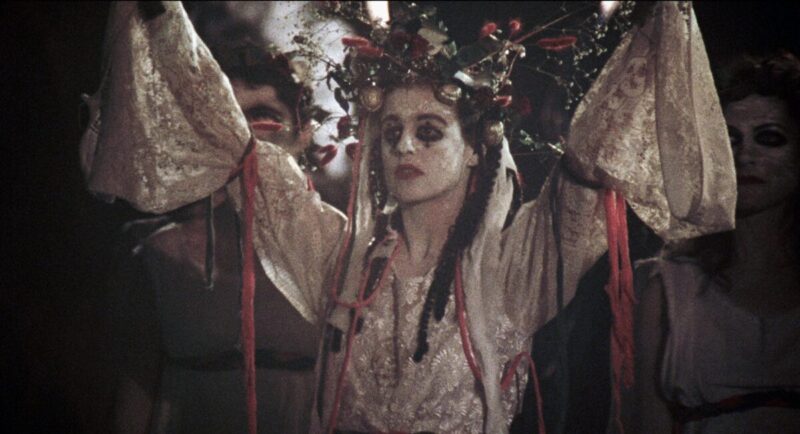
Q. You co-wrote the script with David Mitchell. What were some of your influences when writing
the script and what was your process for writing together?
A. I wrote the screenplay for Darklands over several years and David Mitchell did a dialogue polish a month or two before we started shooting. My strengths as a writer are story and structure, but I often need help fleshing out characters and dialogue. David Mitchell is an actor turned writer, so he was well equipped to address any shortcomings my script had.
I have already mentioned the horror films that inspired Darklands, but it’s also a conspiracy thriller with a heavy dose of mystery and suspense, so other significant influences include The Marathon Man, The Parallax View and Three Days of the Condor.
Darklands has also been described as a Welsh giallo, because of its murder mystery narrative, femme fatale and killer wearing black leather gloves. It was not my intention to make a giallo, but I am a fan of Dario Argento, so it’s likely that Suspiria, Opera and Tenebrae subconsciously rubbed off on the film.
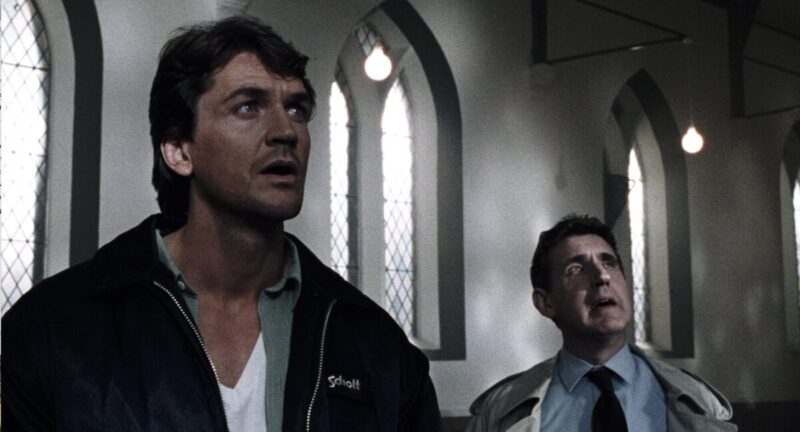
Q. What were some of your influences for the look and style of the film?
A. Darklands is a contemporary British film, so the look is social realism: dark and grey with tungsten streetlights. We shot the film on Super 16mm, mainly to save money, but also to give it a gritty, grainy look. The result is reminiscent of classic TV thrillers like Edge of Darkness and Defence of the Realm.
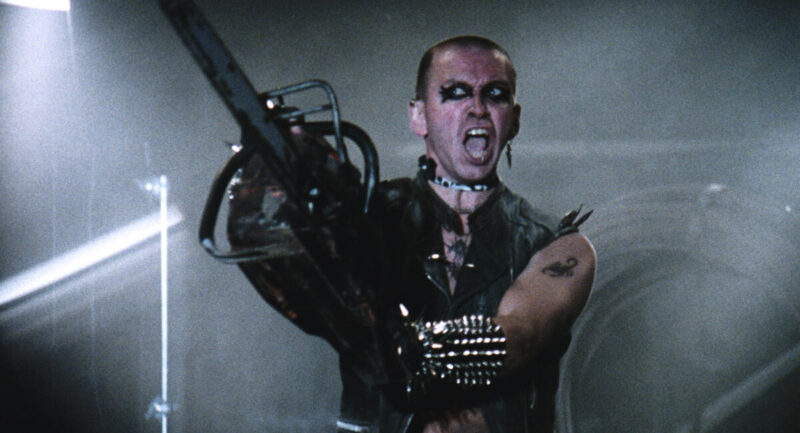
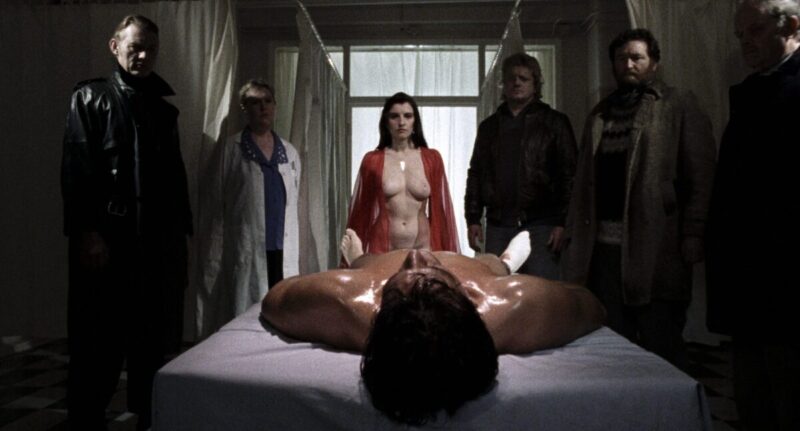
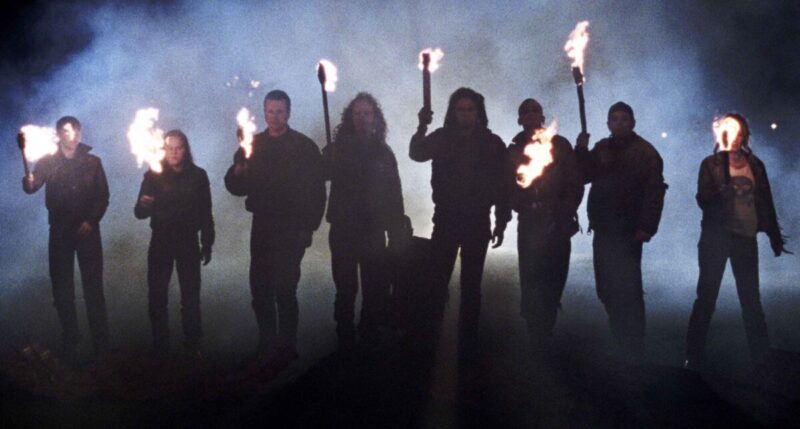
But Darklands is also a horror film with sequences depicting pagan rituals. For these scenes, director of photography, Zoran Djordjevic chose a more colourful palate including lilac to contrast with the cold muted colours of the newspaper office, police station and hospital. The baroque result is reminiscent of Hammer Horror Films such as Vampire Circus, The Devil Rides Out and Dracula AD 1972 which I grew up watching on late night BBC double bills.
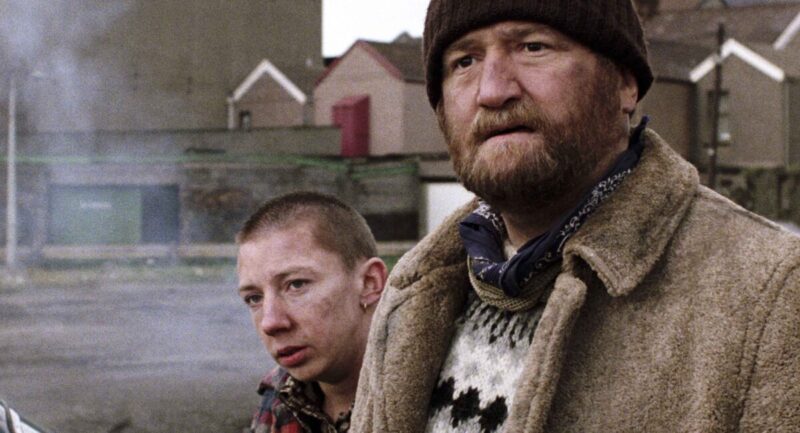
My idea with Darklands was to re-imagine paganism. To take an agricultural faith and make it industrial. This is why we chose Port Talbot as the main location, with its dark Satanic mills belching smoke and fire into the sky.
The circus performers were inspired by French cyber punks, Archaos and the music was inspired by industrial percussionists Test Dept and Brith Gof. Add to this the haunting voice of Welsh folk singer Heather Jones and you have a good reason to sit through the end credits and let the films dark nihilistic ending wash over you.
Q. Did you make any changes from the original script during filming?
A. Not during filming, but this new re-mastered director’s cut did give me the opportunity to address concerns that I had previously over-looked. The original version was too slow, so I removed and juxtaposed several scenes in the first half, reducing its runtime by six minutes. I also refined dialogue, removing exposition and lines that felt clumsy or repetitive.
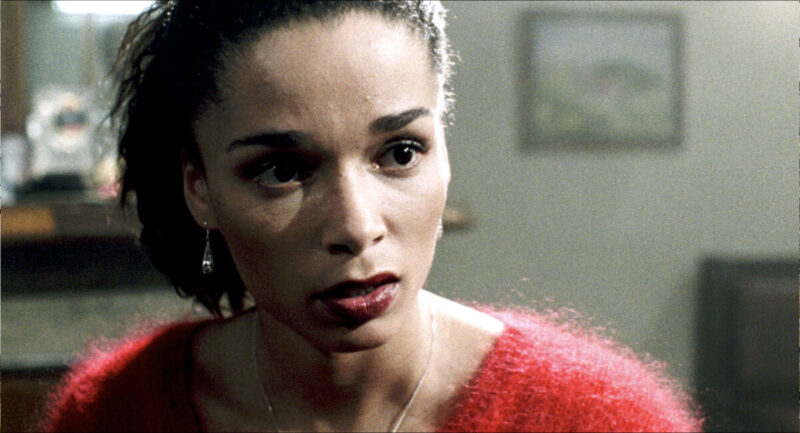
I also adjusted the picture grade, de-saturating colours, concentrating blacks and using shadow to hide anything distracting in frame, such as lighting cables on the floor or flowery wallpaper that was not in keeping with mood we were trying to create.
What were some of your favourite moments during filming?
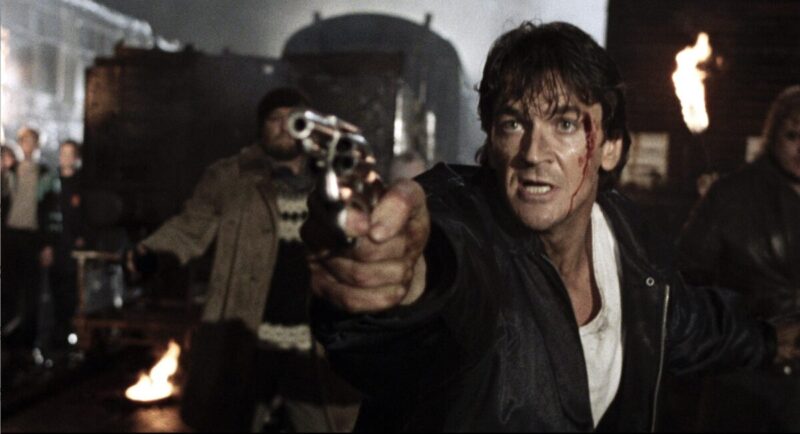
A. I enjoyed shooting scenes in the gypsy camp outside the steelworks. The location was terrific, so every time we set up the camera, I knew I was getting what I had imagined when I wrote the screenplay. I had a similar experience with the pagan rituals and also the railway sequence towards the end of the film. These scenes were extremely ambitious for a £500k budget, with animals, extras and a moving train. These locations serve the underlying post-industrial theme and give Darklands a distinctive atmosphere which I hope sets it apart from the films that influenced it.
Q. Did you experience any issues during filming?
A. The shoot was six, six-day weeks with at least twenty-four days of continuous night shooting, so it was very exhausting. On one occasion, driving home at 5am, I fell asleep at the wheel and woke up approaching a roundabout at sixty miles per hour. After stamping on the brake, the car went into a skid and ended up in a ditch. I climbed out to discover an ambulance behind me.
They used a tow rope to pull my car from the ditch and despite a smashed windscreen I was able to complete the drive home. Next day I realised I was suffering from concussion (having hit my head on the steering wheel) so I asked my second unit director, Chris Jones (White Angel) to take the helm for the day whilst I recovered.
Our locations were spread across South Wales including Newport, Barry, Port Talbot, Swansea and Lydney (which is on the English side of the border). This meant that we spent at least two hours each day travelling to and from location which reduced the time we had available for shooting and resulted in us falling behind on our schedule. To complete principal photography, we had to add a sixth week which increased our budget by about 15%.
It was difficult to find a church to shoot the scene where the priest discovers a dead pig hung over the altar. For the exteriors, I chose a church near Port Talbot with a background steelworks vista, but they would not give us permission to use the interior, so we discovered a de-consecrated church near Ebbw Vale which we used to film the interior scene with the pig. Ten years later I was driving through the same area looking for locations for Summer Scars and discovered that the church has now been turned into a mosque.
Another complicated location was the blast furnace at Port Talbot steelworks, which location manager Dewi Griffiths, miraculously obtained permission for us to use. With a skeleton crew we filmed a huge cauldron carrying hot molten metal across the vast interior of the factory before tipping its contents into the furnace. Halfway through the scene there was a loud, explosion and the crew ran towards the exit. It took a while for the site manager to convince us that we were not in danger and that such events are an everyday occurrence.
Q. What made you decide to release a director’s cut of the film?
A. I was at a loose end during lockdown and took the opportunity to track down the negative of Darklands and get it remastered to 4K HDR. I had previously discovered that the negative of my student short Queen Sacrifice, had been lost when the lab that processed it went out of business, so I wanted to make sure that the same thing did not happen with Darklands. Also, high definition did not exist when Darklands was telecined to video, so the only master I had was standard definition.
This limits potential for distribution on VOD, so it was necessary to re-master to HD if I wanted to keep Darklands viable. After several e-mails and phone calls, I learned that Soho Images, the lab that originally processed Darklands, had been taken over by Deluxe, and they were happy to give me access to the negative because both companies that produced the film, Metrodome Films and Lluniau Lliw, were no longer in business, so nobody was paying the storage fees. If I hadn’t acted when I did, it’s possible that the negative of Darklands would have been lost forever.
This remastering process gave me the opportunity to address problems with the film that I had become aware of since its completion in 1996. They say films are never finished, they are abandoned, but it’s also true that filmmakers mature and improve, and with the benefit of hindsight there were several aspects to Darklands that I wanted to improve. It was too slow in the first half, there was too much exposition in the dialogue, the lighting and colour grading was too bright, and the interior décor of some locations jarred with the tone of the film. I knew I couldn’t fix everything, but I could fix enough to make the effort worthwhile.
Q. What do you hope people take away after watching the film?
A. I hope that people find Darklands entertaining. I hope that they are engaged by its story and characters. I hope they enjoy the mystery, suspense, twists, turns, jump scares and gore. I hope they enjoy its style and atmosphere, locations and cinematography, the pagan rituals and music. But I also hope they engage with the subtext and that the film leaves them thinking about Wales, its history, past and present. Darklands is a metaphor or allegory about Wales which still resonates today with the closure of Port Talbot steelworks.
Q. Do you have any other projects which you are currently working on?
A. I have several screenplays in various stages of development; Code Red is an action thriller about two traffic wardens who tow a car belonging to the Russian mafia who lay siege to their pound after the wardens discover something valuable in the boot. Think Assault on Precinct 13 meets The Raid.
Wrath of God is an action horror set in Brazil, about an urban police force sent into the Amazon to prosecute an indigenous tribe who attacked a rural police station. Think Elite Squad meets Cannibal Holocaust.
Rabies is a US re-make of the Israeli thriller from 2010 which taps into the current zeitgeist of discourse and polarisation.
Q. If someone was looking to write and direct their own film what advice would you give them?
A. It’s all about the script. The underlying idea and the script. Get that right first and then you can think about directing. If you don’t have the chops to write a good script yourself, get the idea down on paper (so you own it) and then employ somebody else to write it.
If it’s your first film, try to keep it affordable, single location, found footage, anthology, short, proof- of-concept. My most successful film is The Last Horror Movie, a found footage, video diary of a serial killer which I shot on mini DV, handheld with available light for £60k. The film won The Melies D’Argent for Best European Fantasy Film and was distributed worldwide including a theatrical release in US by Fangoria and UK by Tartan.
Darklands (Directors Cut) will play at Horror-on-Sea on Sunday 19th January at 5:30pm
You can find out more about the festival and purchase tickets here

Published in various websites, Philip is a reviewer who is best known for his interviews and media coverage of independent projects including; films, books, theatre and live events. Always on the lookout for something different to cover!