

Film Name: The Reign of Queen Ginnarra
Directors: Lawrie Brewster
Writers: Lawrie Brewster, Sarah Daly
Starring: Megan Tremethick, Andrew Gourlay, Stephen Kerr, Stephen Corrall, Adam Barnett
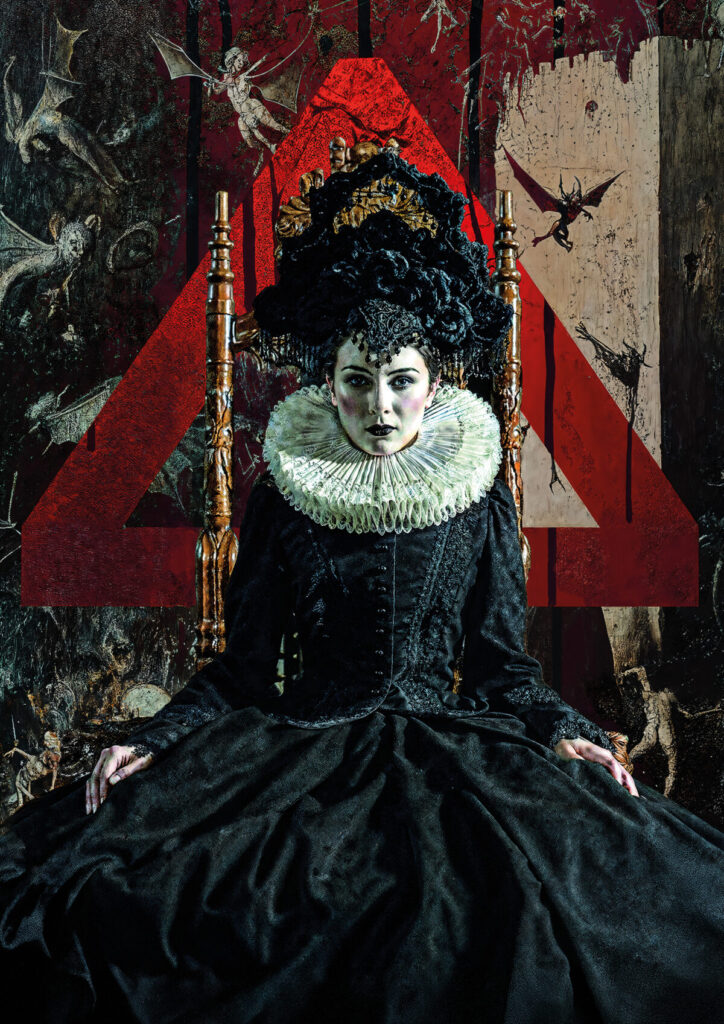
The Reign of Queen Ginnarra is a gritty, Lovecraftian sword-and-sorcery epic with a distinctly Gothic tone. At two and a half hours, it’s a genuine epic charting the tumultuous reign of a terrifying Queen, whose pact with the Old Ones requires a level of inhumanity rarely seen in the fantasy genre.
In a new Exclusive interview on Blazing Minds, I got a chance to ask actress Megan Tremethick a few questions about the new film The Reign of Queen Ginnarra ahead of its World Premiere at the Romford Horror Film Festival,
The Reign of Queen Ginnarra will play at the Romford Film Festival on Saturday, March 1st at 8 pm and Sunday, March 2nd at 5 pm.
Q. Your film The Reign of Queen Ginnarra has been selected to play at the Romford Horror Film Festival. Can you tell us what we can expect from the film?
I’m absolutely thrilled that The Reign of Queen Ginnarra is screening at Romford Horror Festival! This film is a dark, gothic horror-fantasy that takes audiences into a kingdom gripped by fear, prophecy, andmadness.
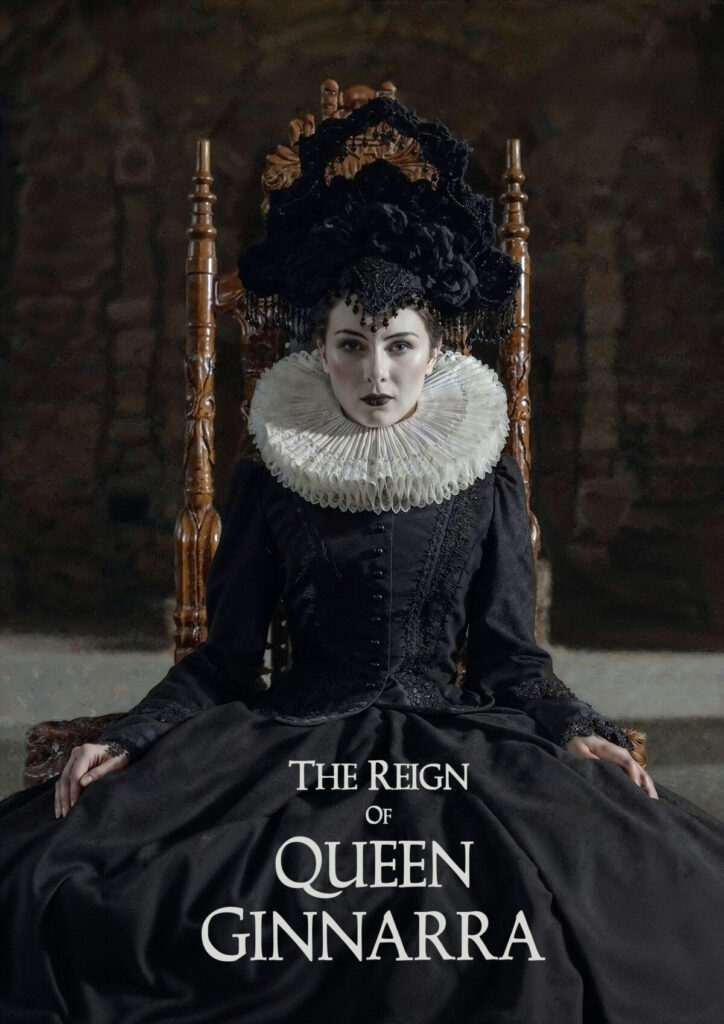
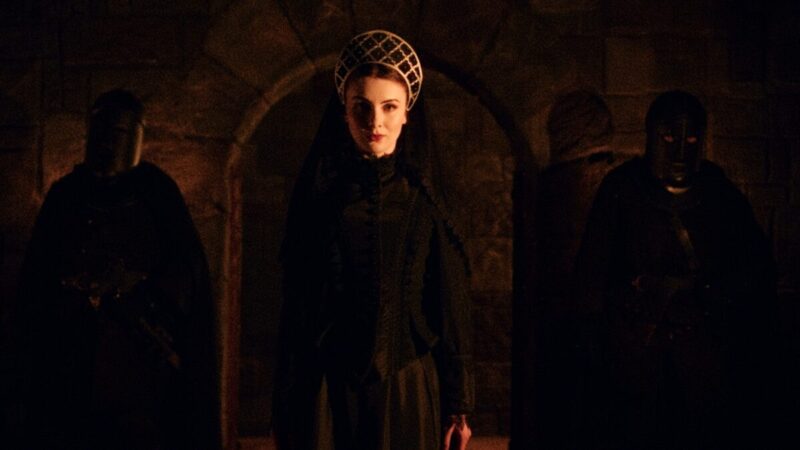
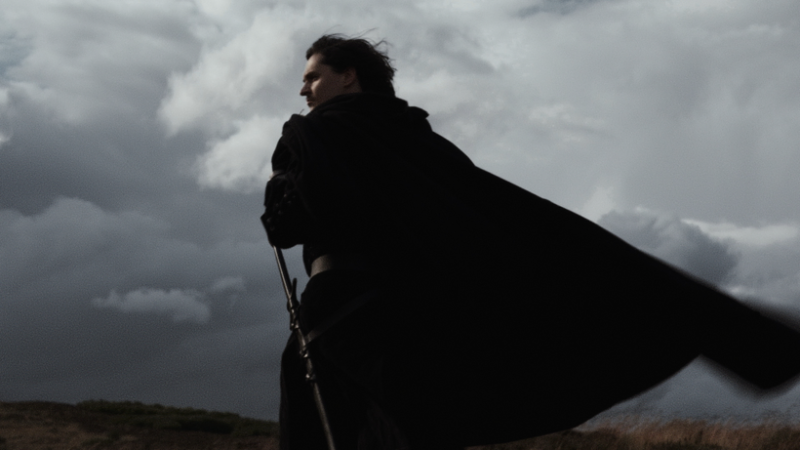
At its heart, the story follows Elderon (played by Andrew Gourlay), an exiled prince who never wanted power but is forced to return when his homeland falls under the rule of his sister, Queen Ginnarra (Megan Tremethick). She sees herself as a prophet, chosen by a dark god, and wields her supernatural connection to maintain absolute control. But the deeper she delves into this otherworldly power, the more unstable she becomes, blurring the line between divine purpose and terrifying delusion.
Alongside her is Raemin (Dorian Ashbourne), her son and a child of prophecy, whose presence is just as unnerving—he’s been raised under her rule, shaped by her beliefs, and he has his own cruel streak. Expect atmospheric dread, eerie mythology, and intense intrigue—along with some truly dark and chilling deeds carried out by Queen Ginnarra herself!
Q. What attracted you to the script and the character of Queen Ginnarra?
When I first read the script, I was utterly gripped by Lawrie Brewster and Sarah Daly’s incredible writing. I think I read the entire thing in one sitting, which says a lot because it was not a short script by any means! The story is so twisty and unpredictable, constantly keeping you guessing—you can never quite pin down any of the characters or their true motivations, especially Queen Ginnarra.
What really fascinated me about her was how layered and enigmatic she is. She projects this unshakable presence, ruling with absolute conviction, but beneath the surface, there’s something far more fragile and volatile at play. She keeps everyone at a distance, maintaining an almost untouchable image of herself—except when it comes to Raemin, her son. With him, she allows herself to be entirely vulnerable—perhaps too vulnerable. Their dynamic is deeply unsettling, and the way their relationship plays out is one of the film’s more sinister undertones.
Playing Queen Ginnarra was an incredible challenge because she’s commanding, chilling, yet tragically human all at once. She’s a character of contradictions—fierce yet fragile, revered yet feared—and that’s exactly what drew me to her.
Q. What sort of preparation did you do for the role?
To prepare for Queen Ginnarra, I did some historical research, particularly focusing on the Tudor period as well as the legend of Countess Elizabeth Báthory. I was really interested in how rulers throughout history have exercised power, controlled their image, and handled court intrigue. The Tudors, especially Elizabeth I, mastered the art of projecting strength while carefully concealing their vulnerabilities, which was something I really wanted to bring into Ginnarra’s character. Elizabeth Báthory, on the other hand, fascinated me in a completely different way—her reputation for cruelty and the dark myths that surrounded her felt eerily fitting for Ginnarra’s own ruthless rule.
Beyond the research, I also had a long conversation with the director and writer, Lawrie Brewster, where we discussed the history of how Ginnarra came to power—overthrowing her father and seizing the throne by force. Understanding this part of her backstory and motivations helped shape how I approached her as a character.
On a more physical level, I worked on controlling my expressions. I naturally have a very expressive face, so for Ginnarra, I deliberately stripped that back. She’s stoic, calculated, and gives very little away—every reaction is measured, making it unclear what she’s truly thinking or feeling. This was completely unlike any other character I’ve played, and I loved the challenge of embodying that restraint.
I also trained my eyes to not blink for as long as possible while rehearsing. The entire process of getting into her mindset was an absolute gift, and I loved every second of it!
Q. Are there any elements of the character which you feel reflect some of your own personality?
Oh my gosh, I really hope not, haha! To be honest… I’d actually say that Queen Ginnarra and I are almost total opposites. She’s someone who is incredibly controlled, calculating, and excellent at concealing her emotions—whereas I… well, I’m pretty terrible at hiding mine! I’m a self-proclaimed regular weeper, and anyone who knows me will tell you I wear my heart on my sleeve.
That said, I suppose there are some similarities. Ginnarra likes to wear extravagant outfits in order to project her image as more powerful. I… wouldn’t go that far myself… but hey, I’m not immune to feeling more confident when dressing up! Ginnarra is also incredibly ambitious, and if you stand in her way… well, let’s just say it doesn’t end well for you! I’d like to think I’m also ambitious, but… hopefully a tad less sadistic. But who knows?
Q. Did you make any changes to the character from how it was written in the original script?
As far as I’m aware, not really. When I read the script, there were already so many interesting and unusual elements about Queen Ginnarra on the page that I found incredibly inspiring for my performance. She was fully formed in the writing, so my job was more about bringing that to life rather than altering anything.
That said, there was one unexpected change on one of the days of shooting—though it wasn’t my doing! Director Lawrie Brewster made a last-minute decision just before we filmed a scene where Ginnarra was meant to walk down a dark castle hallway. Instead, it became pretty much an interpretive dance! At first, I assumed Lawrie was joking (he is frequently a man of many a jest), but I quickly realised… he was very serious.
I just went with it and did my best, and honestly, it turned out to be quite a strange and mesmerizing scene. I’m really glad the change was made because it added something even more unsettling and unique to the film!
Q. What were some of your favourite moments during filming?
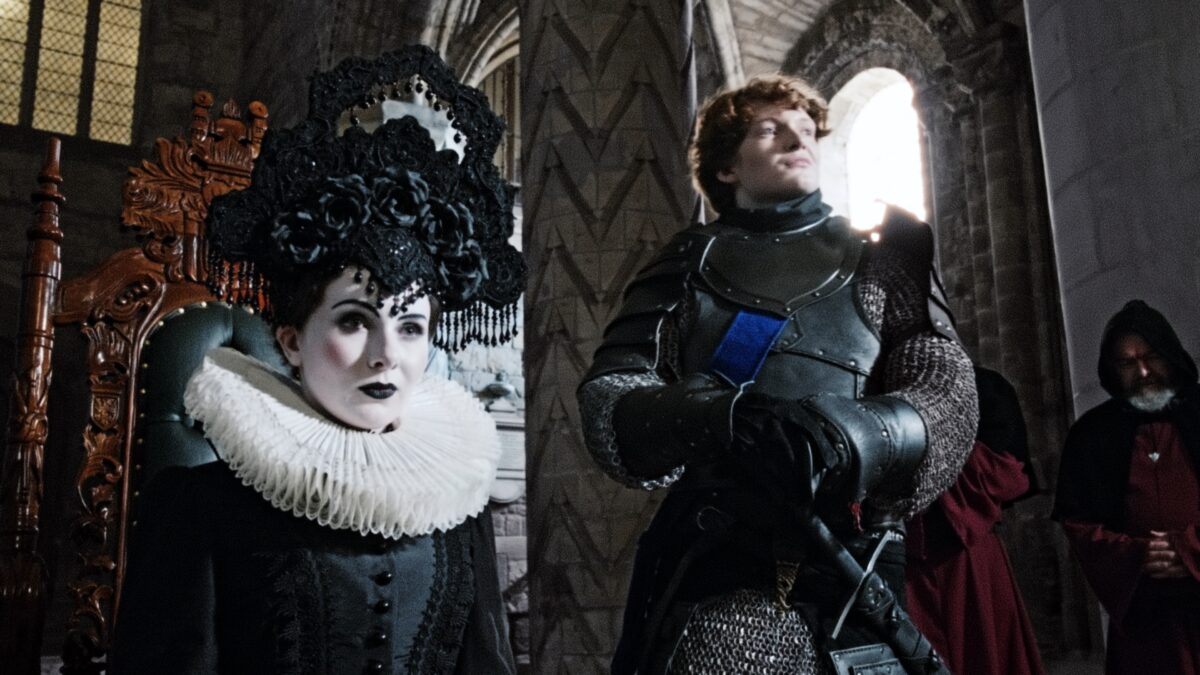
One of the biggest highlights for me was the day we filmed the Throne Room scenes in Dunfermline Abbey. The huge stone hall was absolutely stunning, and it really added to the grandeur and atmosphere of the film. It was also an incredibly fast-paced day—we had the location from 9 AM to 5 PM and had to shoot 14 pages in that time, which is a lot! But the cast and crew were so focused and disciplined, and somehow, we managed to get everything done.
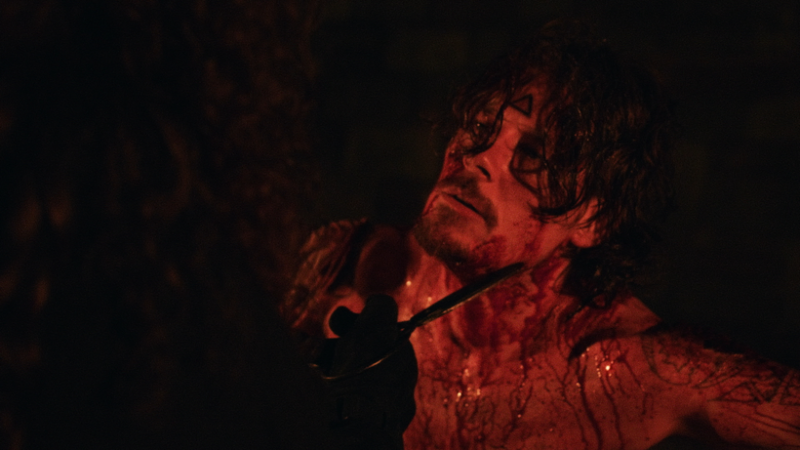
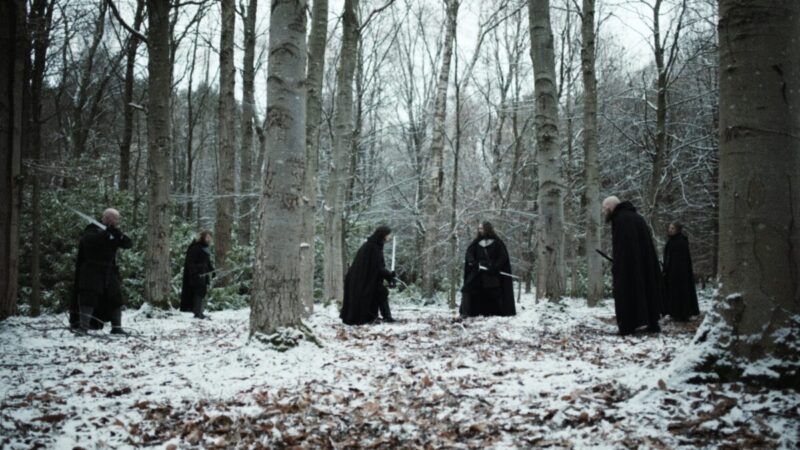
Another fun moment for me was when I was working on the film as a Makeup Artist (I often do makeup on projects when I’m able to!). I was painting triangles on the foreheads of the Black Claw Guard—Queen Ginnarra’s ruthless dark army of fanatics—before they went off to shoot their fight choreography in the woods. However, once the first few takes had started… most of the triangles began to sweat off their foreheads! It was absolutely boiling outside, and they were kicking so much ass that the makeup didn’t stand a chance! But I was there to reapply when need be!
Q. Did you experience any issues during filming?
The fight scene in the snow was definitely one of the biggest unexpected challenges during filming—but also one of the most rewarding! I was lucky enough to direct that day with a second unit, which was an incredible experience. The snow was a complete surprise for all of us, as it fell just a day or two before filming. Originally, we had a completely different location in mind, but at the last minute, we had to change plans because our cars couldn’t reach it in those conditions.
However, in the end, I’m so delighted with how the scene turned out. The snow made everything look even more dramatic, and with the cinematic shots Lawrie had in mind, it took on this incredibly striking, almost dreamlike quality. Our DOP, Michael Brewster, executed the visuals flawlessly, and the result feels like something straight out of an Akira Kurosawa film!
I also feel very lucky that Lawrie trusted me to collaborate on this day of filming. Getting to work closely with the talented actors and fight team was an absolute highlight. Sometimes the most unexpected challenges lead to the most stunning cinematic moments, and this was definitely one of those times!
Q. What makes The Reign of Queen Ginnarra stand out as something different in the horror genre?
What makes The Reign of Queen Ginnarra stand out is the way it blurs the lines between gothic horror, dark fantasy, and psychological drama, creating a film that is both grand and intimate, chilling yet deeply tragic. While it is steeped in the aesthetics of classic gothic horror, with its haunting castles, eerie prophecies, and cruel monarchs, it also has a mythic, almost Shakespearean quality that sets it apart from traditional horror films.
At its core, this isn’t just a story about supernatural forces or sinister rituals—it’s a film about power, devotion, and the terrifying lengths people will go to when they believe they are destined for something greater.
The film also has a deeply atmospheric, otherworldly feel, enhanced by its breathtaking cinematography, rich production design, and a truly unique score. There’s a slow-burning intensity throughout, and when the horror comes, it’s as psychological as it is visual.
Q. What do you hope people take away after watching the film?
I hope The Reign of Queen Ginnarra leaves people feeling haunted, intrigued, and maybe even a little conflicted. It’s a film that doesn’t just rely on horror for shock value—it explores power, devotion, and the fine line between faith and madness.
Queen Ginnarra is terrifying, but she’s also tragic. In her own mind, she isn’t the villain. She’s utterly convinced that what she’s doing is right.
I love films that linger with you long after the credits roll, and I hope this one does just that. Whether it’s the atmosphere, the performances, or the psychological layers of the story, I hope people walk away with something that sticks with them—something they can’t quite shake.
Q. Do you have any other projects which you are currently working on?
Absolutely! I have a really exciting mix of projects on the go at the moment. The Reign of Queen Ginnarra is about to make its big-screen debut at Romford Horror Film Festival, with the premiere on Saturday, March 1st at 8 PM and a second screening on Sunday, March 2nd at 5 PM. I’ll be attending alongside several members of the British Horror Studio team, and we’re all incredibly excited to finally share the film with an audience!
Beyond Ginnarra, I’m currently finishing up filming on my directorial feature debut, ‘Spoiling You’ — a psychological horror film with a unique ASMR-inspired approach. It’s been a rather ambitious first feature, but I’ve loved every minute of it, and I can’t wait to get it fully wrapped and into post-production soon.
I’m also continuing my work with British Horror Studio, Hex Studios, and Amicus Productions, with several exciting horror films on the horizon. I’ll be appearing in In the Grip of Terror, the highly anticipated return of Amicus Productions, directed by Lawrie Brewster and starring Academy Award nominee Jane Merrow and Laurence R. Harvey. I’m also part of ‘Black Chariot‘, a striking black-and-white neo-noir supernatural thriller, which stars Laurence R. Harvey, Novarro Ramon, Dorian Ashbourne, and Sam Barclay.
For those who want to keep up with everything happening at British Horror Studio, you can follow us on Patreon for exclusive updates and behind-the-scenes content!
Q. If some is looking to get into filmmaking what advice would you give them.
I’d actually recommend looking up British Horror Studio and even joining our Patreon (we have a free tier!). We’re building a community of both experienced filmmakers and those just starting out, creating a space where people can learn, collaborate, and get more involved in film projects. It’s a great way to connect with others in the industry, see behind-the-scenes processes, and even get opportunities to contribute to productions.
More generally, my biggest advice for anyone wanting to get into filmmaking is just start making things—even on a small scale. You don’t need a big budget to write, direct, or act in your own short films. Find a group of like-minded people, experiment, and don’t be afraid to make mistakes. Every project teaches you something new.
Another great way to get your foot in the door is to start by doing whatever job you can on a film set—not always your dream role. Getting hands-on experience in any capacity, whether it’s being a production assistant or a background artist, helps you understand the filmmaking process and build connections in the industry. Many people work their way up from unexpected roles, and the more you’re around film sets, the more opportunities will open up.
Also, just watch films. Period. Watch as many classic films as you can, as well as keeping up with the latest releases. There’s so much to learn from both—and how storytelling has evolved over time. The best filmmakers are always students of film, constantly absorbing new ideas and techniques. If you want to work in horror specifically, I’d really encourage studying indie horror films, because there’s so much creativity in that space.
You can follow Megan Tremethick on Instagram and find out more about the British Horror Studio and support them on Patreon
Tickets to The Reign of Queen Ginnarra Saturday, March 1st and you can purchase tickets here:

Published in various websites, Philip is a reviewer who is best known for his interviews and media coverage of independent projects including; films, books, theatre and live events. Always on the lookout for something different to cover!