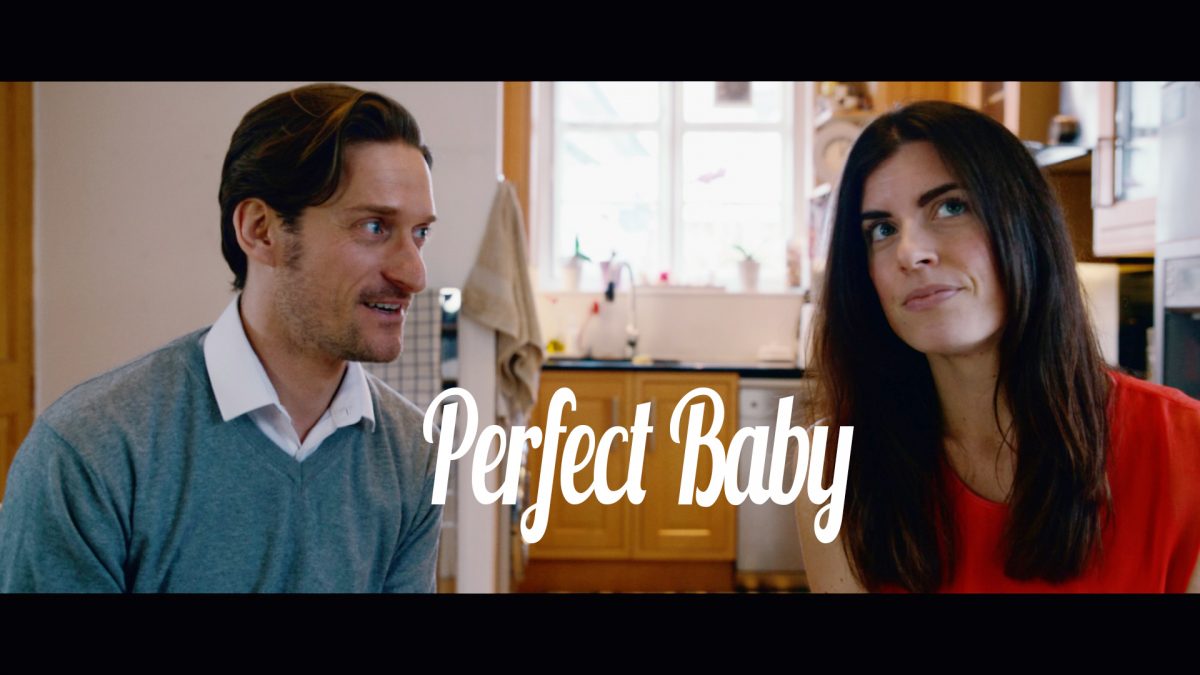


Perfect Baby (2018)
Director: Paul Rodriguez
Writer: Paul Rodriguez
Stars: Tawny Fontana, Marek Platek, Lucy Cheesemanm, Nikol Madjarova, Zak Mir
Set in a dystopian present, Jason and Emily Walker want to have a baby, but the government has strict rules that present them with challenges. The process is revealing, but not in the way they expected.
With the Southend-on-Sea Film Festival returning for its 11th year in May, I got an opportunity to ask director Paul Rodriguez a few questions about what we can expect from his short film Perfect Baby which has been selected.
Q. What can we expect from your new short film Perfect Baby?
Perfect Baby is a short comedy set in a dystopian present where the government have strict rules on the criteria for couples having children. Whilst it’s a comedic style, the message is serious one and it maybe be that we are heading towards this type of future.
Q. How did you come up with the original concept for the film?
The film was inspired by a TED talk I listened too many years ago talking about how DNA technology would allow genetic changes to babies to create so called ‘designer babies’. This led me to imagine how a couple might choose the attributes for their children in a similar way to how they might decide on the specifications of say a car – with money being a deciding factor.

Q. What were your influences for the look and style of the film?
I wanted a bright clean look to give a sense of technology and comedy. I looked at the Black Mirror series, which I’m a big fan of, for guidance, but I tried to create something that looks unique too.
Q. Did you make any changes to the original script or story whilst filming?
Yes, massively. A few days before the main location we had planned to use fell through – this meant I had to completely re-imagine the script. Originally the couple visited an office, but I had to film them at home and use a “Skype” type technology for their meeting – this completely changed virtually every scene. Also, there was a much darker ending alternative ending, but I decided on a lighter one in the edit.

Q. Did you experience any challenges whilst making the film?
Unusually for March 2018 when we filmed, the weather was very bad – it was snowing and so I had to make sure you couldn’t see out of the windows of the house as it wouldn’t match with a scene we filmed later. Because the location fell through it created the need for a lot more VFX and I hadn’t finalised on how this was going to work during filming. The main actors Tawny and Marek had to act towards imaginary characters on screen – to be fair they took this in their stride.
Also, there is a scene outside St Paul’s Cathedral that we shot one morning – there was a police helicopter that just wouldn’t go away so it made what was a relatively simple scene, a nightmare. But we got it in the end!
Q. What were some of your favourite moments during filming?
I was very pleased with the opening scene which involved a camera slider and racking focus in time with the actor’s movement. We actually used the first take which was great because we could move on the main action much quicker.
Tawny and Marek had great chemistry. I wanted them to be the sort of couple who are in love but are familiar enough for each’s little quirks to annoy each other. I wanted their argument to be believable, yet comedic and I was pleased with how that scene unfolded.
Zak Mir who plays Dr. Hanson is a non-actor and despite the challenges we had during filming his scene outside St Paul’s cathedral, his scene worked well.

Q. Do you have any new projects which you are working on?
Yes, I’ve number of short films in the pipeline that I hope to film this year. I’ve also got two horror features that I’m looking to raise money for – they are such strong stories I can’t wait to bring them to life. I’m always looking on the lookout for actors/actress and people who love film making. If that’s you drop me a line at info@rodproductions.com.
Q. If someone is looking to write and direct their own film, what advice would you give them?
Firstly you don’t need to be a writer and director – often it’s better to find a great writer or story and direct or vice versa. But if you’re looking to do both and you’re just starting out, practise on small scenes and think about how the camera should move as the scene unfolds. If you can get them right, you’ll get the big scenes right. You can usually tell within 5 mins of a feature film or 30 seconds of a short whether it’s going to be any good. Your job is to think of the audience and how they are perceiving the material. The audience are great at drawing conclusions, but you have to be careful not to show them things that are irrelevant to the story – that means keeping it as short as possible, but no shorter. The biggest mistakes I see are:
- Make sure the story is worthy of a film. Too often you seen incomplete ideas or stories that just don’t quite work. This annoys the audience as they expect to be entertained. Test your ideas on a few people who will give you honest feedback. Film making is hard work, even for the simplest scenes, so wait until you have a story that is worth telling and plan it as much as possible.
- Non-actors (and sometimes professional actors) giving a poor performance – that’s always the directors fault. Use good actors or make sure you have a good performance. There are plenty of great actors out there and some will even work for small amounts of money IF the story is good enough. That makes the story doubly important.
- Set the scene but cut to the chase. A five-minute film can feel like an eternity if it’s handled incorrectly – and 30 min short can zip by if it’s engaging. Find the most ADHD person you can find and see if you can keep their interest. If they start checking their phone, you’re in trouble.
- There are no rules on how anything should be done. Some directors are very technical and know all about lighting and the camera, others no nothing about that, but can communicate what they want to the crew. Film making is a team effort, that doesn’t mean bossing people about for the sake of it, it means getting the best you can out of what you’ve got. Make the actors feel comfortable, solve problems without being melodramatic and make decisions or delegate. Always keep a cool head no matter what happens as you can affect the mood greatly. I like to think of every problem as an opportunity – we lost a location but that gave us a chance to show more technology, that worked to our advantage.
- Show don’t tell as much as possible. Some films are dialogue driven, but remember it is much better to show where possible. People can tell by actions whether someone is happy/sad/scared/elated etc – the more you show the more efficient your film will be and the easier for your audience to follow.
- Don’t be afraid to make mistakes, but learn from them – your first films might be truly awful, but if you keep going, they will get better as long as you learn from the experience. Never stop learning, constantly trying to do better no matter what level you’re at will ultimately determine your success.

You can find out more about future projects from Paul Rodriguez on the website: www.rodproductions.com and Twitter
You can also find out more about the film on IMDB
The Southed-on-Sea Film Festival runs from Thursday 23rd May to Monday 27th May. You can find out more about the event and purchase tickets on the website https://www.southendfilmfestival.com

Published in various websites, Philip is a reviewer who is best known for his interviews and media coverage of independent projects including; films, books, theatre and live events. Always on the lookout for something different to cover!