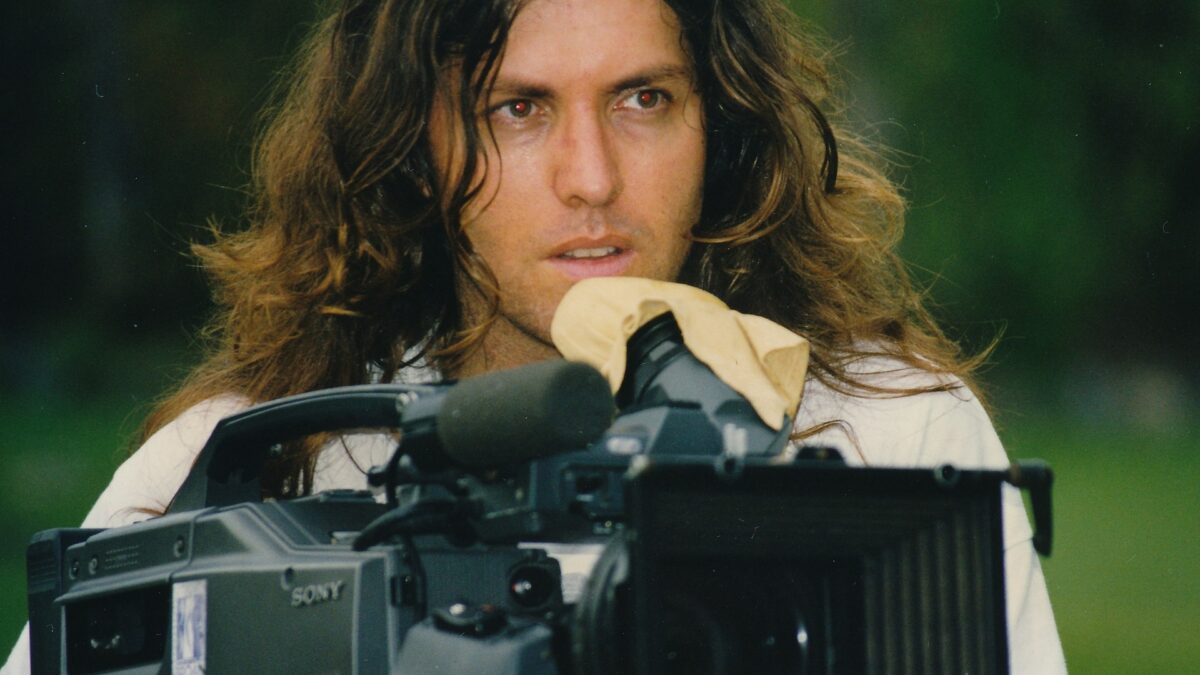


In a groundbreaking revelation, the 1995 film The Demons in My Head, directed by Neil Johnson, has been confirmed as the world’s first entirely digital live-action feature film. This landmark achievement in filmmaking is explored in the now-released documentary “Screaming In Digital“, directed and produced by Stuart Bannerman, which chronicles the creation and impact of this visionary project.
Neil Johnson’s visionary achievement “The Demons in My Head“, released in 1995, was an experimental and ambitious film that utilized cutting-edge digital technology for its entire production, breaking new ground in the world of cinema. In a time when the film industry was still heavily reliant on traditional analog film stock, Neil Johnson’s decision to shoot the movie digitally was revolutionary, marking a pivotal moment in film history.
Dealing with continuing harassment from local Christian groups and actors feuding on set during the height of summer in Australia, the film completed shooting in February of 1995. It was also unique at the time for featuring a gay character who would later transition to a woman.
Despite being told it was a mistake to shoot on digital, Johnson and his producer Jane Rowland, pushed ahead with the production that would be shot anamorphic widescreen on a freshly released digital cinema camera, and then edited, mastered and colour graded inside a computer (the now defunct Imix Stratosphere). It was even projected digitally in a cinema on the Gold Coast in Australia, near the end of 1995.

The film sold in over 20 territories worldwide but was rejected by a few countries who considered the presence of a gay/transgender character to be unacceptable to their culture in the mid-nineties.
Created with a minimal budget, Johnson’s bold experiment proved the viability and potential of digital technology for storytelling on the big screen. The film’s digital format not only delivered high-quality imagery but also set the stage for the digital revolution that would transform the industry in the years to come.
The Digital Revolution and Screaming In Digital Documentary
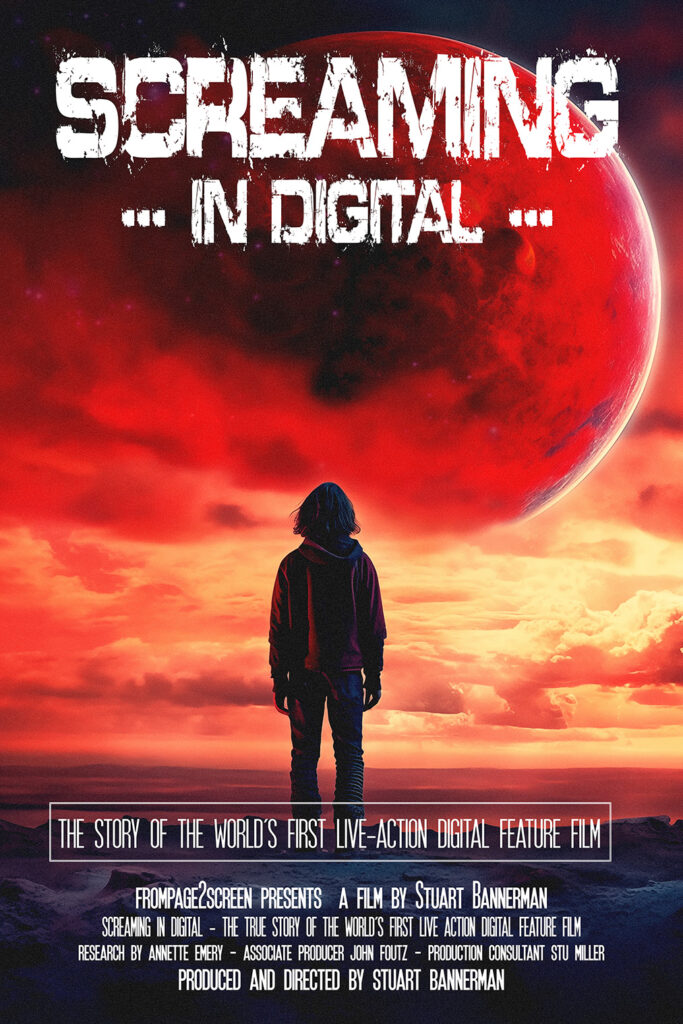
In “Screaming In Digital”, Stuart Bannerman delves deep into the story of “The Demons in My Head”, featuring interviews with Neil Johnson, the cast and crew, as well as other influential figures from the tech and film industries who were involved in the digital filmmaking movement of the 1990s. The documentary explores the technical challenges Johnson and his team faced, the cutting-edge technology they used, and the cultural impact of their trailblazing work. It also features a behind-the-scenes look at the making of “The Demons in My Head”, including how it was shot on the prototype Sony DVW-700, the first professional anamorphic digital camera to be used in filmmaking.
Stuart Bannerman’s film highlights the unheralded nature of Johnson’s achievement and the critical role “The Demons in My Head” played in proving the concept of digital film production. Despite being largely overlooked at the time, the film has since earned its place in cinematic history as a milestone in digital cinema.
“At the time, and for the next five years, I was a laughing stock in the local Australian film industry,” said Neil Johnson. “Even my second and third films were fully digital and sold internationally, but I was never even acknowledged by anyone. And then a chance meeting with Rick McCallum and George Lucas changed everything.”
Impact on George Lucas and Star Wars: Episode II – Attack of the Clones
One of the most significant indirect impacts of “The Demons in My Head” was on the decision- making of George Lucas and producer Rick McCallum when it came time to make “Star Wars: Episode II – Attack of the Clones”. In the late 1990s, Lucas and McCallum were evaluating the possibilities of digital technology for the Star Wars franchise. While “The Demons in My Head” was not the only factor influencing their decision, the film’s success in utilizing digital technology demonstrated the potential of shooting an entire feature digitally—something Lucas and McCallum had been contemplating for years.
Ultimately, this contributed to their landmark decision to make “Attack of the Clones” the first major studio film to be shot entirely on digital cameras. While Lucasfilm’s decision to go all- digital with “Episode II” was rooted in a desire to push the boundaries of filmmaking technology, the groundbreaking use of digital on “The Demons in My Head” helped validate the concept and inspired confidence in the broader film industry. It was a critical step in the evolution of digital cinema, leading to the widespread adoption of digital filmmaking in Hollywood and beyond.

A Look Back at a Landmark Moment in Film History
At the time of its production, “The Demons in My Head” represented the cutting edge of digital technology, and it was shown primarily in theaters with digital projection equipment, a rarity during the mid-90s. The film was not only an artistic success, but it also drew attention to the economic advantages of digital filmmaking, from lower production costs to faster post- production processes. Though its initial reception was modest, the legacy of “The Demons in My Head” continued to grow as the digital revolution gained momentum, culminating in the widespread use of digital cameras in mainstream cinema in the 2000s.
“The Demons in My Head” remains a testament to the ingenuity and foresight of its director, Neil Johnson, whose foresight ultimately helped pave the way for digital filmmaking in Hollywood and beyond. The film has been recently upscaled to 4K and is available for a limited time on youtube before being re-offered to streaming services later in the year.
The film is still in print on DVD around the world (under a variety of titles), including USA, Germany, Holland, Switzerland, and the UK.
This film helped pave the way for Neil Johnson’s latest 10 hour limited series “The Time War”, which uses production techniques that were developed in 1995, and now opens the door to new shooting methods that are clearly displayed in the new series, literally 30 years in the making.

Karen Woodham is the founder and owner of the Blazing Minds. She is also a Cinema reviewer and works with RealD 3D reviewing the latest 3D releases and IMAX, she has also had several articles published in various publications including the first edition of SFW Magazine. In 2015 she became an Award Winning Blogger and also has her website listed as one of the UK’s Top 10 Film Blogs.