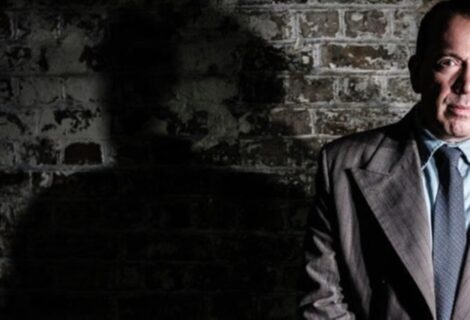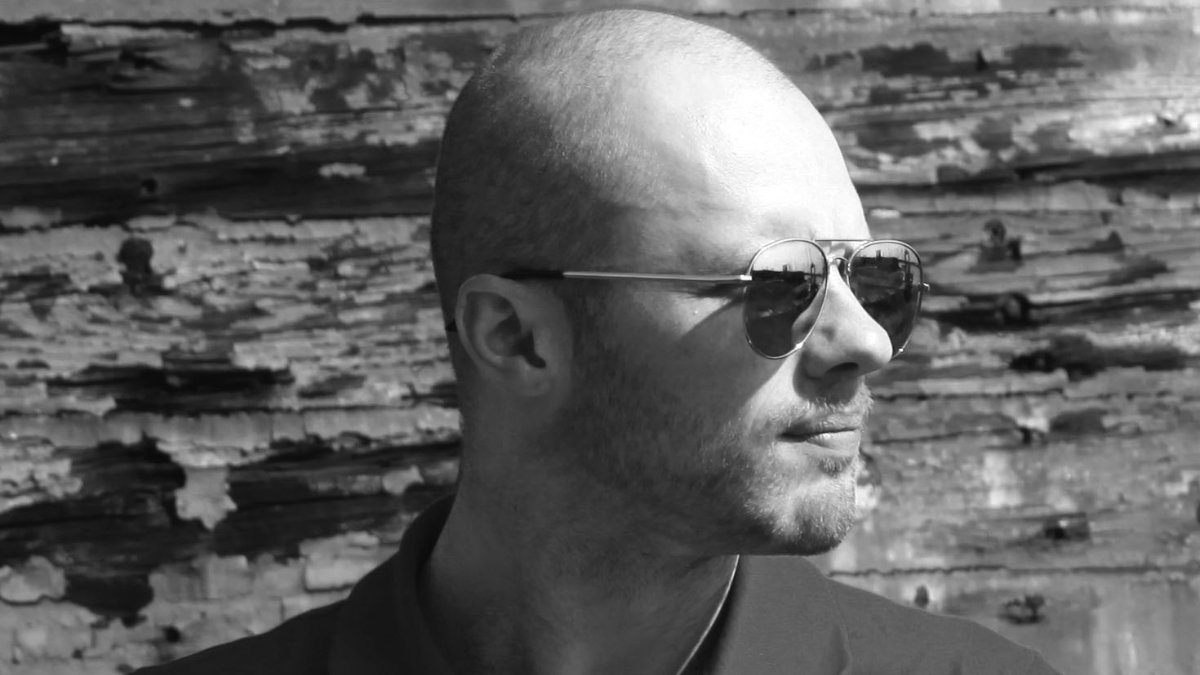


Sci-fi visionary Robert Ratcliffe has detonated his concept album Chronicles of the Residuum: The Age of Destruction – released in sync with World Audio Day. This isn’t just music—it’s a cinematic apocalypse in sound. Across thunderous beats and orchestral firepower, listeners are hurled into the Residuum: a shattered world where warrior Anku battles to protect the child Unagu against forces that threaten time itself. Built over a decade on a battered twelve-year-old laptop, Ratcliffe’s magnum opus channels the spirit of Jeff Wayne and Rick Wakeman while fusing the raw energy of The Prodigy, Aphex Twin, and Hans Zimmer into a visionary sonic storm.
From the adrenaline blast of first single Escape from Port Fallen to the sweeping landscapes of decayed cathedrals and floating islands, every track is a battle cry of survival and hope. Ratcliffe’s relentless ambition pulled in Grammy-winner David Donaldson, voice artist John Cavanagh, Game of Thrones language creators David and Jesse Peterson, and Magic: The Gathering artist Igor Kieryluk—with industry titan Nick Halkes of The Prodigy steering the vision. The Age of Destruction isn’t just the first album in the Chronicles of the Residuum series—it’s a genre-smashing, future-shaping epic that obliterates boundaries between music, fantasy, horror, and sci-fi. This is more than sound. It’s an experience. We decided to find out more from the talent behind the project – Robert Ratcliffe:
1. What inspired the post-apocalyptic world of the Residuum, and how did the concept evolve over the 10 years you spent crafting the album?
The idea for the Residuum came from my fascination with worlds that have slipped out of alignment — not just ruined landscapes, but realities where the rules themselves have broken down. I’ve always been drawn to post-apocalyptic fiction, the Dying Earth genre, and altered-reality narratives, because they explore what happens when time, identity, and memory start to fracture.
Visually, the project first emerged through pen-and-ink sketches: ruined structures, impossible architecture, and places that felt both ancient and futuristic. As I explored these ideas, the world became stranger influenced by optical-illusion art, anamorphosis, shifting perspectives, and the kind of mind-bending structures you find in the work of M.C. Escher. I was also thinking a lot about unanswered questions in physics, neuroscience, and cosmology, including ideas about time, consciousness, and reality that don’t yet have clear explanations. All of this fed into the concept of the Residuum as a place where the natural laws have warped, time had fractured and reality had scrambled itself.
The story actually arrived later. I composed most of the music first, and once the tracks were sequenced, the order suggested a journey, a quest through a deteriorating world that becomes progressively less stable. That structure gave me the framework for the larger arc that eventually became Chronicles of the Residuum.
2. Can you walk us through the storyline of the album? Who is the mysterious warrior, and what’s at stake in their quest to save time and reality?
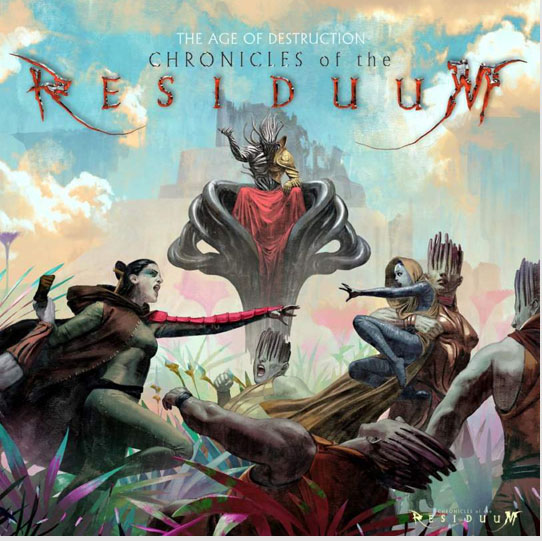
At the centre of the story are Anku, a warrior and protector, and Unagu, the child she must keep safe. Unagu is the only child ever born within the Residuum, a prophesied figure believed to be the key to restoring what was lost when time and reality collapsed. Together, they move through a world that has been broken in ways that bend logic, memory, and perception.
What’s at stake for them isn’t just survival. In the Residuum, time and reality have been shattered, and powerful forces want to erase what remains forever. Their journey becomes a fight not only for the child, but for the possibility that their world, however damaged, might be repaired.
Each track on the album is a chapter in their progression through this warped landscape: from the desperate, high-stakes escape of Escape from Port Fallen, to the terrifying visions unleashed in Eye of Ronayosho, to the eerie, dislocated stillness of The Fog. As Anku and Unagu move deeper into the Residuum, every step reveals another layer of danger and another piece of the world’s broken history.
3. You’ve described the album as a sci-fi epic. How did your love of science fiction and fantasy influence the music and narrative?
Science fiction, fantasy and horror have always been constants for me. I’ve always been drawn to imagined worlds, strange futures, alternate realities — not just to escape, but to explore ideas in ways everyday life doesn’t allow. When I began Chronicles of the Residuum, the aim from the outset was to build a world that deliberately blended elements from all three genres, filtered through my own imagination.
One of the main ways that shows up is in the sound design. The residuum is a fractured reality: part ancient myth, part far-future ruin, part distorted echo of our own world, and the sound palette had to reflect that. Sometimes I would use sounds that had a referential quality, that hint at recognisable structures or technologies from our own civilization. For example, in Escape from Port Fallen you can hear vehicles and industrial remnants from what used to be a naval shipyard. In Cathedral of Time, there are organ passages, choral sonorities and bell tones that evoke fragments of gothic and religious architecture still standing in the Residuum.
Alongside those familiar traces, there are sounds that have no real-world equivalent: synthetic, twisted, heavily processed sounds that couldn’t exist anywhere except in a distorted reality. That contrast between the recognisable and the unreal was essential for capturing the strange, unstable nature of the residuum.
Narratively, those genres shaped the tone: a world that feels mythic and futuristic at the same time, where ancient prophecy sits alongside the debris of fallen far-future civilisations. That blend is at the heart of the story and the music.
4. Escape from Port Fallen and Storm Flight are gripping singles set at the beginning of the narrative. Does your songwriting happen in a linear story-arc fashion?
Not at all. Nothing about this project unfolded in a straight line. The tracks weren’t written in the order they appear on the album, and the story didn’t exist until after most of the music was finished. Once I found a running order that felt like a journey, the narrative emerged from that structure.
Escape from Port Fallen is a good example. Despite sitting near the front of the album, it was the last of the main tracks I composed. After sequencing the rest of the album, I realised there needed to be a bridge between the Prologue and Storm Flight that was immediate, high-impact, and propulsive enough to drop the listener straight into the world. It became the “in medias res” entry point, and one the most direct tracks on the record.
The other late structural addition was adding music and sound design beneath the narration on Knights of the Mem Ittarai / The Prophecy and the other narrative passages at the beginning and end of tracks, which helped to link everything together.
Compositionally, the workflow was equally non-linear. Some tracks came together quickly from start to finish, such as Eye of Ronayosho and Attack of the Iksi’e. Others were built in sections because of the complexity of the material and the limitations of the old system I was working on (which I talk about later). With Storm Flight, I actually began with the most vivid anchor points: the approach to the storm, the awe-inducing sight in the eye, and the final ascent into clear sky. Those scenes existed in my mind like storyboards, and everything else in the track was built around them.
Cathedral of Time(Part 1) began with its own set of referential anchors: the opening organ music; the dark, enclosed atmosphere of the crypt; the cloister-like courtyard filled with vegetation and wildlife (loosely inspired by the cloister at Durham Cathedral). Later, the organ solo in Part 2 became another pillar. Those elements established the environment, and the rest of the track unfolded from there.
There were also times when I had to step away entirely. Lizards of Death, for example, took shape over a long period because I kept losing objectivity. At one stage I shelved it for nearly a year and returned with fresh ears. That became part of the rhythm of the whole project: moving between tracks, switching focus when needed, keeping ideas in rotation until the right solution appeared.
All of this: the reverse workflow, the unusual composing methods, the forced limitations of old hardware gave the project an unusual coherence I don’t think I could have achieved if I’d started with a traditional script-first approach. And in a way, the method ended up echoing the world of the Residuum itself: fractured, distorted, assembled from shards of different times and places, and ultimately made whole.
5. You created this project on a 12-year-old laptop — what challenges did that present, and how did it shape the final sound?
Quite early on, I knew the sound palette I wanted to explore: the energy of ’90s electronic dance music fused with the cinematic sound design you hear in modern film and game scores. To achieve that, I decided to work entirely inside the computer rather than rely on my old hardware synths and modular gear.
But that decision came with a huge challenge: my main machine was an old laptop running a 32-bit version of Ableton Live, which I didn’t initially realise could only access 4GB of RAM. For music this detailed, with large Kontakt libraries, layered cinematic sound design, and dense electronic textures there simply wasn’t enough memory to load whole tracks into a single session.
The workaround was to compose each track in multiple, highly detailed sections, render those sections as a collection of audio files, and then stitch everything together in a separate arranging session. It was slow and technically awkward, but it became part of the album’s identity: the Residuum is a world built from fragments, and in its own way, the music was built the same way.
6. The album blends music, art, and pop culture. Were there any specific artists, films, or books that influenced your creative direction?
There were so many influences that fed into the project that it’s impossible to list them all, but a few stand out.
Musically, Jeff Wayne’s The War of the Worlds was a big one. Not the sound itself, but the ambition of telling a story through music, narration, and artwork. That album was a huge part of my childhood, and getting to speak with Jeff recently felt like closing a loop.
The DNA of ’90s electronic music is equally present. Albums like Leftism,Dead Cities, Orbital’s Brown Album, and Music for the Jilted Generation were major influences. That mixture of energy, atmosphere, and sound design is embedded in the Residuum. On the cinematic side, composers like Hans Zimmer and Tom Holkenborg shaped the hybrid soundworld that mixes orchestral scale and electronic intensity.
Visually, I drew a lot from the darker imaginative worlds of H.R. Giger, Zdzis?aw Beksi?ski, John Blanche, and, of course, Igor Kieryluk, who created the artwork for the project. The comics and graphic novels I read as a teenager were equally important, especially 2000AD, and in particular the strip Revere (illustrated by Simon Harrison), which had a surreal, close-to-psychedelic quality that resonated with me. Other visual influences include Dave McKean’sArkham Asylum, and Ian Miller’sThe City.
Film-wise, the Mad Max series fed into the sense of collapse, desolation, and post-apocalyptic scale, while The Matrix influenced the album’s interest in altered realities, fractured time, and the unsettling feeling that the rules of the world have shifted. I’m also drawn to the structural inventiveness of Christopher Nolan, especially his non-linear forms, and the twist-driven storytelling of M. Night Shyamalan. Those ideas about perception, perspective, and hidden layers definitely fed into the narrative and the album’s structure.
In literature, there were three main strands. The early visionaries: H.G. Wells, Olaf Stapledon, Jules Verne, who imagined radical futures and alternate histories long before those ideas were mainstream. The epic world-builders: Tolkien, and Frank Herbert, whose languages, lore, and sense of deep time influenced the scale of the Residuum universe. And then the Dying Earth authors: Gene Wolfe and Jack Vance, whose mythic, decaying far-future worlds shaped how I think about time, memory, collapse, and the weight of history.
All of these influences fed into different parts of the project — the music, the story, the visuals — but none of them dictated the outcome. The Residuum ultimately became its own world. The album was shaped less by any single source and more by the way these influences collided, filtered through my own aesthetic, and adapted to the warped, nightmarish, distorted nature of the Residuum itself. What emerged is a world that feels familiar in places, but fundamentally strange.
7. How do you envision listeners experiencing the album — should they treat it like a cinematic journey or a traditional music release?
Ideally, I’d love people to experience it as a cinematic journey, almost like a film without the visuals. It’s designed to be listened to in sequence, so the music and narration unfold in a deliberate arc from beginning to end.
Each track flows into the next like a series of connected scenes. And if you listen closely, you’ll hear recurring musical ideas shaped by leitmotif: specific themes, textures, and sounds associated with characters, forces, or moments in the story. When these motifs return, they don’t just repeat: they carry narrative meaning with them. Some of that meaning is obvious; some of it is deliberately hidden, pointing toward events, relationships, and revelations that won’t become clear until later in the trilogy. This is one of the ways the album behaves more like a cinematic narrative than a traditional music release, as the music is telling its own version of the story beneath the narration.
But it also works as pure music. Most of the album was composed and produced before the narration was added, so the instrumental version (coming next year) stands completely on its own. Listeners can choose whichever entry point they prefer.
8. What emotions or messages do you hope fans take away from Chronicles of the Residuum: The Age of Destruction?
At its core, the album is about hope, even when everything around you looks beyond saving. The Residuum is a harsh, broken world: deserts, wastelands, ruined cities, fractured timelines. It’s the aftermath of a cataclysmic event that shattered reality itself. Most of it is unforgiving, hostile, and warped.
But scattered through it are a handful of fragments from before the collapse — places that still hold a trace of beauty or memory from the world that once existed. Those fragments show what’s been lost, and more importantly, what might still be recovered, if the characters can hold on long enough. Those elements reflect anxieties in our own world: environmental collapse, war, political instability, and uncertainty about the future. The Residuum embodies the fear that we may be edging towards irreversible outcomes, but also the possibility that we still have choices left to make, collectively and individually, that can change the direction of the story.
9. Looking ahead, do you see this album as the beginning of a larger saga or universe you plan to expand on in future projects?
Absolutely. The Age of Destruction is only the beginning. Chronicles of the Residuum is the collective title for a planned trilogy, in the same way that The Lord of the Rings refers to the whole saga rather than a single book. This first album lays the groundwork, but there’s a much larger story unfolding behind it.
Across the trilogy, listeners will uncover the truth about Anku’s past in the Time Before, long before the Residuum came into existence. Her origins are central to the wider conflict: the vast, millennia-long war between the Obranage (The Enlightened Ones) and the Jarege Khalo (Shadows of Illusion). Everything is moving toward the final confrontation between these forces of creation and destruction.
It won’t all be told in a single linear sequence. There will be spin-off stories that explore different corners of the Residuum, and the next musical release may actually be a prequel: beginning in Tazhna Dojumpima — the Deserts of Anonymity — where Anku first awakens inside the Residuum and is rescued by the Kanchekona (Unagu’s people). These events all take place before Escape from Port Fallen.
Sonically, the universe will keep evolving. Part Two of the trilogy will likely be darker, more fragmented and unstable, mirroring the accelerating collapse of the world itself, but melody will remain the emotional anchor.
Alongside the music, the world is expanding in other ways: a graphic novel adaptation, an immersive Dolby Atmos version of the album, a live show combining visuals, narration and performance, and a nu disco remix of Dream Within a Dream by Nick Reach Up (Nick Halkes) releasing 12th December.
The goal isn’t just to continue the story, but to keep building a world dense enough, immersive enough, and detailed enough that people can genuinely get lost in it.
The Residuum is calling. Are you ready to step into the unknown?
DISCOVER CHRONICLES OF THE RESIDUUM:

Karen Woodham is the founder and owner of the Blazing Minds. She is also a Cinema reviewer and works with RealD 3D reviewing the latest 3D releases and IMAX, she has also had several articles published in various publications including the first edition of SFW Magazine. In 2015 she became an Award Winning Blogger and also has her website listed as one of the UK’s Top 10 Film Blogs.