Awoken (2019)
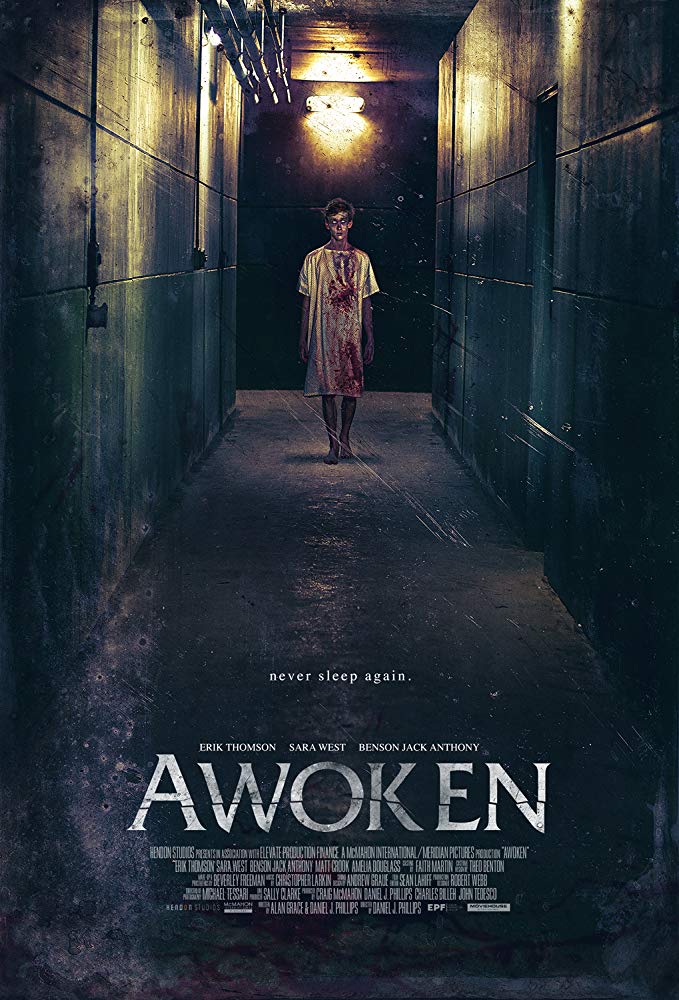
Director: Daniel J. Phillips
Writer: Alan Grace, Daniel J. Phillips
Starring: Erik Thomson, Benson Jack Anthony, Sara West, Felicia Tassone, Adam Ovadia
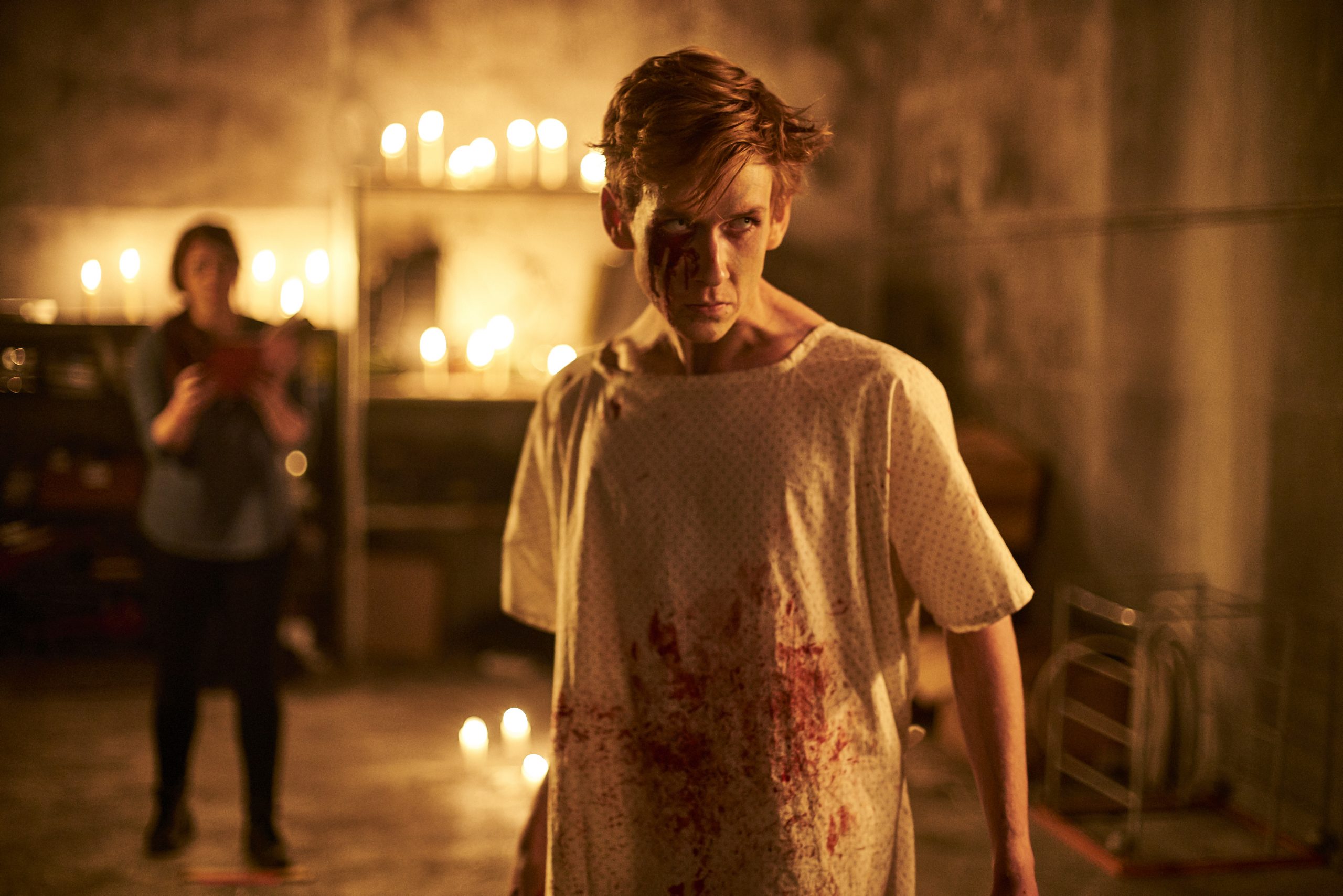
A young medical student attempts to cure her brother from a terminal sleep illness called Fatal Familial Insomnia, where you are unable to sleep until you die. On her quest to help him, a more sinister reason for his condition is revealed.
In a new interview in the series leading up to Horror-on-Sea Film Festival, I got a chance to ask Awoken co-writer/Director Daniel J. Phillips a few questions about what we can expect from the film.
Q. The horror film Awoken has been selected to play at Horror-on-Sea. Can you tell us what we can expect from the film?
Awoken is a combination of a slow-burn traditional horror, taking inspiration from films like The Exorcist (1973) and The Shining (1980), as well as a found footage films like Cloverfield (2008) and The Blair Witch Project (1999). I’m hoping that audiences will walk away from it feeling a sense of unease, and be reminded of the film every time they’re having trouble sleeping. I’m delighted for the film to be playing at Horror-On-Sea, and I’m hoping it’s going to rock the festival a bit.
Q. You co-wrote the film with Alan Grace; what is your process for writing together and what were some of your inspirations behind the screenplay for the film?
I was introduced to a cult horror story called The Russian Sleep Experiment (2015), which at that time was on Creepy Pasta. I loved the idea of sleeplessness leading to supernatural occurrences and it was a very loose inspiration for Awoken. I knew I wanted to make my first film in a claustrophobic space, with only a few characters, so I thought about working with a playwright that was used to similar constraints.
Alan was an upcoming playwright and I saw one of his plays that I loved, and immediately approached him to work on the script with me. We wrote many, many different versions of the screenplay, taking it in lots of different directions, before arriving to what Awoken is now. We would basically spend a lot of time talking about the script, work shopping and working on the beats of the story, then we would split off the scenes to work on. We would rewrite each other’s stuff, and then I did a final director’s pass on the script to tidy up tiny things and make it a very consistent vision.
Q. What were some of your influences for the look and style of the film?
There’s obvious nods to The Shining and The Exorcist, but I think I really wanted to make a film that has three distinct styles of Heaven, Earth and Hell. The first act of the film is all blues and airy, the main bulk of the film is greens, browns, blacks, and then the final act is all red and fire. I’m pretty heavily influenced by James Wan, in particular The Conjuring films – those super deep blacks were very inspirational for myself and my cinematographer, Michael Tessari. I also in general like to play in that world of gritty images and dark sets, flickering lights etc. My shorts before Awoken have a very similar look and feel.

Q. Where there any elements of the original script which were adapted during filming?
There are obviously lots of small changes on a daily basis depending on what the actors are feeling works for them, which I’m very open to, but to be honest the biggest changes we made were in the editing process. We completely restructured the opening of the film by reorganising the scenes to introduce the lead character in a different way. We did this because as it was written, we were introducing her as a doctor first, rather than a student, so people didn’t get that she was a student-doctor. Some magic from my editor, Sean Lahiff, and some slick ADR fixed the problem. It’s amazing how easy it seems to take certain information the audience is receiving for granted until you really see it cut together.
Q. Did you experience any issues whilst filming?
Ha ha. Yes. Many. But I think that’s normal. I think we were trying to make a very ambitious project for the budget we had. Whether working on a commercial, short film or Awoken, I’ve always pushed my budgets to their limits. I know how to make things look way more expensive than they are, but sometimes that’s a bit taxing on the crew. There were a lot of overtime days to get it done to the standard that I would like, but I had the most wonderful cast and crew who were very much on board for what we were trying to do.
Q. What were some of your favourite moments whilst making Awoken?
I think at least once a day on the shoot there was an amazing moment, whether it be a shot, a performance, or a particular practical effect that worked well. The best moment for me was when we were just about to crack overtime on a Friday – something I was told I absolutely could not do.
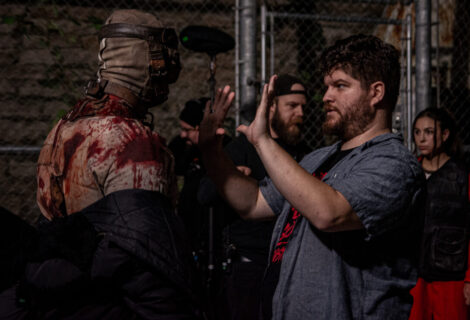
We were shooting a scene where a character hides a camera inside a box and pushes it into an airduct – and the camera is the thing that’s filming the scene as it’s part of the found footage section of the film. I was going to do it a certain way, but we just didn’t have time, so I grabbed an art department guy and told him to cut a hole in a piece of cardboard. We had the character run in, holding the camera, and then stick it to this piece of cardboard we just made, and then run over to the duct and pass the camera to the grip who was lying down inside the air duct. It made it look like he put the camera in the box and pushed it into the duct all by himself, but there were about 3 other people there that made it look that way, and originally to do that it was much more elaborate. It was one of those tricks that you’d do as a kid making movies in your backyard, and it just worked perfectly and we didn’t go overtime.
I also very much enjoyed the first time I heard the music from composer, Christopher Larkin. It was super creepy and cool and really elevated the images.

Q. What makes Awoken stand out as something different in the horror genre?
I think the main thing that makes Awoken different is its premise. The idea of sleeplessness leading to demonic possession has never been done before and I think that it’s a fresh way into the possession sub-genre in horror. I also tried to make a conscious effort to really have fleshed out characters that had some deep desires and fears – it wasn’t just some chick being chased by a guy with a knife – the character’s motivations were very carefully thought through and weaved into the story.
I think we’ve got enough classic touchstones of horror here, combined with the original premise that’ll give horror fans something unique. Another thing too, is that we didn’t sexualise anyone. I was very clear that I wanted to cast for the roles, and not sex up the movie in any way. It just doesn’t have anything like that in it at all, which I’m very proud of.
Q. What do you hope people take away after watching the film?
I hope that people are afraid to walk down dark hallways at night, and that when people are cramming for their big tests late at night, trying to stay awake, that the film comes to mind.
Q. Do you have any other projects which you are currently working on?
Yes, I have a couple of completed scripts that are ready to go and I’m looking to get produced, as well as a lot of treatments that need to be developed further. I’m keen to jump into my next project as soon as possible and work with some awesome people.
Q. If someone was looking to write and direct their own film what advice would you give them?
A.Be aware that you really need great people around you to make anything work – you absolutely cannot do it alone. As I’ve progressed through my career from commercials to shorts and now my first feature, you work with some people who you just don’t click with, and then there are the people who you become very close to because they’re just great at what they do and share similar values to you. Hang onto those people and bring them with you onto everything, because making films at times is an incredibly difficult and soul destroying thing. You need trusted collaborators around you to keep getting what you need out of any given project and help you achieve what you set out to do.
Another thing is to not worry so much about being liked, especially early on in your career. This is a really tough one to grasp for a lot of people, but it’s not about being arrogant, it’s about having unrelenting standards for your work, because as the director, that filters down to everyone else on the film. It doesn’t mean that you aim to be an arsehole, or posture to try to get respect or anything (because people that do that are actually arseholes), it just means that if you know that as a director, if someone isn’t doing what they should be, if they’re not reaching their potential and you know it, if they’re being lazy, make sure you do something about it, because ultimately most people will blame you for every single thing wrong with that film.
You should always treat everyone with absolute respect and courtesy, but you have to know when to stand up for what you believe in at the risk of not being liked. At the end of the day it’s this striving for the best product you can make, in a world where people are caring less and less, that’ll get you and your work noticed.
You can find out more about Awoken on the website
Awoken will be playing at Horror-on-Sea on Friday 10th January at 17:30 hrs
You can find out more about Horror-on-Sea and purchase tickets for the festival here:


Published in various websites, Philip is a reviewer who is best known for his interviews and media coverage of independent projects including; films, books, theatre and live events. Always on the lookout for something different to cover!