

In a new interview on Blazing Minds I got an opportunity to talk with writer Darrell Buxton about his latest book ‘Chopped Meat: British Horror of the 1970’s’. A pocket guide to British horror cinema and television of the 1970’s, which was written during the current COVID-19 lockdown in just 8 days.
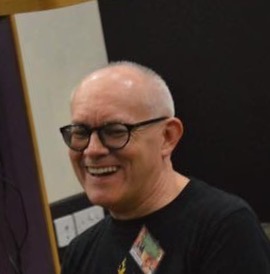
Q. You have just released your latest book Chopped Meat: British Horror of the 1970s. Can you tell us a little bit about what we can expect from the book?
A. Yeah, it’s a concise but exhaustive pocket guide to one of the key and best-loved eras and types of British cinema and telly. In just 128 pages I’ve crammed in 170 capsule movie reviews, plus sections on short films, Public Information Films, kiddie monster movies, and a major overview of BBC/ITV horror on the small screen.
Q. You wrote the book in 8 days during the current lockdown. What was your inspiration for writing the book now and why did you decide to give yourself such a tight timeframe?
A. During the enforced isolation I’ve managed to keep myself pretty busy and occupied – I really can’t understand why people have been saying how bored they are! But when I’ve not been catching up on Blu-rays or new albums or my reading pile, I’ve been seeking other avenues. I’d been text-editing a major book project where many of the contributors were flouting the imposed deadline – it was originally supposed to be February 29th and we were still getting submissions three months later! So inspiration hit me, and I just had the fleeting thought “why not see whether I can write a whole book from scratch in ten days, and show everyone that meeting a fixed target date can be done?”
As for selecting subject matter – well, in the past I’d edited two lengthy and detailed books about British horror movies of the 1960’s and 1980’s. I avoided the 70’s because FAB Press had already done the excellent ‘Ten Years of Terror’ covering that period – although that has been out of print for ages, I knew that an updated version was being compiled. However, I was among the frustrated readership waiting and waiting for it – and the notion struck me that I might nip in ahead of them and do a little mini version as my lockdown publication!
Q. What sort of preparation did you do for the book?
A. Hardly any! It all came on a whim, really, so once I’d elected to do a book in ten day’s I figured I’d better pick a subject that I knew thoroughly. I just knuckled down to the task, and any bits of research I had to undertake to prop up my own knowledge would have to form part of the schedule. I found myself waking up at 5.30 am some days, switching on the laptop almost on autopilot, and getting down to it.
Q. There is often a debate about what constitutes as British Film or TV series. How did you decide what films and TV series should be included in the book?
A. It’s a debate I’ve been at the forefront of, during many a pub/curry discussion or internet argument! For the purposes of this book I decided that the main section would include cinema releases of forty minutes or longer, and I added in a few US made-for-TV movies such as Spectre and Baffled! (both should be on any Star Trek fan’s radar as one was produced by Gene Roddenberry and the other starred Leonard Nimoy), which were filmed over here with loads of well-known British actors.
I also decided to include items like Quatermass or the Armchair Thriller series The Chelsea Murders, as they had official movie-length edited versions as well as being shown in episodic form. As for TV, I had lots of fun selecting items for inclusion – obviously you’ve got the Ghost Story for Christmas strand, classic one-offs like The Stone Tape and Count Dracula, and all of the amazing dark fantasy being churned out by little HTV for kids and adults, but I thought I’d dig deep and give a mention to The Phantom Raspberry Blower of Old London Town, various sitcoms that had the occasional spooky-themed show, and the remarkable eerie monologues that Dave Allen used to deliver on a darkened stage over a whisky and a ciggie.

Q. Considering your previous answer were there any films or TV series which you would like to have included in the book, but decided not to?
A. There’s a method by which I got around that! I love the books written by Donald C. Willis, the researcher who spent years putting together a vast Horror and Science Fiction Films checklist – in his various hardback volumes, Don features an appendix called ‘Peripheral, Problem, and Borderline Films’ where he lists all the stuff that doesn’t quite fit. And I’ve nicked that idea. So, if a non-horror film has one jokey scene about a vampire, or if a dark murder thriller doesn’t quite topple over into becoming a full-on slasher flick, there’s a spot where I can at least give it an acknowledgment.
Q. Did you experience any issues whilst writing the book?
A. It all seemed to run remarkably smoothly! Although I called Spandau Ballet’s Martin Kemp by his brother Gary’s name in the first draft (and if you’re wondering what Martin Kemp has to do with 70s British horror, see the book!). I’d also planned to include a few movie stills and posters as illustration, but just couldn’t seem to format it all how I wanted it, so I abandoned that plan – that was the only real casualty of the imposed time limit, if I’d had longer I’d definitely have put a few pics in there.
Q. What do you hope people will take away from the book?
A. Hopefully it straddles the divide between the experts and the beginners. I think the mad keen Hammer and Amicus fans will enjoy seeing their old faves mentioned; there’s a strain of 70’s horror buffs who like to dig deeper and celebrate the not-so-well-known titles, so they’ll be pleased to see that I’ve kind of skirted over Blood on Satan’s Claw and The Wicker Man and have given more attention to the likes of Voices, Sex Express and The Body Beneath. However, none of the critiques is more than a few sentences long, which seems to be appealing to newcomers who just want a handy reference guide and a few pointers about which films to look out for.
Q. Do you have any other projects which you are working on?
A. Yeah, I’m pretty busy currently. Just about to finish work on the new book from the We Belong Dead team, ‘Spotlight on Horror‘ (I had to edit something written by Kim Newman for that last week, which was pretty daunting when you’re used to checking work done by enthusiastic amateurs and your mates!); I’m also compiling ‘The Third BHF Book of Horror Stories’, a collection of original short fiction by various mainly non-professional authors, each story based on characters or situations again taken from our favourite British horror movies of the past; and I’m working with two other guys on a Sex Pistols project which is going to be unlike anything else you’ve ever read on the Pistols.
I was also set to start directing a documentary about the mid-1980’s rise of the UK horror fanzines, but I caught a mild form of coronavirus four hours before the first day of shooting! I had to cancel the shoot at impossibly short notice, inconveniencing lots of participants including my cameraman who had travelled a hell of a long way for nothing – I’m planning to get restarted on the documentary sometime in the future. And I’m waiting to see whether any of this year’s horror weekends go ahead, as I’m supposed to be interviewing Joe Dante at HorrorConUK in Sheffield, if it happens and if he flies over. I’m pretty doubtful. Maybe next year…
Q. If someone was looking to write their own book what advice would you give them to get started?
A. Don’t do what I’ve just done! Seriously though, pick a subject that you’re comfortable with, maybe something small; try to do something that hasn’t been covered in detail before (we don’t need any more books about ‘folk horror’, thank you, but I’d love to see ‘the films of Michael Gough’ or ‘political horror movies of the 21st century’ or ‘Dario Argento reappraised – a detailed examination of his post-1990 work’). Get someone to look at your work, preferably a good editor, and don’t be disheartened if they advise you to make changes; Stephen King’s editor does exactly that. And don’t be afraid to self-publish – if you’re writing about horror or cult movies or fantasy or whatever, it’s a niche market and you aren’t going to get rich, so work hard on your project for the love and the fun of it, get it looking and sounding like something you’d want to read yourself, and put effort into the graphic design or get someone to help out with that; and don’t go in with huge expectations. Enjoy the experience.
You can find out more about Darrell Buxton on his website here
Chopped Meat: British Horror of the 1970’s is available to purchase here

Published in various websites, Philip is a reviewer who is best known for his interviews and media coverage of independent projects including; films, books, theatre and live events. Always on the lookout for something different to cover!