Film Name: Amor
Director: Mark Cordier
Writer: Mark Cordier
Starring: Thomas Vincent, Eden Mele, Jean-Baptiste Kaupp
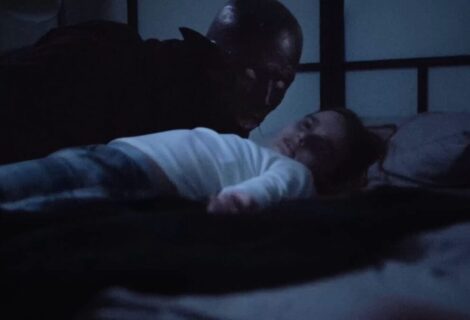
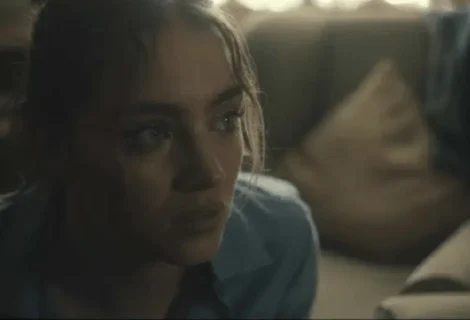
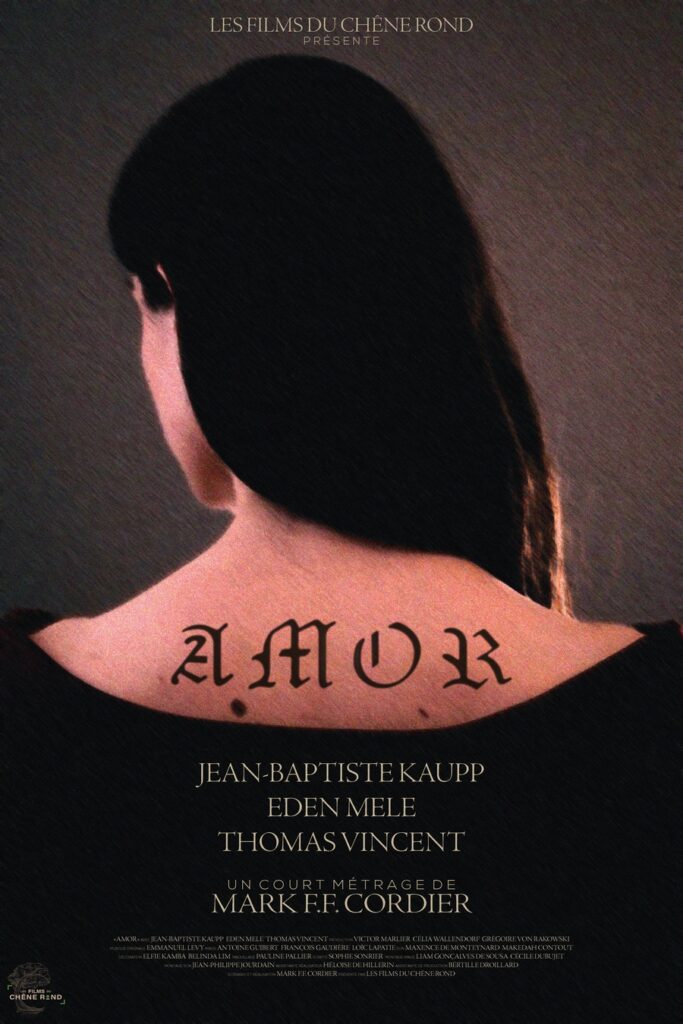
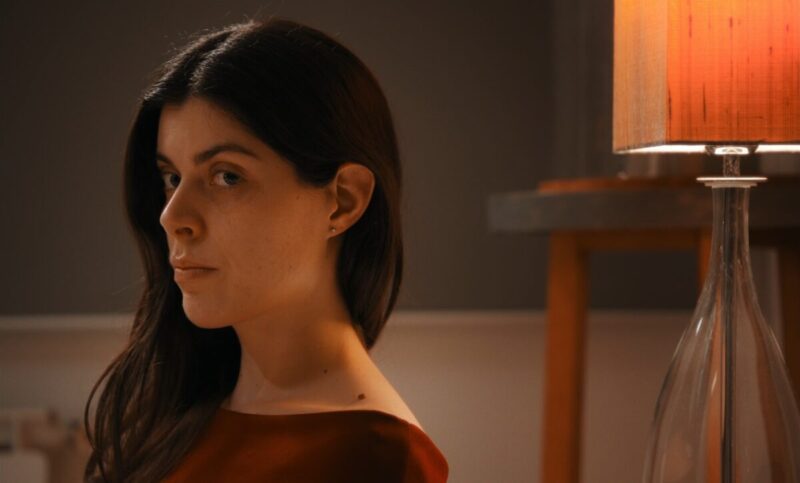
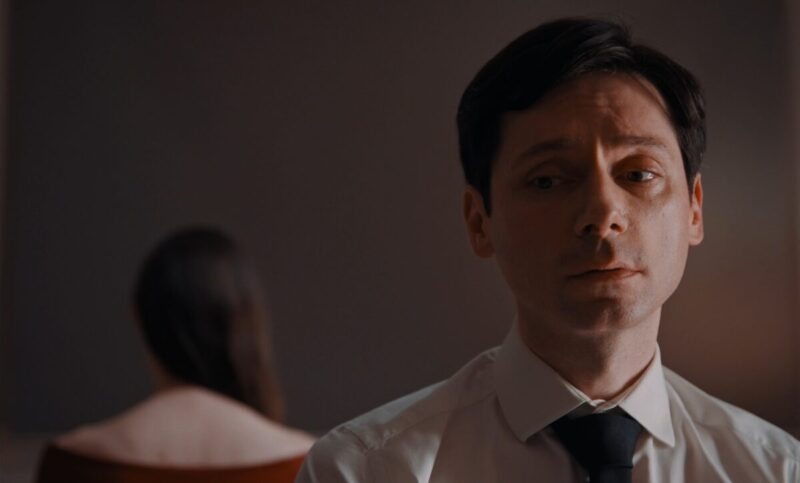
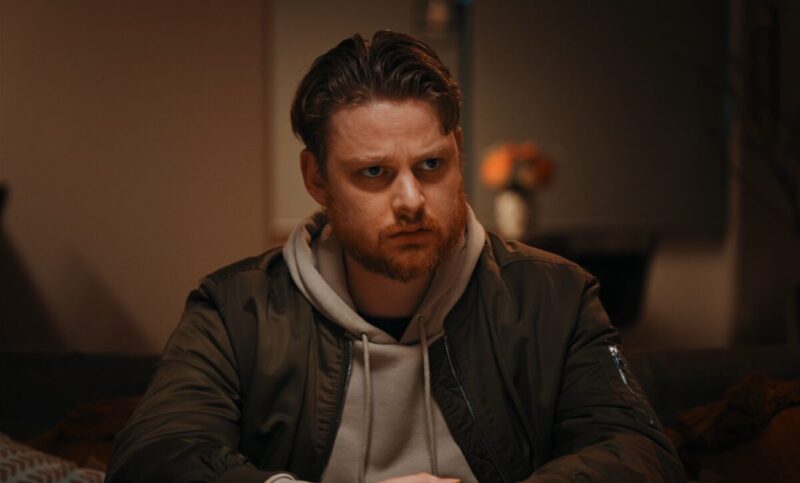
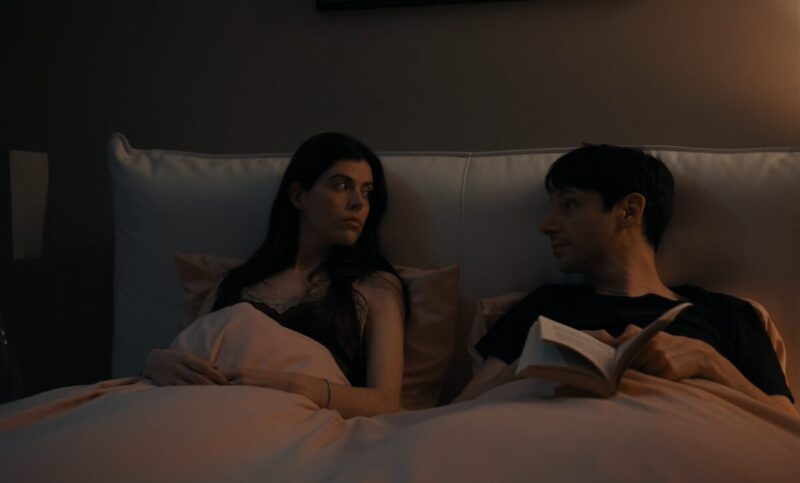
One night after work, a man comes back home. His wife is waiting for him to announce something. The thing is that ever since she woke up this morning, she’s had only one desire, an all-consuming desire, to kill him.
In a new Exclusive Interview on Blazing Minds ahead of Horror-on-Sea I got a chance to ask Writer/Director Mark Cordier a few questions about the film ‘Amor‘
Amor will play at Horror-on-Sea on Saturday 17th January at 3.00pm.
Q. Your film has been selected to play at the Horror-on-Sea Film Festival. Can you tell us what we
can expect?
A. To laugh, I hope! Haha… Hard to say really. I was surprised when I heard that the film had been selected for a horror festival, as I never directly thought of this project as a horror film. For me, it’s a dark, cynical comedy-drama. But thinking back, it’s possible that in my project’s intent note, I mentioned a horror aspect. What I hope is that people have fun with the grotesqueness of this story.
A mixture of fun and discomfort. That the viewer never really knows how to feel during the film.
Q. What were some of your influences when writing the script?
A. The direct influence comes from the work of the Greek filmmaker Yórgos Lánthimos. His slight disconnect with reality, the cold absurdity of his dialogues, the grotesqueness of his darkness… My first motivation was clearly to follow in his footsteps, without going so far as to copy his work. In any case, any first short film or first feature film by a filmmaker follows in the footsteps of one of his mentors. I then added my sense of humour, as well as a central situation that I had never seen elsewhere.
Q. What were some of your influences for the look and style of the film?
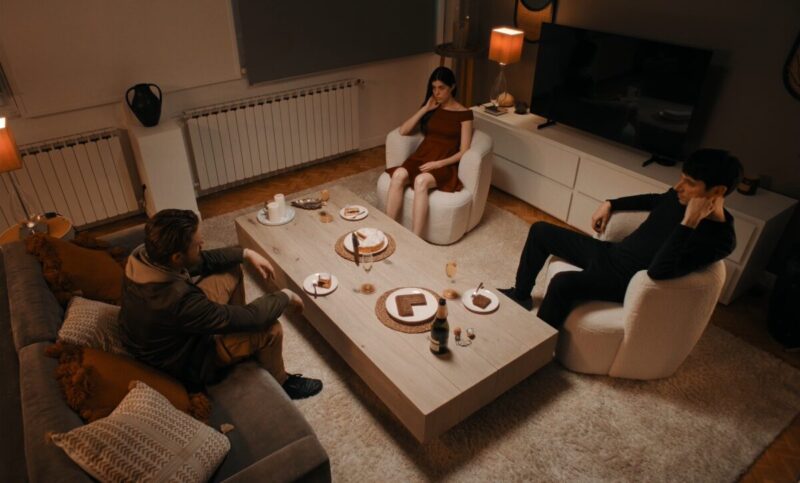
A. Here again, the work of Yórgos Lánthimos completely inspired me. Especially The Lobster and The Killing of A Sacred Deer (the latter being one of my favourite films). This voyeuristic way of
approaching his stories, with these high-angle shots, low-angle shots, slow zooms, wide angles
reinforcing the absurdity of a situation… Creating unease with the choice of shots is essential for the
kind of story I present. As well as with photography. An elegant aesthetic, with warm colors,
supposed to bring a feeling of comfort, will necessarily clash if we place monolithic actors there,
playing their lines coldly.
Q. Did you make any changes from the original script during filming?
A. Not that I remember… I’m someone who’s quite picky about his work. I like people to respect the script that I took the time to perfect. Apart from a few words changed in the dialogues for the comfort of some actors, nothing really changed on set. Even the shots I had drawn for the storyboard must correspond to maybe 90% of the final content. Before that, the first script had a different ending, that couldn’t be kept during pre-production due to budget limitation. I quickly adapted to a new ending, the current one, which turns out to be much better, more coherent.
Q. What were some of your favourite moments during filming?
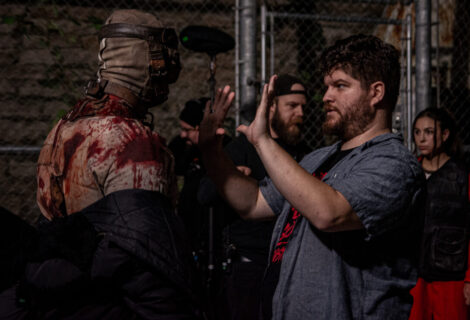
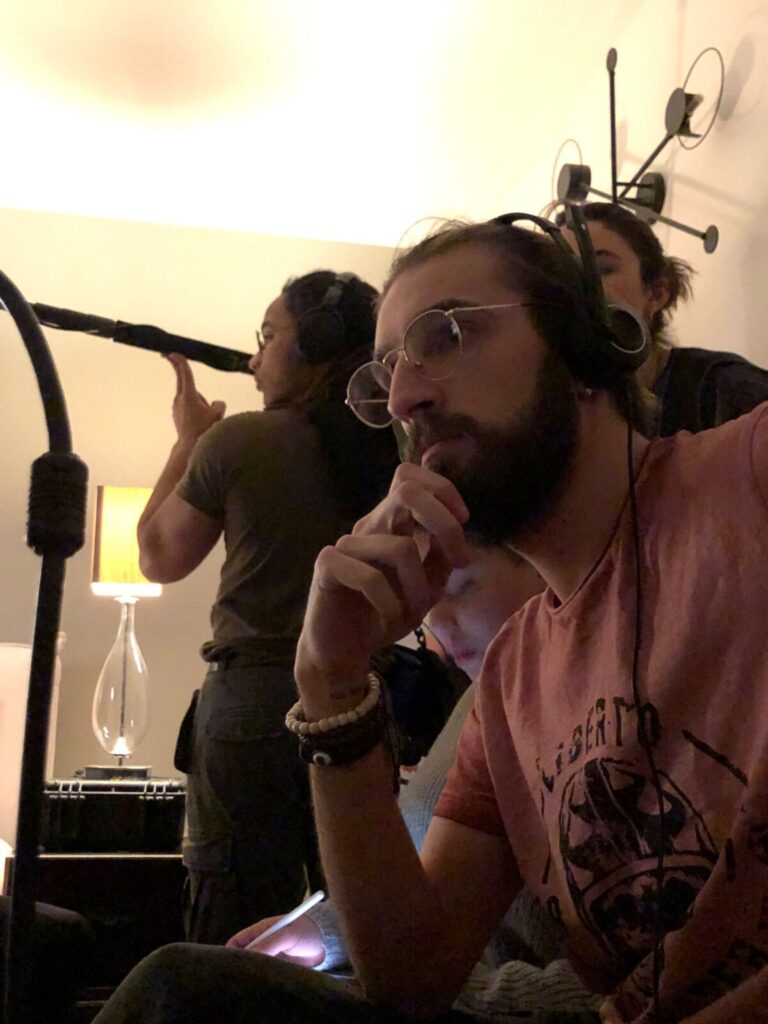
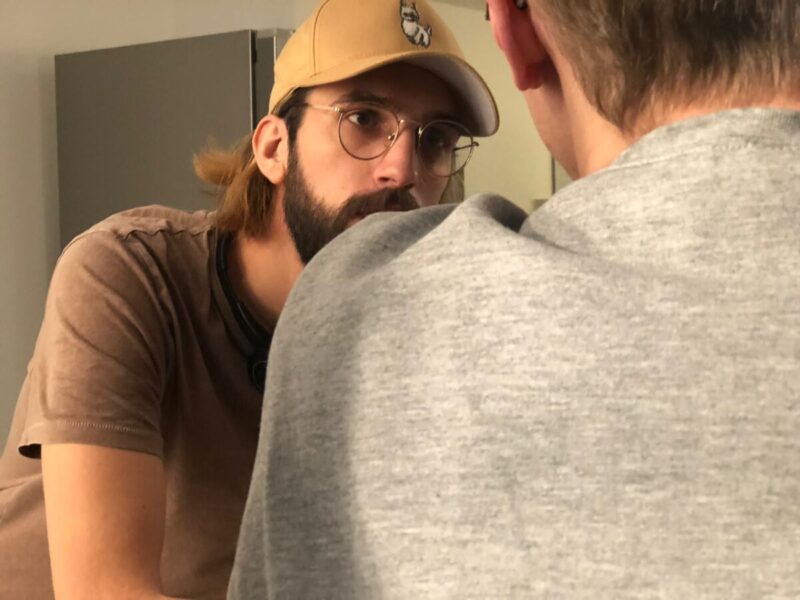
A. I don’t think there are any specific moments. The whole experience was great! Imagine, a first professional short film as a screenwriter and director. First time leading a team, seeing your script take shape. Having actors play your lines. Having efficient technicians who give you their best. The continues excitement on set. The insane attention to keep on all the elements. All together at full speed, united to create. I had never felt so at home in my life. Even waking up early has never been so enjoyable. Getting up to make a story that came out of my mind into something real. Plus, the shoot was concise, two and a half days.
Q. Did you experience any issues during filming?
A. As I said, we only had two and a half days to shoot. The biggest pressure was to finish all the scenes in such a short time. We didn’t have much freedom when it came to reshooting certain scenes. Efficiency was the key word. Beyond that, and the fact that we almost lost the location due to a misunderstanding, everything went pretty well.
Q. What makes it stand out as something different in the horror genre?
A. Probably the fact that the project was not thought of as a horror film at all. From my experience with horror cinema, and with life in general, few things surprise me. So I absolutely do not know how to surprise the spectators. I only write for myself, never for them. I have to surprise myself, have fun, leave doors open, questions, to be able to rewatch my works like a spectator. I never try to totally control a story or its characters. I need to feel like the first spectator of my works. In any case, I imagine that some sensitive souls may come out of it disturbed, others amused, others without any emotion… If there is horror in Amor, it is certainly psychological. In the tension between the husband and wife. No blood or screams to be expected here.
Q. What do you hope people take away after watching the film?
A. I hope they will think about the story, about the open ending, about its themes, that they will form their own opinions, their own theories, on points that I hadn’t even thought of during writing. I would like the viewers to take ownership of the piece, because, if I write above all for myself, I am always grateful and love to hear the theories of others on my stories. Not knowing the smallest details allows me this open-mindedness. It is strangely by working selfishly that I open up ways for reflection, and I prefer to give this freedom of interpretation rather than guide the viewer too directly. I’d like people to think about the film from time to time, that it stays with them the time to go home, or simply that they had a good time in front of it. I am not demanding. Everyone will react as they feel. That is also what cinema is!
Q. Do you have any other projects which you are currently working on?
A. I never stop imagining stories, writing down ideas, and simply writing. I have several short and feature-length scripts in stock, as well as a few novels that I am working on. The trick now is to find partners to follow me on these many projects, whether in cinema or literature. In my head, my career plan, not to say my life plan, is already mapped out. I clearly know which projects I want to develop next. The very next one would be a short film in the same cynical style as Amor. A portrait of a couple for whom money is the answer to everything in life, and who try to in still this in their young child. A new dark comedy about how money can make humans insensitive.
Q. If someone was looking to write and direct their own film what advice would you give them?
A. I don’t think I’m the best person to give advice on this subject. I’m only at the beginning of my career, if I can continue it. There are so many different ways to make a film. Whether you find a team of friends to do a project together, whether you go to a very expensive film school, whether you bet (like me) on your talent, on a script that you send around hoping to touch a producer, all means are good as long as you do things with desire, if not a vital need to create. In this industry, there is a huge element of luck. You have to be at the right time in the right place. Have confidence in your work, in yourself. Write, make (not-so-great) videos in your backyard, learn the codes, then transcend them, write what drives you above all, not what people expect of you. Be proud of yourself, have fun, take advice but don’t lose your vision in it. Creating is a need, and making a living from it is terribly difficult. So don’t waste time creating things that don’t motivate you. Create your stories, with your style, your universe, and be patient, very patient…
You can follow Mark Cordier on the following social media Facebook Instagram
Amor will play at Horror-on-Sea on Saturday 17th January at 3.00pm.
You can find out more about the festival and purchase tickets here

Published in various websites, Philip is a reviewer who is best known for his interviews and media coverage of independent projects including; films, books, theatre and live events. Always on the lookout for something different to cover!