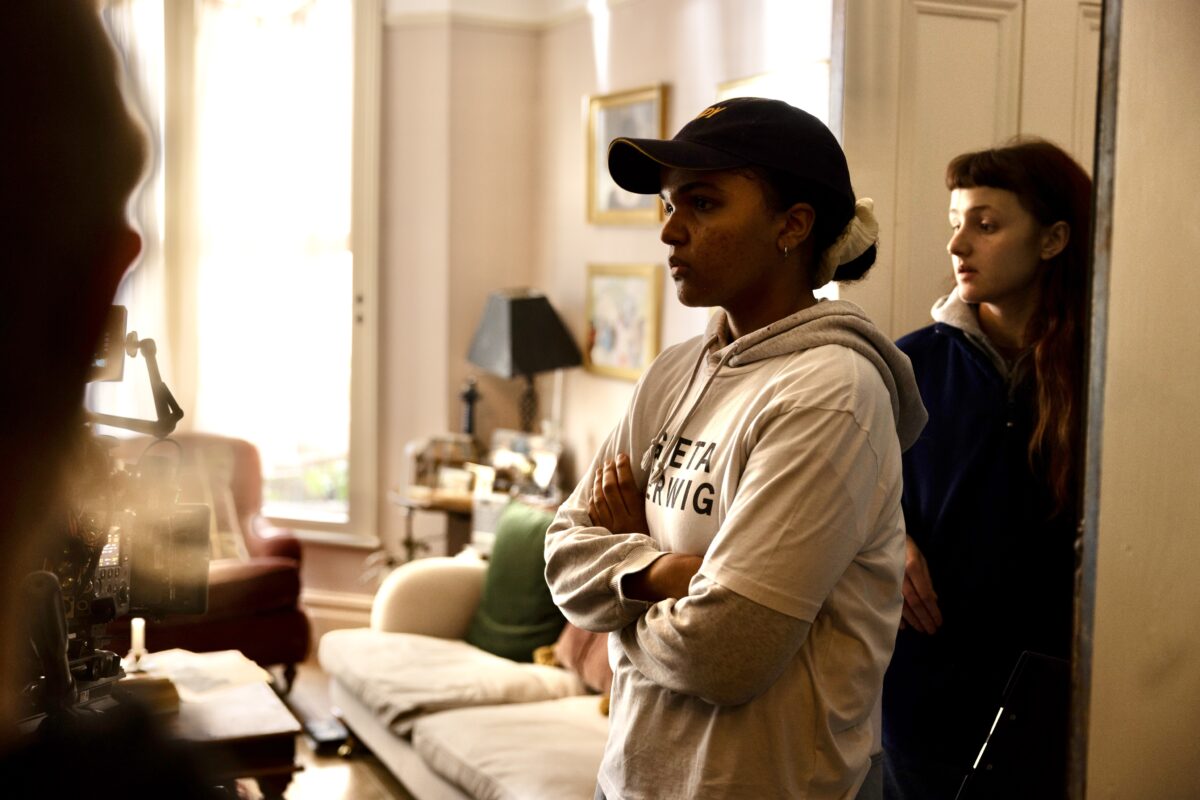
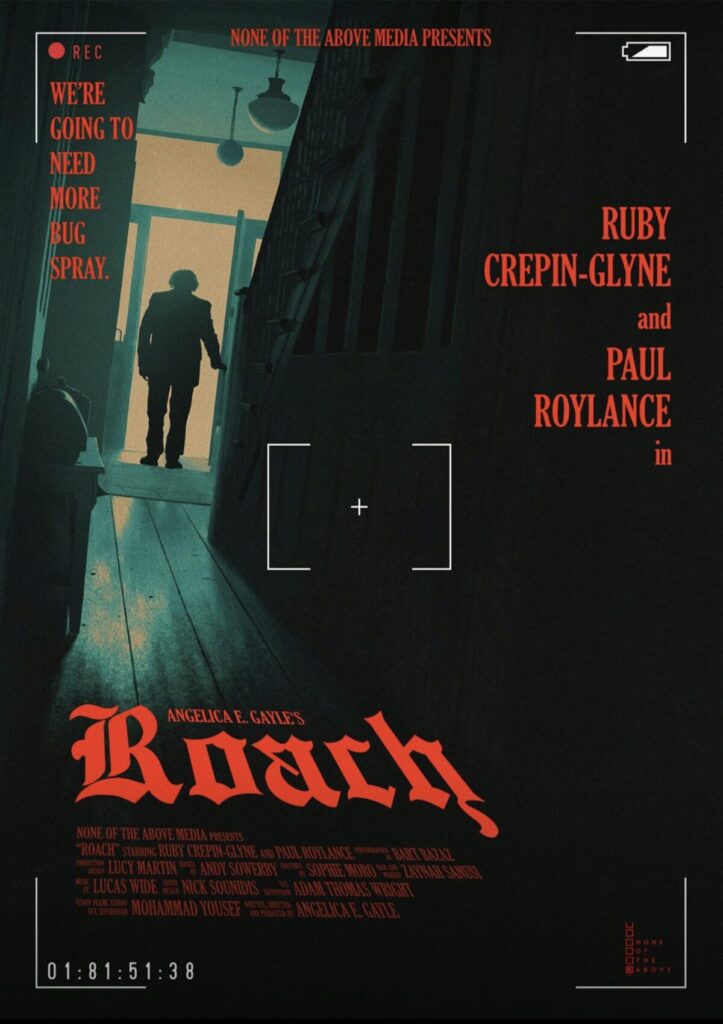
Film Name: Roach
Director: Angelica E. Gayle
Writer: Angelica E. Gayle
Starring: Ruby Crepin-Glyne, Paul Roylance
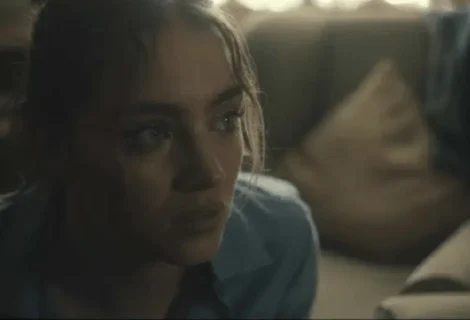
A 17-year-old girl gets a job cleaning an old man’s house. As time passes by, she realizes she’s not
just there to clean.
In a new Exclusive Interview on Blazing Minds ahead of Horror-on-Sea I got a chance to ask Writer/Director Angelica E. Gayle a few questions about the film ‘Roach‘
Roach will play at Horror-on-Sea on Saturday 18th January 5.30pm
Q. Your film has been selected to play at the Horror-on-Sea Film Festival. Can you tell us what we
can expect?
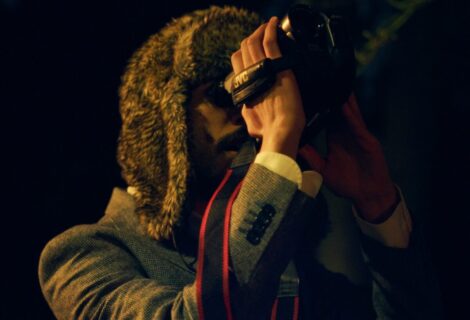
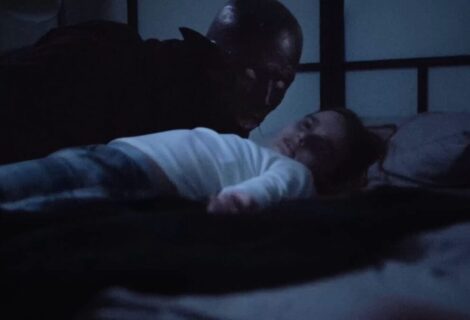
A. To be surprised. Horror is a space that can falter if it reaches the point of being overexplanatory and I’m confident Roach will not only provide audiences a new perspective on horror but allow them to be immersed in a story that requires you to really pay attention. We aren’t served these grandiose scenes of emotional expression or even dialogue from our characters, but rather textured images that when pieced together, naturally form the narrative and framework of this film and allows a wide interpretation after watching it. Roach isn’t a surface level short film by any means; it relies heavily on its environment through remarkable production design by Lucy Martin and the visual landscape, carved and supported by our cinematography Bart Bazaz. Their collaboration along with my entire crew and the way I translated this story to them has meant we are giving an audience a feast for the eyes.
Q. What were some of your influences when writing the script?
A. The antithesis of Roach came from a compilation on the Mojo YouTube Channel; one of those “Top
10 Mystery videos” I watched years ago, way before I even started to think filmmaking was a possibility. However, the idea stuck with me for a few years to present the story of a girl who had been cleaning someone’s house and found out they were being spied on, but I decided early on that this reveal felt rather thin and didn’t house the potential for a strong cinematic landscape. Adopting the cockroach motif into the basic narrative honestly came out of nowhere in particular other than the distinct association between cockroaches and a feeling of unease or decay – a distinction that came after writing the script. Having this be the central messaging of this film was supported by this motif, a physical symbol of what I wanted to embody in Roach – a distinction between the feeling of cockroaches in one’s mind and perversion. Writing to me is purely led by feeling; my influences are what I feel inside of me as opposed to external references, which come in the process of crafting the visual language rather than the other way round.
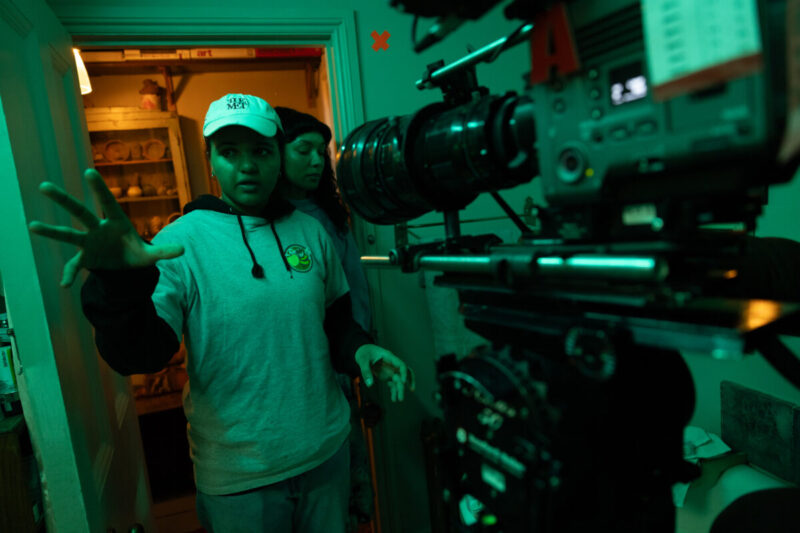
Q. What were some of your influences for the look and style of the film?
A. Visually, as Roach started to manifest, the work of David Lynch (particularly in Blue Velvet), Robert Eggers, Charlie Kaufmann and Early German Expressionist cinema like Nosferatu started to emerge as influences. I had an idea in my head of how I wanted Roach to look and feel because of these references and there are many examples where I have grabbed pieces of other films I’ve liked and incorporated them into my own film. One example is the micro fringe of our protagonist, Bonnie, which was adopted from the character Maran in Luca Guadagnino’s film Bones & All (who stole the fringe idea from Silence of the Lambs, so it’s been passed down a few times!).
A lot of Maran’s character from the way she dressed to how she carried herself, were the backdrop to Bonnie’s character, specifically because I rarely see mixed-race female characters who are crafted to be innocent and vulnerable. The Al Bowly track used in the opening was taken from Stanley Kubrick’s The Shining, the end credits were in the same design as Paul Thomas Anderson’s There Will Be Blood, and our aspect ratio is representative of my adoration for golden age cinema. Roach is a collage for films I’ve admired for years and it’s my way of preserving these titles and giving them to new audiences.
Q. Did you make any changes from the original script during filming?
A. The only thing that changed heavily was the opening shot which was supposed to be a continuous moment where we pan from one of the sewing hoops to the next and down to the radio. This was turned into a dissolve transition in the edit, as the space we used didn’t allow this type of shot.
It’s hard to rethink to any other moments that were significantly different to the script as the script is only 7 pages long and purposefully straightforward with little dialogue. My collaborators certainly met the brief in all manners of constructing this and visually, there was an embrace in being spontaneous and off grid with the shots we were making, even when we had a dedicated shot list, and they weren’t in the script.
Q. What were some of your favourite moments during filming?
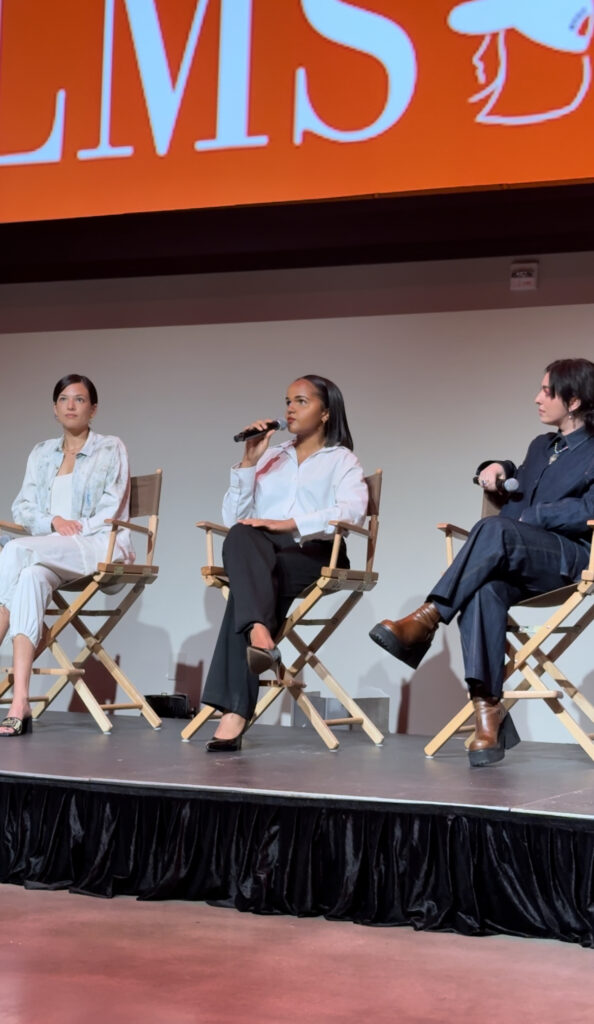
A. Can I say the whole thing?! We laughed a lot on this set, and there was also some conflict too, but even within these conflicts it felt relative to what we were doing which was making something everyone felt passionate about. As I was the only producer on this production I put in a lot of time, work and energy into ensuring not only a comfortable work environment, but a safe one too. Things like food, water or just breathing space are often overlooked on small scale productions but these had to be number one for me, not only because most of the crew were giving their time for free or were strangers, but it determined the quality of the work. We must understand as directors that we’re working with people and not robots who need to feel cared and respected for to execute your vision. It filled me with so much pride hearing my cast and crew let me know this was one of the best shoots they’ve worked on and to continue to think that was down to my hard efforts makes me want to continue making movies.
Q. Did you experience any issues during filming?
A. Pace will forever be the bane of shooting because there’s never enough time especially when
balancing creative discovery with what’s on the schedule! I felt it imperative to play advocate between
the technical team and my 1st AD who was doing a terrific job of keeping us on schedule, but it was
important we didn’t make camera, lighting, sound ect .feel rushed or out of the loop of the creative
process. We forget that tech teams like to be involved in the story and would like their efforts to have
meaning, so finding time to slow down was difficult, especially on a tight schedule. This area of friction
was felt by my cinematographer at one point during the filming, but I simply allowed them to express
their concerns and offer what I could do better to support their creative workflow. During conflicts
and issues on set, reach for empathy rather than shame!
Q. What makes it stand out as something different in the horror genre?
A. I’m a big fan of horror as a genre and surprisingly never found horror films to be difficult to stomach. Roach adopts a more eccentric style of horror from those early days when music, colour and shape were the main attributes to creating the mise-en-scene of horror. Something like Nosferatu is perceived to be less terrifying than your everyday slasher film with none of the limitations Nosferatu had and yet I find this film was more ground breaking for the genre than anything the mainstream media has made in years (except for Ari Aster and Robert Eggers’ work, but even they were likely inspired by films like Nosferatu or medieval folk horror). Similarly, I’d like to introduce people to horror of the darkest corners of our humanity and exhibit this in the way that is subtle yet creative.
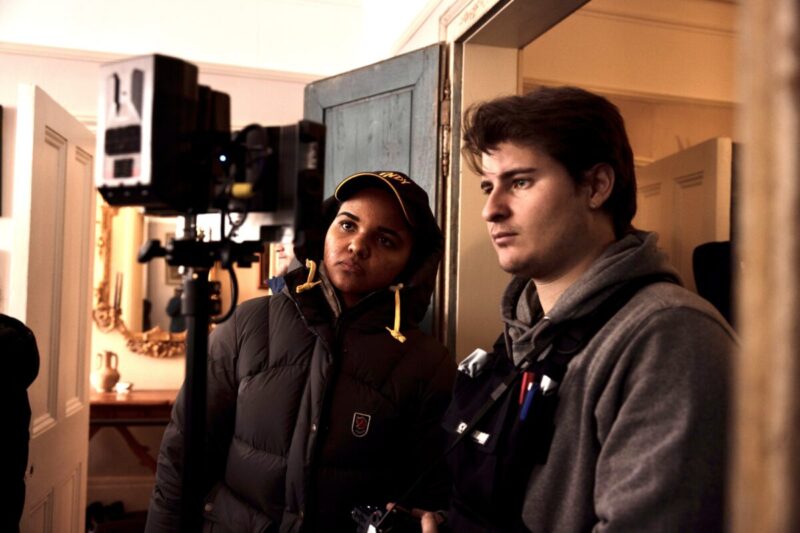
Q. What do you hope people take away after watching the film?
A. I don’t really have a definitive hope, I would just like people to enjoy the film!
Q. Do you have any other projects which you are currently working on?
A. I’m currently working on bringing two shorts to life next year and my first feature film, which is still in the writing phase. There’s a pattern forming in my work, but I don’t like to jump ship too early and declare that this is the type of work that I’m going to make forever. I wish to explore themes and subject matters that resonate with me, that keep me up at night and will allow me to deepen my understanding of humanity. The industry, having worked in it for almost 4 years, is a factory for products that feel synthetic and unrepresentative of the human experience. We rarely see work that is authentic and honest come into fruition and usually its after years’ worth of banging on the same doors. I’d like to focus on making not what “sells” or is “commercially viable” or even “festival worthy”, but what I would want to watch and all the projects I’m working on now reflect that.
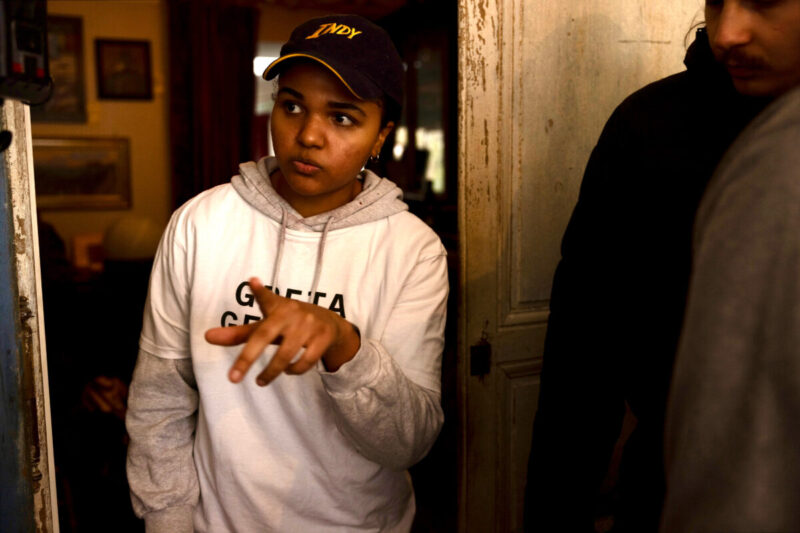
Q. If someone was looking to write and direct their own film what advice would you give them?
A. There are two separate answers to this question as I believe you can’t give the same answer to male and female directors. I understand the gaps, limitations, the effort it takes for the female director (or even the working class or the POC filmmaker) to make something of herself in comparison to her males and we shouldn’t be blind to or refute the biases between male and female directors. Why is the process so different?
Because of what we’ve both been told. The cinema landscape for years has been dominated by largely the same voice, the same undercurrent of themes, characters and behaviours and although there have been extraordinary films made by women (Agnes Varda, Jane Campion, Joanna Hogg, Katherine Bigelow to name a few) over the years, breaking into the commercial, filmmaking market where you get to earn a salary for what you do, has and continues to be really difficult for women. This may not even be what most female filmmakers want, but it’s certainly something I’m striving for, because I know that this has the potential to change things and allow more female voices through the door (take Greta Gerwig being Cannes’ last Grand Juror after being the first woman to direct a movie which made over $1 billion in the box office last year). Gerwig uses her commercial influence to inspire change and create a platform for female filmmakers. I’d like to do the same!
To any filmmaker, respect time. Respect that it may not be the right time to make a film and sometimes you may have to wait longer than expected for things to come into fruition. I met Bart, an amazing collaborator through a mutual friend who’s short I worked on, and I can categorically say there is no other cinematographer I wish to work with, but forming this connection only happened in the last year or so and was a gamechanger to Roach’s inception. Find your Roger Deakins, your Robby Ryan or Greg Fraizer; that visual master who will take your ideas and give them a beating heart and indoctrinate other people to do the same!
To the female filmmaker, and not to be condescending, but accept that if the world is built against you, cinema can be impenetrable. There’s a level of dominance the director must adopt to drive the ship that is your narrative, and this is a scary, daunting, uncharted territory for many women who aren’t used to being in these positions of power, where tens or hundreds of people are asking you for answers. It takes a lot of confidence, confidence you may only develop in the later stages of your life which explains why it’s rare to find a female filmmaker under 35 making a living. However, realise that your fears are valid but cannot stop you from venturing into this world. Yes, you may be judged and undermined because you’re a woman; accept it and use it as the fuel to further your ambition. Have the confidence to also call it out! Educate yourself on all the tech jargon often reserved for our male counterparts and learn the language of film in every single department. Be assertive with your vision and lead not in the same way a man would, but in a way that is authentic to you.
Roach will play at Horror-on-Sea on Saturday 18th January 5.30pm
You can find out more about the festival and purchase tickets here

Published in various websites, Philip is a reviewer who is best known for his interviews and media coverage of independent projects including; films, books, theatre and live events. Always on the lookout for something different to cover!