Film Name: Lenore
Director: David Ward
Writers: Josie Hess, David Ward
Starring: Nicholas Jaquinot, Ruby Duncan, Sam Macdonald, Caithlin O’Loghlen, Scott Mackenzie
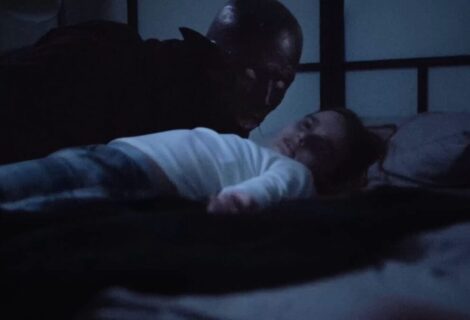
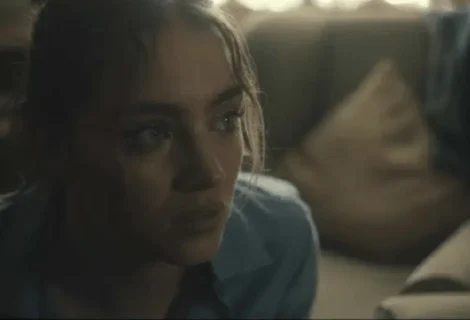
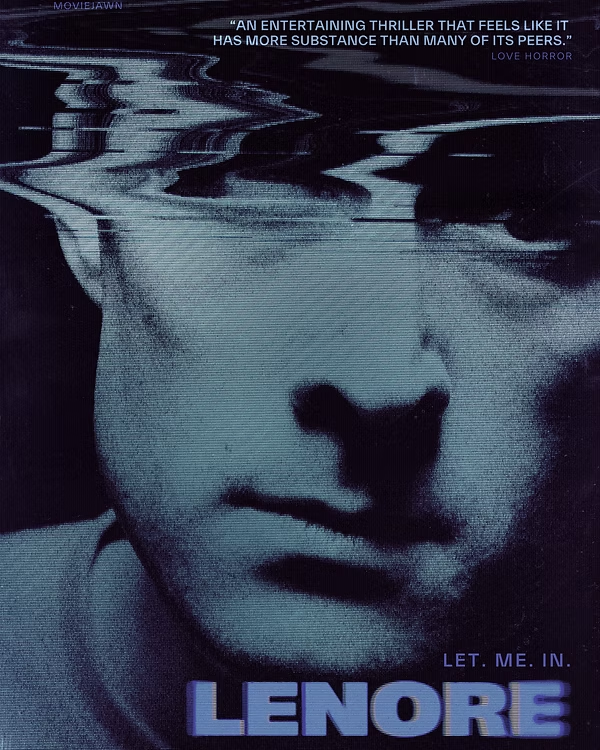
When a controversial influencer suddenly disappears, a terminally online sycophant goes hunting for answers, but comes face-to-face with the monstrosity of his own sins.
In a new exclusive interview on Blazing Minds I got a chance to ask Director / Co-Writer David Ward a few questions about the film ‘Lenore‘ which will have its World Premiere at Horror-on-Sea on Friday 23rd January 15:00hrs.
Q. Your film Lenore has been selected to play at the Horror-on-Sea Film Festival. Can you tell us what we can expect?
A. You can expect a claustrophobic, tense and acutely psychological thriller about the most extreme lengths that desperately lonely people will go to in order to feel some sort of connection in an increasingly disconnected world. In short, it’s a Gothic horror story projected through the lens of our 21st century technologies and anxieties.
Q. You co-wrote the script with Josie Hess. What were some of your inspirations when writing the script and what was your process for writing together?
A. So the film’s title indicates its biggest progenitor, which is Edgar Allen Poe. Lenore has existed in some capacity on-and-off since around 2016, when it was initially conceived as a stage play. The original brief for that now defunct version was to write a contemporary, site-specific adaptation of the work of Poe; use any text/s you want, just make it modern and creepy! In developing the stage version, it struck me that Poe always seems to be orbiting similar themes (guilt, madness, obsession, the sins of the past reemerging to haunt the present) as well as similar characters—it’s entirely conceivable to me that the central figure in The Raven is the same as in The Tell-Tale Heart, for instance. So, once I’d made that discovery, it gave me a bit more license to combine his works into a structure that retained the essence of Poe without slavishly following any one of his texts.
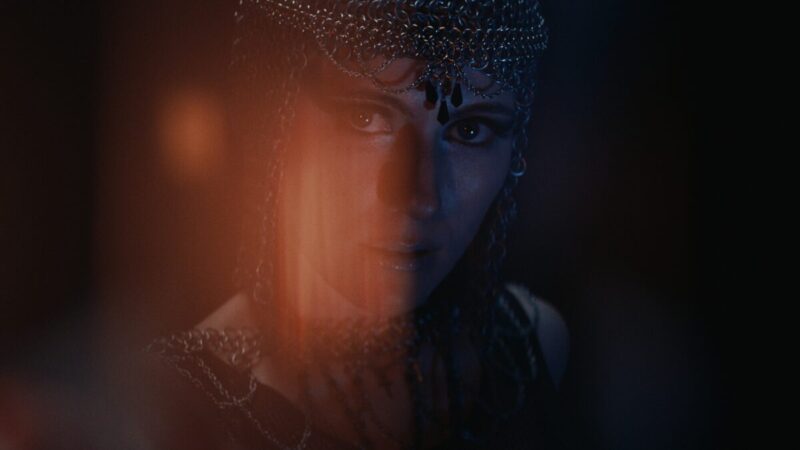
Anyway, I’d been chipping away at Lenore by myself for years before my friend and collaborator Josie Hess came on board as co-writer during the pandemic. I’ve always found writing to be a necessarily solitary practice, but I’d been bashing my head against the script by myself for too long and needed help taking it to the next level. In terms of process, we would generally meet once a week to go through what I’d already written and thoroughly interrogate it to make sure we both knew exactly what the aim of each moment was. From there, we’d assign scenes for each other to go away and work on—for example, Josie’s voice really suited the Lenore character, so they would often tackle her scenes, while I would often work on scenes involving Max—after which we’d come back together, exchange work, offer critique, rewrite and repeat until we felt like the scene was working. So it was a very organic and iterative process, and we’re both very pleased with the results.
Q. Did you have any of the cast in mind for the characters when writing the script?
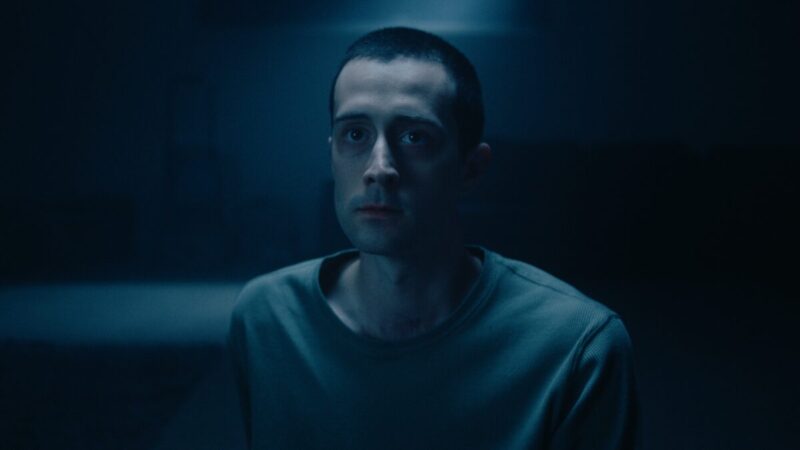
A. Just one: Nicholas Jaquinot as Max. Nick and I have been dear friends for many years now and have collaborated several times. Beyond the fact that we really love and bring out the best in each other, Nick is a superb actor, and to my mind, he was the only choice for Max—and I think when folks finally get to see the film, they’ll agree; he just disappears into that guy so completely and it’s pretty remarkable and terrifying to witness.
Q. What were some of your influences for the look and style of the film?
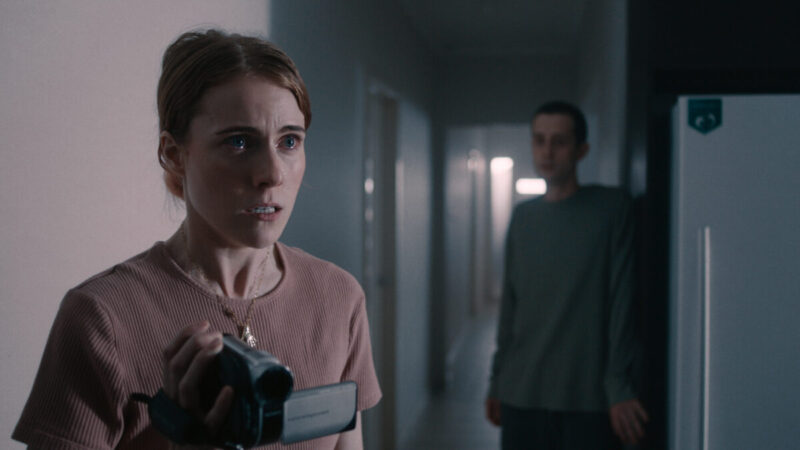
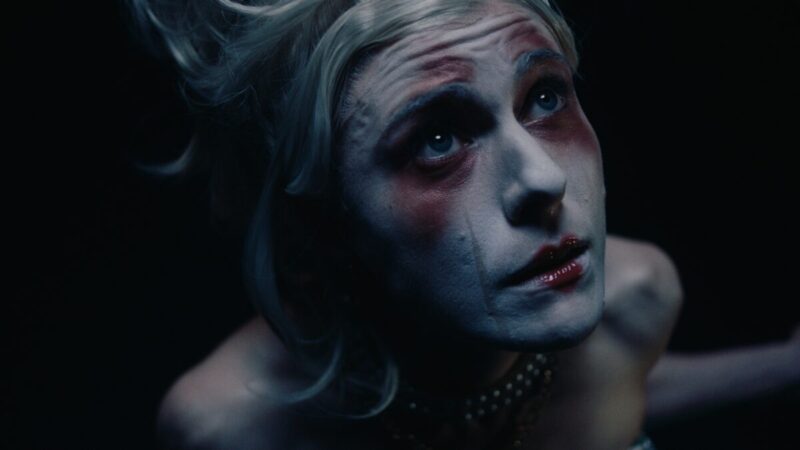
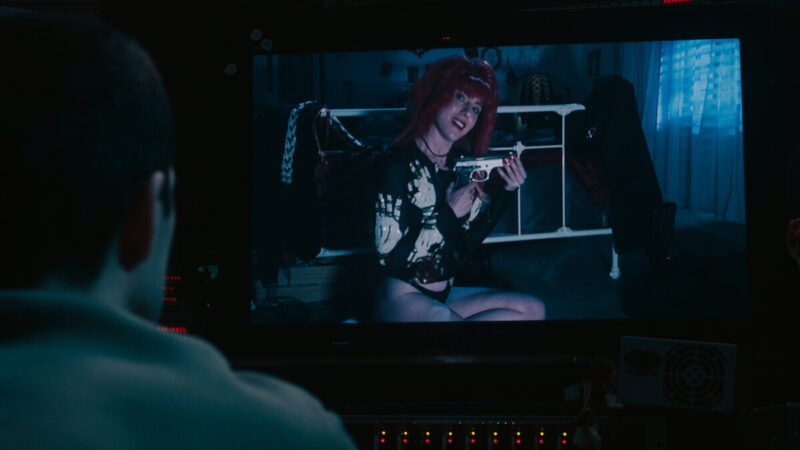
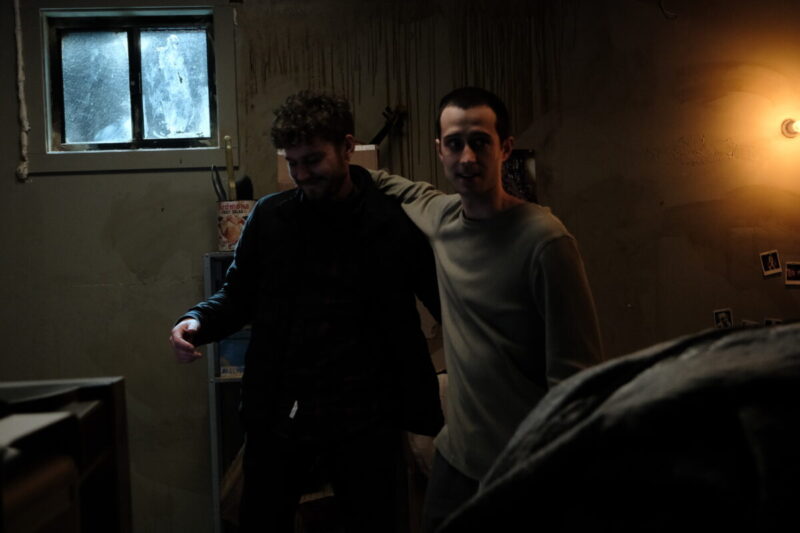
A. When the brilliant Shaun Herbertson (DOP) and I first started discussing the look and feel of Lenore, we quickly settled on two key principles: simple and purposeful. We were very keen for the camera to be a quiet, almost omniscient presence throughout the film; as if to imply that what’s happening here was doomed to happen all along, which is a very Gothic horror notion.
Being a painter, I tend to gravitate more towards visual art than films for inspiration, so I was thinking a lot about the likes of Phil Hale and Ken Currie—and especially the photography of Bill Henson— while preparing Lenore. I’m so enamoured with the heavy, nocturnal, nacreous atmosphere of their work, so that’s something we went to great lengths to try and capture in the look and feel of this picture. But in terms of some more film-centric references, both visually and thematically, Lenore owes a great debt to films like Cronenberg’s Videodrome (1983), Kurosawa’s Pulse (2001), Nakata’s Ringu (1998) and Haneke’s Benny’s Video (1992).
Q. Did you make any changes from the original script during filming?
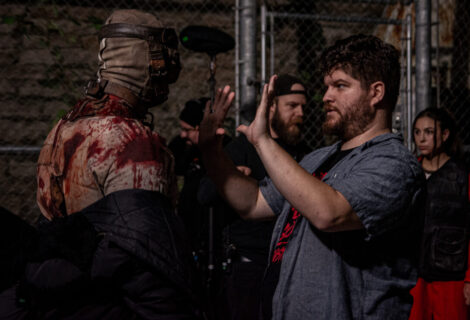
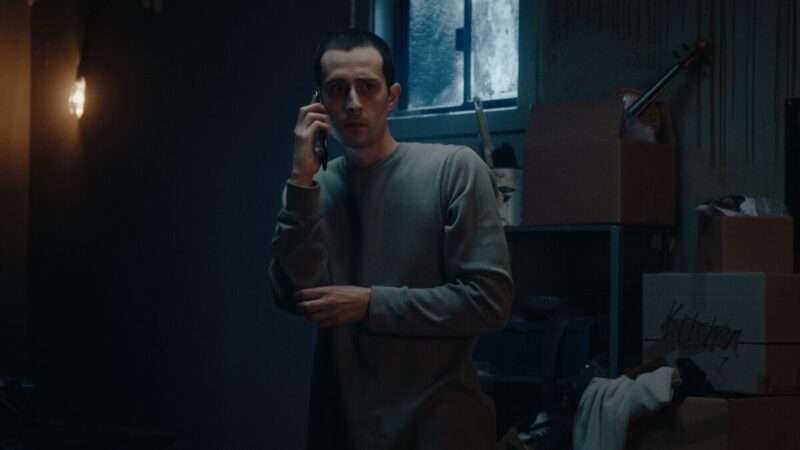
A. Plenty. We had a playful motto during the shoot which was “Fuck the script”; which is not to say that we just tossed it all out and made it up on the day or anything, but it was very important to me that we all collectively built upon the material rather than merely reciting it. Josie and I are not remotely precious as writers, so dialogue and big print frequently got tweaked as we went along to sit better on the actors, to land an idea more effectively or just to trim the fat.
Q. What were some of your favourite moments during filming?
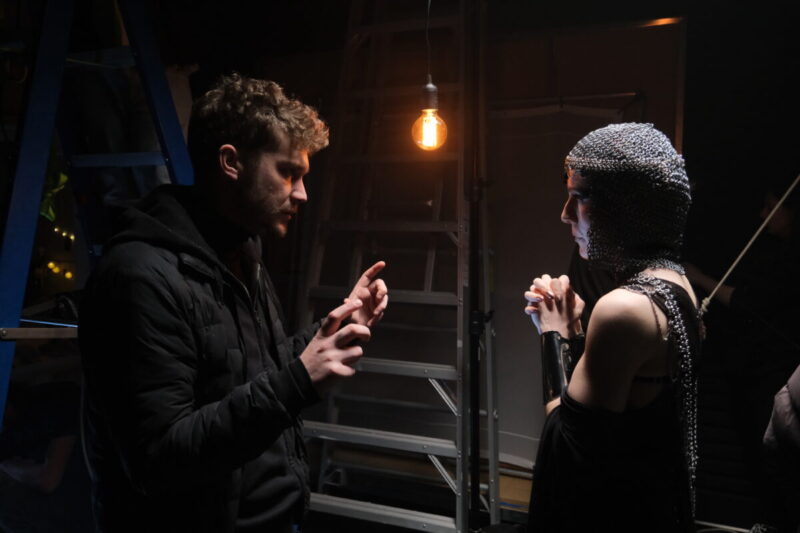
A. Forgive me if this sounds trite, but honestly, there were far too many to mention! Lenore was made by the most generous, spirited, conscientious cast and crew I’ve ever had the pleasure of working with, and I could not wait to come to set every morning and get to work with them. Even though we were doing six-day weeks in a freezing cold studio in the dead of winter, every day was exciting and energising and deeply creatively satisfying, both for me and my collaborators. I firmly believe that it has to be a positive experience for everyone involved in the filming process, otherwise there’s really no point, and thankfully we all had an absolute blast making Lenore!
Q. Did you experience any issues during filming?
A. Absolutely! The nature of filmmaking is constant, real-time, high-stakes problem solving, and for a total pragmatist like me, that’s what makes it so much fun and so creatively exciting. Whether a location falls through or the weather sucks that day or an actor gets sick or whatever it is, every obstacle presents an opportunity for you to apply your craft and find an interesting, creative solution. So my belief is that you should never resist your constraints as an artist in any field: rather you should try to partner with and adapt to them, and in doing so you will create work that is far more interesting and unique than if you were to just stop in the face of adversity and wait for it to pass.
Q. What makes Lenore stand out as something different in the horror genre?
A. The maturity and incisiveness of the writing, the boldness and ambition of the performances, Nick Sadler’s nightmarishly pulsating music score and the quietly dread-inducing atmosphere the film maintains.
Q. What do you hope people take away after watching the film?
A. I don’t mean to sound evasive, but I genuinely have no expectations as to what people will take away from Lenore. It’s a film that considers its audience savvy and intelligent enough to come to their own conclusion, and it’s up to each and every audience member to interpret and take away whatever they wish from this (or any) film. What you know and believe is valid, and I truly don’t wish to impose myself or my authorial intent on your viewing experience.
Q. Do you have any other projects which you are currently working on?
A. I have several things on the go at the moment in various stages of development. Nick’s written an absolutely killer horror-comedy called Raindance which we’re developing together, and I’m also in the process of writing an epic sports drama called Centre Half Forward, set against the backdrop of an Australian mining community and based on a real-life tragedy. I also regularly work on assignment for various production/arts companies around Australia, both stage and screen, and I do a bit of commissioned work as a visual artist as well. So yeah, lots of creative irons in the fire!
Q. If someone was looking to write and direct their own film what advice would you give them?
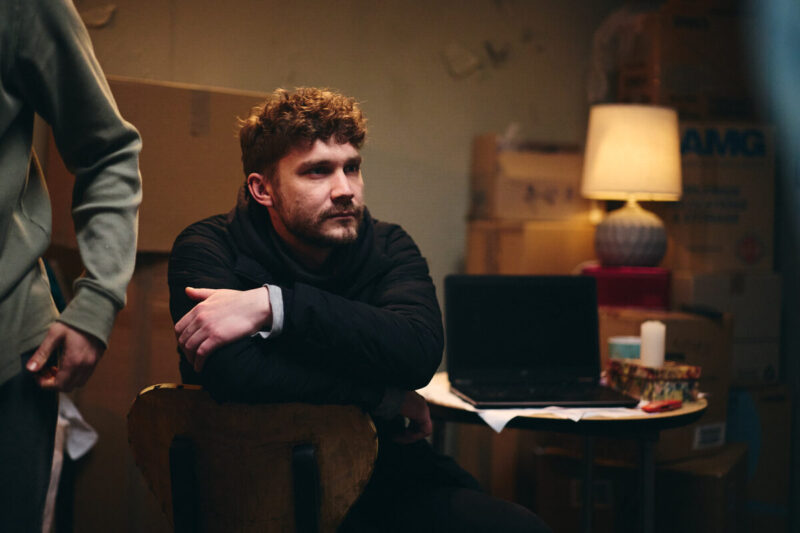
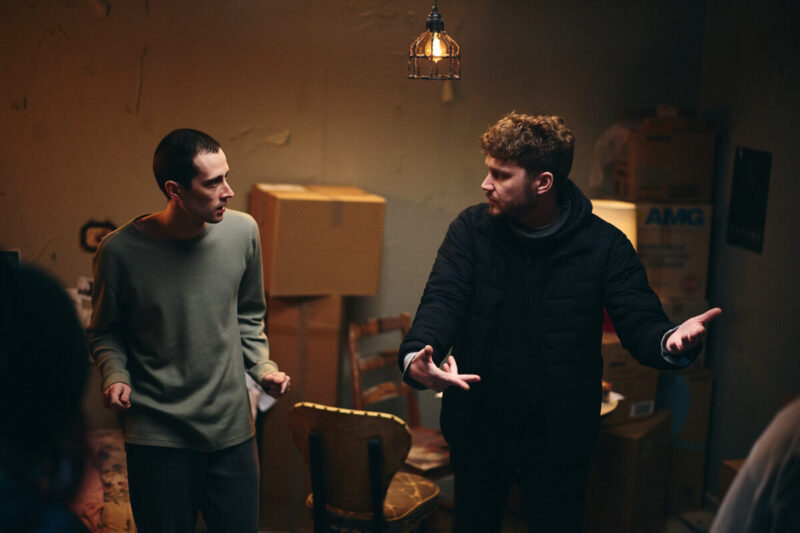
A. Be patient and, as I was saying earlier, never resist your constraints; Lenore was conceived around several constraints, both logistical and financial, and I think it’s a much more interesting and creative film as a result. But beyond that, for any project, I genuinely think patience is the key; patience with yourself, with your collaborators, with the process itself. Because if making art in any medium is something that you genuinely feel like you need to do—if it’s a latent, burning desire within you that absolutely must come out—then you owe it to yourself to be patient and see it through. Don’t think “if”, think “when”, and you will absolutely make it happen. Promise.
Lenore will have its UK Premiere at Horror-on-Sea on Saturday 17th January at 15:00pm.
You can find out more about Horror-on-Sea and purchase tickets for Lenore here

Published in various websites, Philip is a reviewer who is best known for his interviews and media coverage of independent projects including; films, books, theatre and live events. Always on the lookout for something different to cover!