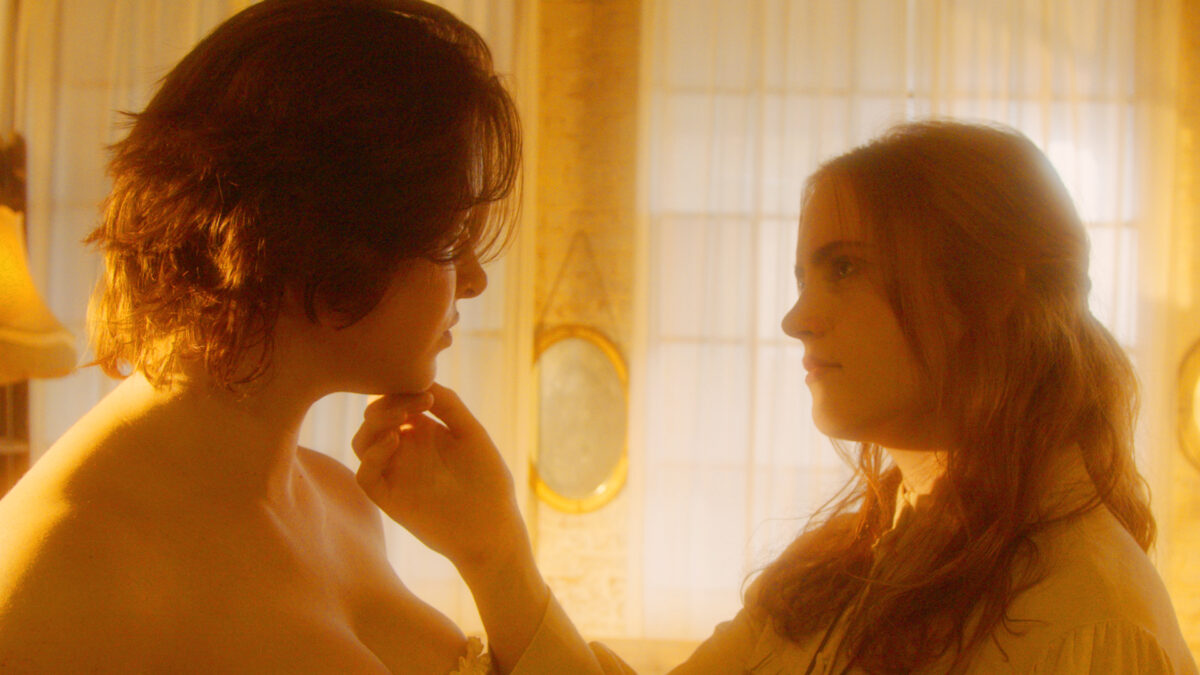
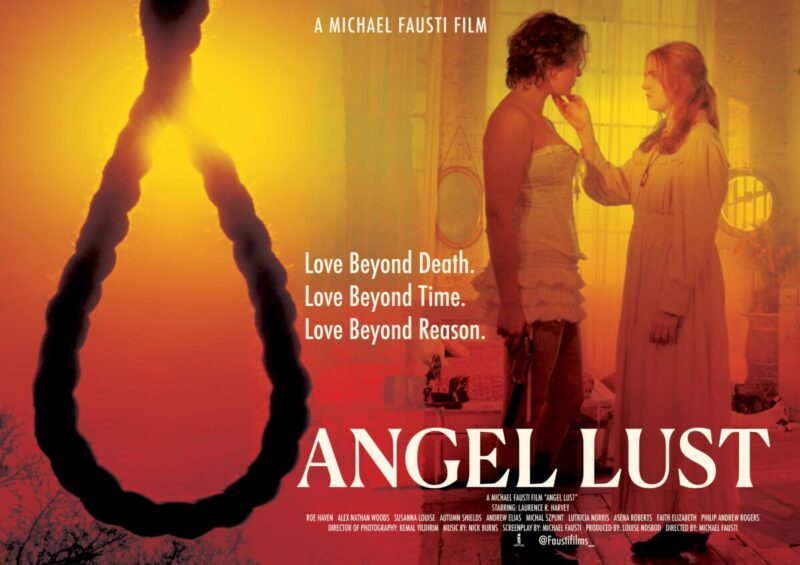
Film Name: Angel Lust
Director: Michael Fausti
Writer: Michael Fausti
Starring: Roe Haven, Alex Nathan-Woods, Susanna Louise, Autumn Shields, Andrew Elias, Asena Roberts, Faith Elizabeth, Michal Szpunt, Lutricia Norris, with Laurence R Harvey.
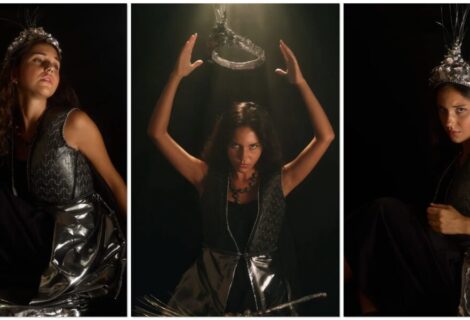
In 1782, Ophelia Danube faces the hangman’s noose for defying society. But death may not be the end. A mysterious mentor offers her a chance to find her lover Celeste again – not just once, but across the endless corridors of time. As Ophelia’s obsession drives her through era after era, dark forces conspire to make certain that some loves are truly doomed.
In a new exclusive interview on Blazing Minds, I got the chance to ask Writer-Director Michael Fausti a few questions about his film Angel Lust, which will have its World Premiere at The Horror-on-Sea Film Festival on Saturday 17th January at 20:00hrs.
Q. Your film Angel Lust has been selected to play at the Horror-on-Sea Film Festival. Can you tell us what we can expect?
A. Angel Lust is a dark, gothic, time-travel story about obsessive love. It’s set across multiple time periods; 1782, 1852, 1922, and 1992. We witness our Protagonist, Ophelia Danube, journey through time searching for her lover Celeste. We first meet Ophelia at the moment of her execution in 1782, when she’s offered the chance to find Celeste again across different eras, whilst malevolent forces are working against her at every turn.
Expect something atmospheric and strange, with horror that comes from psychological dread, and the weight of institutional oppression, rather than jump scares. Our Director of Photography, Kemal Yildirim, has created something genuinely dreamlike: visuals that shift between beauty and unease. Furthermore, musician Nick Burns‘ score and sound design stay with you long after scenes end, creating a sense of dread that’s essential to Ophelia’s journey.
Q. What were your inspirations when writing the script?
A. I’ve always been fascinated by stories where time doesn’t behave how we expect, where it loops back on itself or traps characters in repetition. There’s a short story by Ambrose Bierce that’s haunted me for years, and I was inspired by its circular structure. I was also thinking about how religion has historically been weaponised against LGBTQ+ people. When I began writing I was affected by the death of a friend and colleague who was from the LGBT+ community, and that fed into the narrative. For me, oppression of people is “horror” in its most real form. So the script became about what happens when obsessive love meets institutional condemnation across time itself.
Q. Did you have any of the cast in mind for the characters when writing the script?
A. Not initially. We held open castings for the lead roles and were overwhelmed. We had over 300 submissions for each character. It was humbling to see that level of interest and commitment from actors. We asked everyone to self-tape, including people we’d worked with before, because we wanted to approach these roles without assumptions. It needed to be about who could inhabit the roles most truthfully, not familiarity or previous relationships.
Roe Haven, who plays Ophelia, actually self-taped for the roles of both Ophelia and Celeste. Watching actors explore different characters gave us insight into their range and how they understood the material. So many people went above and beyond with their tapes; particularly Susanna Louise, who plays Angel Lust’s Antagonist Marcella. Later, during rehearsals, you could see they’d really sat with the script and brought their own interpretations. That’s when you know you’ve got something collaborative happening, even before anyone’s on set.
Autumn Shields brought something essential to the role of Celeste. It would have been easy for that character to become simply symbolic, the object of obsession, rather than a person in her own right. Autumn gave Celeste real agency, dimension, and a genuine presence. The audience needs to understand why Ophelia can’t let go, and that only works if Celeste feels fully realised as a person, not just an idea someone is chasing through time.
Once we were in rehearsals and filming, the script became more flexible. Dialogue that worked on the page sometimes needed adjustment when delivered, and the actors sometimes found more organic ways to express what a scene was about. My job as director is to hold the vision, to know what the film needs thematically and emotionally, but also to recognise when an actor has found something truer than what I’ve written. It’s a balance. You have to be clear about what matters, but flexible about how you get there. The best moments come from that collaboration, when everyone’s serving the same story, but also bringing their own instincts to it.
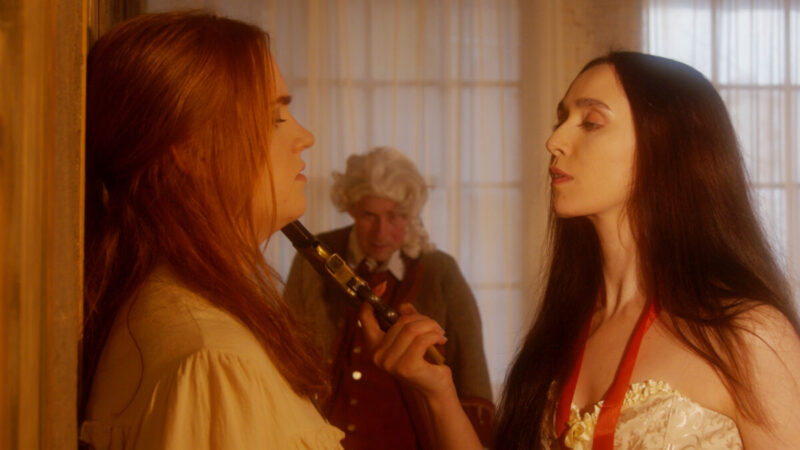
Our leads really stepped up to bring an “other worldly” quality to the project. Alex Nathan-Woods delivered exactly what I wanted in Lucien, leading us through the character’s journey from stoic mentor, to something more emotional. Roe really captured the feisty, yet vulnerable qualities I wanted in Ophelia, as she struggles to not only survive, but thrive in the strange new worlds she finds herself in. I knew from previously working with Andrew Elias (Däniken) in my past films, that he was the perfect choice for Marcella’s loyal, yet viscous aide. He genuinely brings an air of menace to the character and is the perfect accompaniment to the ruthless and relentless Marcella, who is seemingly stone hearted and brutal in her pursuit of Ophelia.
Q. What were some of your influences for the look and style of the film?
A. Visually, we wanted something that felt like a fever dream; beautiful but unsettling. Films like Carnival of Souls (1962), Picnic at Hanging Rock (1975) and The Innocents (1961)were influences in terms of atmosphere. We were working with very limited resources, so we leant into shadows, candlelight, and locations that already had texture and history.
Kemal and I talked a lot about painterly compositions. Given that our main character is from 1782, we reasoned that her visual lexicon would essentially be based upon paintings. Therefore, when discussing colour palettes and scene compositions, this was always at the forefront of our Pre-Production planning, and Pre-Visualisation. The period settings helped; to me there’s something inherently unsettling about the 18th Century, when you strip away the costume drama romanticism, and lean into how harsh and unforgiving that world actually was. Moving across the timeframes of the narrative allowed us to explore different visual aesthetics, whilst always looking to maintain Angel Lust’s key themes of obsession and entrapment.
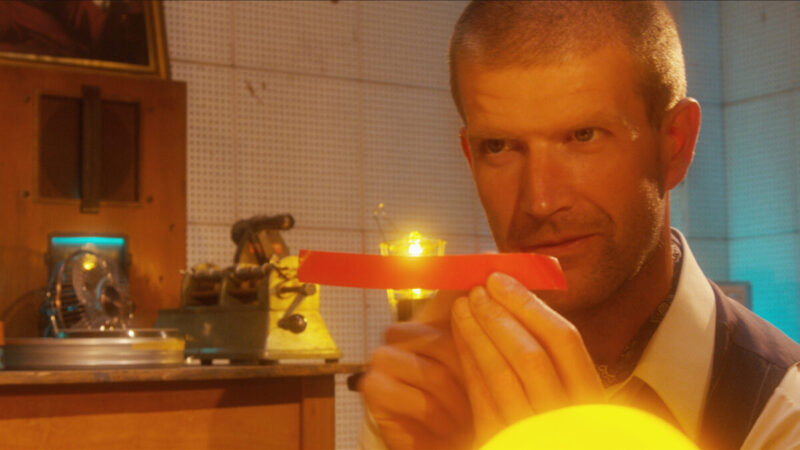
We were also exceptionally lucky with some of the locations we managed to secure, including an old projection room, a genuine Tudor building and a cinema, thanks to the team at Lumiere Romford.
Q. Did you make any changes from the original script during filming?
A. Yes, always. You write a script in isolation, then suddenly you’re on set with actors bringing unexpected dimensions to characters, or a location reveals possibilities you hadn’t imagined. We tightened some dialogue. There were a few moments where we let scenes “breathe” more than scripted, just following the actors’ instincts and unique perspective they brought to the character. But the structure and themes always stayed intact.
It’s also the case that some of the secondary characters’ roles expanded due to their “can do” attitude, and the energy they brought to the screen. Notable characters here are Asena Roberts who plays ‘Sister Agnes’, and Jade Chloe Ayres who is ‘Sister Magdalene’. Lutricia Norris deserves particular recognition for her work as ‘The Mother Superior’. She effortlessly inhabits the role with nuanced authority, while Faith Elizabeth navigates the contradictions of ‘Sister Faith’ with a performance that balances provocation and real screen presence.
Q. What were some of your favourite moments during filming?
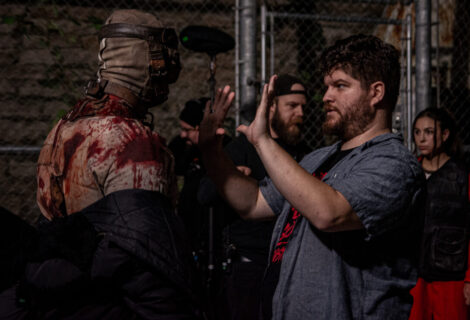
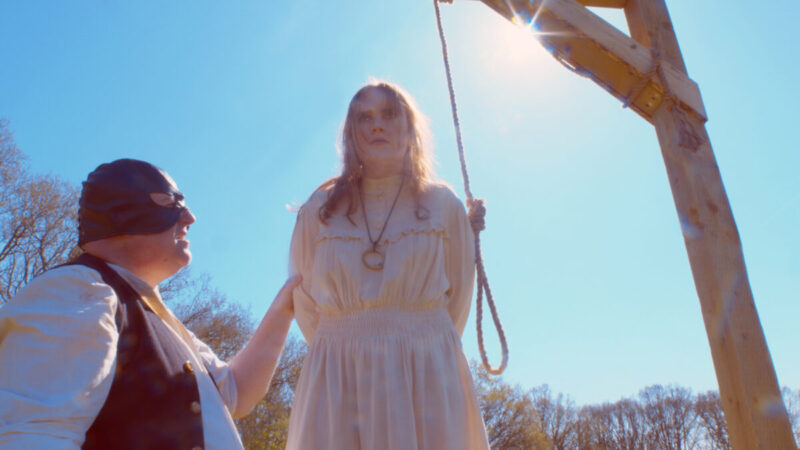
A.The 1782 execution scenes were intense, but rewarding. It was technically challenging, and a massive thanks goes to Simon and Dennis from Studio7props for making this happen. The scene was emotionally demanding for everyone involved, and watching our lead, Roe, navigate those moments with such commitment was remarkable.
As with all micro budget Indie Film, the locations that look fabulous on screen can be a challenge to film. We had to endure both extreme heat and, at times, freezing cold locations, but the commitment of the cast and crew were such that we could feel the film materialising exactly as we’d imagined it.
I also have to say, any time Laurence R. Harvey is on set is always exceptionally fun! He brings such a presence and understanding of genre filmmaking to proceedings; it elevated everyone’s work. He’s a real star! For one scene we had him wear these obscenely ugly NHS bottle glass spectacles. He didn’t complain once. He did however reduce us to tears of laughter with some of his ad-libbing, but that’s another story!!
Q. Did you experience any issues during filming?
A. Yeah, of course! We made a multiple period time travel film for £16,000, everything was an issue!! Weather, namely a really hot July, and later, freezing cold conditions made for some really challenging times.
Add to that limited shooting time, costume logistics, trying to make each time period visually accurate on practically no budget, all made for a challenging, but ultimately rewarding shoot. Producer Lou Nosbod, Head Production Assistant Jade Chloe Ayres, and our endlessly innovative Director of Photography, Kemal, are constantly coming up with creative solutions, whilst still maintaining the film’s vision. I firmly believe that constraints force clarity. When you can’t throw money at problems, you have to really think about how you tell the story. Every shot has to earn its place. I think that discipline actually strengthens Angel Lust.
Q. What makes Angel Lust stand out as something different in the horror genre?
A. Angel Lust refuses to offer comfort or easy catharsis. A lot of horror, even great horror, gives you a clear threat to defeat and a resolution to hold onto. We don’t do that. This is a film about being trapped in a cycle you can’t escape, because the trap is as much psychological, as it is supernatural. It’s about what happens when love turns into possession and desire becomes a prison.
What makes Angel Lust distinctive is that we’re unapologetically honest about the darkness within love itself. Not the sanitised, tragic romance version, but something messier and more human. Ophelia’s love for Celeste isn’t noble. It’s obsessive, possessive, destructive. The horror doesn’t come from monsters or jump scares, it comes from watching someone destroy themselves, and everyone around them in the name of love, while institutions of power pursue them across time itself.
Q. What do you hope people take away after watching the film?
A.I don’t make films to deliver messages, but if Angel Lust resonates, I hope it’s because people recognise something true about obsession, how love can become a prison when we refuse to let go. I also hope it reminds viewers that horror has always been the genre that speaks most honestly about power, control, and social persecution. If audiences leave unsettled and thinking, that’s exactly what I want. I also hope they are impressed with the visual spectacle that the team managed to create on a minuscule budget.
Q. Do you have any other projects which you are currently working on?
A.Yes, I’m currently developing a new project about a woman who enters a community seeking refuge, only to discover that what’s behind those walls isn’t what she expected. I’m keeping details close for now, but it centres on a deeply complex female anti-hero.
People often ask us, “is it horror?”, when discussing our projects. For me, real horror is people and their intolerance. The systems they build to control others. Whether you call it horror, psychological thriller, or dark drama doesn’t really matter to me. I’m interested in making films that refuse those easy categories, that make audiences uncomfortable in ways they weren’t expecting. If Angel Lust explores how religion can be employed to condemn desire, this new project will ask different questions about power, and what it means to be remade entirely. We’re in the early stages of this new project, but it’s shaping up to be something provocative, that resists comfortable categorization, which is exactly how I like it.
Angel Lust is our third self-financed feature, and we’ll keep making films as long as we can scrape together the resources. Independent filmmaking is a war of attrition, you just keep going until you can’t anymore. Right now the focus is on getting Angel Lust out into the world via festivals and finding its audience.
Q. If someone was looking to write and direct their own film what advice would you give them?
A.I’d say, make something you actually care about, not what you think will sell. If you’re working on a micro-budget, that becomes even more importan.You don’t have spectacle or star power to hide behind, so your film has to have genuine conviction.
Also, understand that limitations force creativity. You can’t afford elaborate sets? Use locations creatively. Can’t afford VFX? Find ways to suggest horror through atmosphere and performance. Most importantly: finish the film. So many people start and never complete. Finishing, even imperfectly, is the only thing that matters. And once you finish, start the next one. Your voice develops through accumulated work, not singular perfection. There will always be times when it will be easier to compromise, or even walk away. Trust that if you stay true to what you need to express, you’ll find the audience who need to see it.
Angel Lust will have its World Premiere at The Horror-on-Sea Film Festival on Saturday 17 January at 20:00hrs.
You can find out more about Angel Lust and purchase tickets for the film here

Published in various websites, Philip is a reviewer who is best known for his interviews and media coverage of independent projects including; films, books, theatre and live events. Always on the lookout for something different to cover!