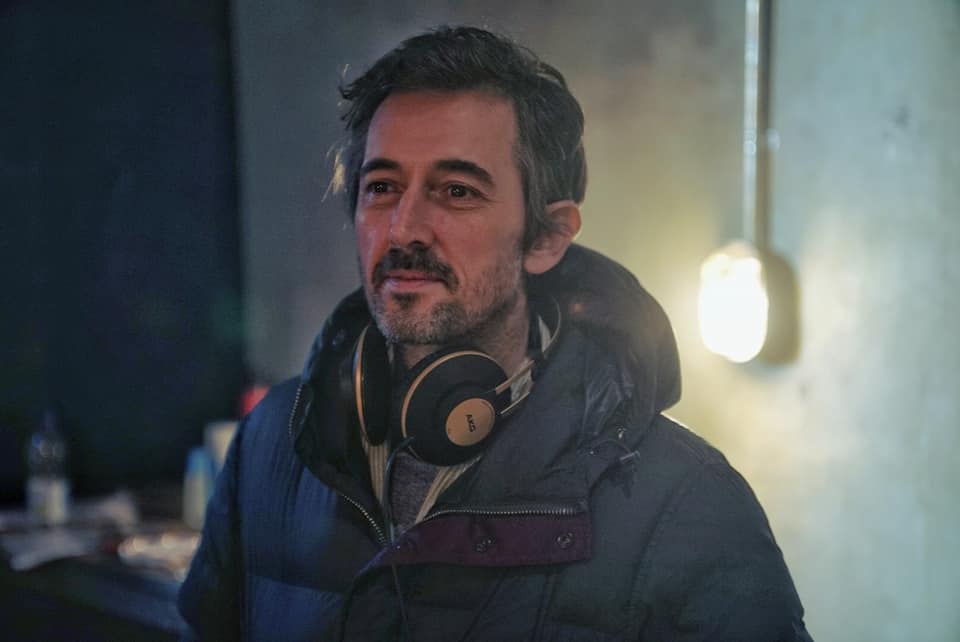


Director: Jez Alsop
Writer: Ryan Davis
Actors: Nicholas Clarke, Nisaro Karim, Dean Kilbey, Darren Tassell, Gregory Piper
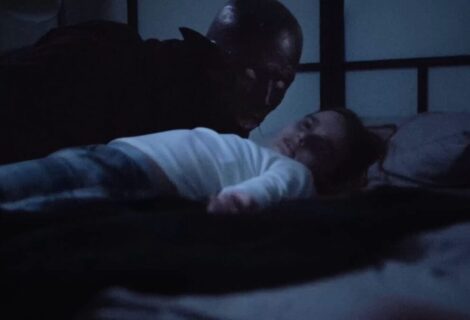
Synopsis: On the night low-level gambler, Daz Clemance is leaving Birmingham to start a crime-free life with his girlfriend in Spain, he’s accused of fixing a bareknuckle fight in a warehouse. He is beaten, stabbed and locked in a cupboard. Can he escape before it’s too late?
With The Southend-on-Sea Film Festival will be returning once again from 26th – 29th May, I got an opportunity to ask Director Jez Alsop a few questions about the film ‘Fixed‘ which has been selected to play at the festival on Saturday 28th May at 4.00pm
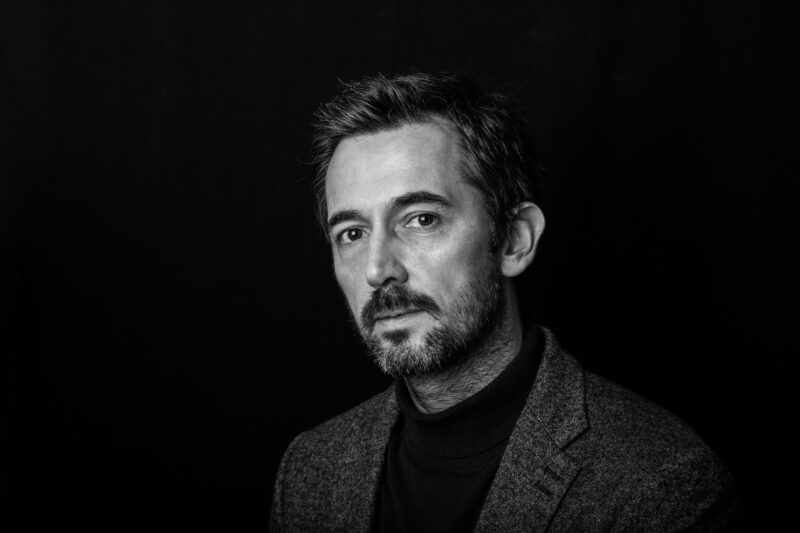
Q. What can we expect from the film?
A. There is a pervasive tension that runs throughout the entirety of the film, that’s something we worked hard to create and something that audiences have told us they really respond to. Nicholas Clarke’s wonderful performance, as Daz, is the heartbeat of the film. He is really powerful in the role, not in the physical sense, but he turns a guy that could have been a loud-mouthed pub punching-bag into a multi-dimensional human being who we can see ourselves in. He gives the character real pathos.
Q. How did the idea for the film come about?
A. Ryan, the writer, and I met with each other and it was a bit like the scene in Taxi Driver where Travis and Wizard talk and don’t really say much of anything, other than a lot of inarticulate nonsense. And yet, by the end of it, we understood that we both were dying to make a film and we would have a much better chance of doing what we’d both been doing separately for some time, together. We collaborated on a short, which went well. And then we were kicking around ideas for a feature and being really brutal with what we’d keep and what we’d reject, as we knew we wanted to do something simplistic and primarily in one location for it to be achievable on a budget. We eventually settled on the idea for Fixed, teamed up with producer, Alan McQueen, and then when we found The Lampworks in Birmingham, we just looked at each other with that look of, ‘yeah, this is happening.’ 8 months later we were shooting the film. It was insane, looking back at the timeframe in which we did it.

Q. What were some of your influences for the look and style of the film?
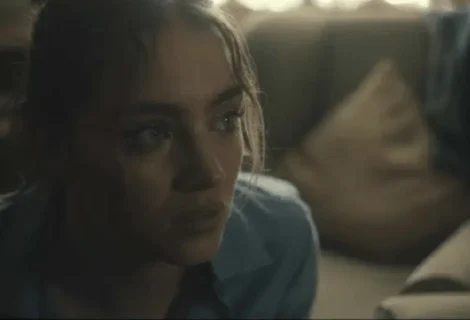
A. One of the big influences for me was how the Coen brothers went about making the film, Fargo. I listened to Roger Deakins’ podcast, and he was talking to Joel Cohen about the film, and Joel was saying that the footage that’s in the final film is pretty much what they shot, and that they didn’t really shoot unused coverage. This completely blew my head off. I watched the film over and over to try to learn more, and I realised that instead of using five or six shots to cover a scene, they’d use two or three, max. And they’d be clever about developing a shot, instead of cutting, using the foreground, midground and background, focus, movement, combining shots together. Because the one thing you always want more of when you make a film is time. I thought that if we approach the film in this way we’ll cover what’s essential, hopefully in an interesting way, and then if we have more time, we can try some ideas that are more experimental. It worked and it has really changed the way I think about coverage. Our film focusses on one character for a lot of it, so then it was a case of sustaining the audience’s interest and keeping the intensity. In planning, I wanted to use a lot of close-ups to make the film feel claustrophobic, and when it became clear that Nick’s performance was as strong as it was, I embraced this by keeping the frame tight for much of the time. It was just as well, because we didn’t have the money to build a bigger set! I took influence from a lot of gritty, British films and really looked at films with a lot of night scenes like Hyena by Gerard Johnson and Mike Leigh’s Naked. Cinematographer, Gary Rogers and Gaffer Andre Govia were amazing at taking the seeds of these kinds of ideas and then turning them into something shootable. They spent several days pre-lighting the set and that was a great move, as it meant that you then spend less of your time lighting and more of it shooting.
Q. Were there any elements of the original script which were adapted during filming?
A. Yes. There were scenes that just plain didn’t work in rehearsal, so we changed them. And then there were some short linking ideas that weren’t in the script that we added. It’s especially satisfying when these ideas work out and you feel audiences react to them, even though they weren’t initially planned. The scene with Chopper (Anthony Wakefield) coming to try to rescue Daz was added in and the bit with Mark (Darren Tassell) threatening to ‘Shove that shoe right up your arse’ was added in. The audience usually laughs at that, and the way we shot it is odd, as we pan around and he’s just there at the door like a ghostly presence. The main thing though that changed were the scenes with Ravi (Nisaro Karim). He wanted to improvise a lot of his part, and after the initial fear that you feel, thinking that when he goes AWOL the scenes could spiral out of control, with a little bit of guidance, he was brilliant. He made us laugh every day we were working on the film and all through post. But that’s filmmaking, you have to plan, but if you try to constrain every element you will end up with something pretty pedestrian. If actors, and other personnel don’t feel the freedom to suggest and try things out, then the film will be a lot less rich and interesting for the audience. The script is just a plan, and sometimes you shoot what’s on the page word for word, and sometimes, you feel it’s not working and it has to change. It’s a big mistake for a writer and a director to dismiss an idea from someone else that either adds to what they’ve done and makes it more, or is just a better idea. A lot of people starting out resist this, perhaps because they think it undermines their authority, or something, but I’m really open to ideas from cast and crew and for changing things that make the film better.

Q. What were your favourite moments whilst making the Film?
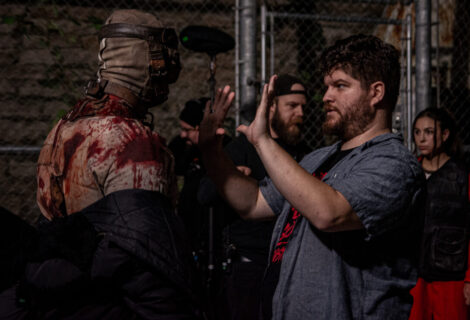
A. There were so many, but one that comes to mind is when Nick is being dragged in through the set and I just watched on as the whole crew was working in unison, and it was like, ‘Oh, shit. This was that thing I was storyboarding for the last four months.’ It was a real thrill to see it all come to life. The fight scenes were complete chaos, but great fun to shoot, and working with a fight choreographer (Phillip Ray Tommy) was something new for me and again, it’s one of those situations where you suggest a few things and then he takes them and turns the scene into something way beyond what you could have anticipated. We made more of lots of trippy little moments that we always thought we’d include, and had a lot of fun shooting (Nick may disagree with this, as he was rolling around on the floor for a lot of them). Nonetheless, I was unsure as to whether they would work, or just end up looking a bit bizarre, or pretentious, and they’re actually something that lots of people have said they love in the film, so we took a chance on some strange visual elements and it worked out. Mikolaj Kacprzak, the editor should take a lot of credit because he was great at bringing out key moments in the film, and also, making the film feel like a movie, that really takes the audience somewhere. Technically, Mik was able to translate his ideas for the more hallucinatory sequences into visuals that work on screen and help to give it that movie feel.
Q. Did you experience any issues whilst making the film?
A. Covid hit as we were in prep, so all of the auditions were done via self-tape, the read-throughs were done over zoom, as were most of our meetings. We were worried that we would not be able to shoot, or get shut down when we did. We had to be very careful and adhere to all of the restrictions whilst shooting, and then we went into the second lockdown the day after we wrapped! So that added a level of stress that we could have done without. The Lampworks is a great location, but the warehouse was really cold. It’s not as bad when everyone was in there and it warmed up, but it was really tough for Nick, when he’s doing a lot of work on his own in just a t-shirt. To adhere to social distancing, we had to shoot a lot with just Nick, Cinematographer Gary and the Sound Recordist (Wayne Reay) in the room, and I’d be just outside with a handheld monitor. It wasn’t ideal, but we just had to adapt. We had a flood, that nearly destroyed the set. At one point, it was like, ‘What else can happen?’ But it galvanises you. We were a tight-knit team and we tackled everything together, that helped us get through the tough times.
Q. What do you hope people will take away from the film
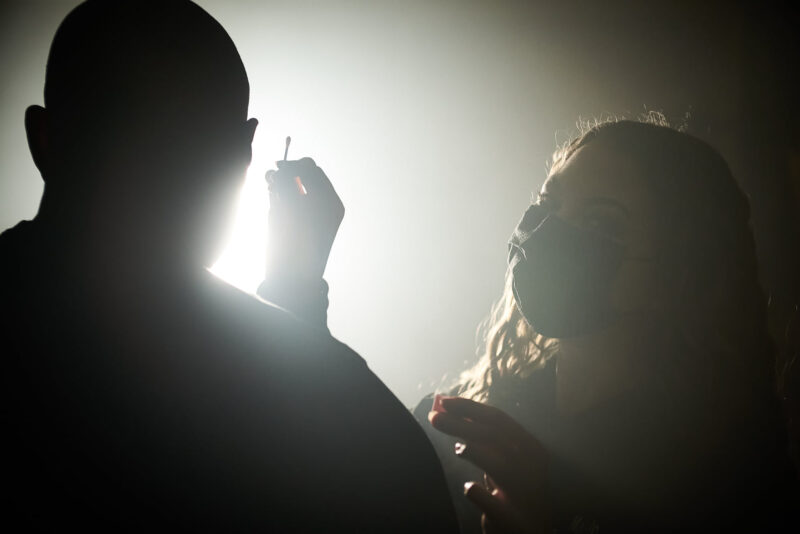
A. I hope that they’ll enjoy it, first and foremost. We wanted to give audiences a thrill-ride, albeit in a small-scale kind of way. It’s about a father who’s estranged from his son, and is a thorn in the side of his girlfriend, and he is a character who makes bad choices, but not because he has bad intentions. I don’t think Fixed is going to change the world, but if it makes someone think about their own life and the choices they’re making in a different way, or be more compassionate to someone who they’d ordinarily be quick to write off, I’d feel like it has resonated. We’re part of the whole British Independent film scene, and as someone who loves and supports British films at every opportunity, I hope that people can do likewise. And it’s a Midlands film and a Birmingham film. How many films have you seen come out of Birmingham (that are actually Birmingham films)? There’s the Spielberg Film, which doesn’t count, obviously. There’s Felicia’s Journey, the scene in The Firm where they have it off down under the old New Street, then you’re scratching your head to think of examples. Cosmos was the last film I could think of, you know that was actually distributed and out there to see. We should have a proper film culture here in Brum, as the second city with a large talent pool, but we don’t. We intend to change that.
Q. Do you have any other projects which you are working on?
A. Our next movie is called Hoarder House and is a horror which focusses on two kids who’ve grown up in care who inherit their biological father’s house. Needless to say, things quickly start to go bump in the night. It’s a character-based horror in the vein of Under The Shadow, The Babadook, The Innocents and The Haunting. We’re really excited about this and looking forward to getting stuck into it. Again, we will shoot in The Midlands and continue to give opportunities to local established and up and coming talent. We have a handful of other projects, that we’ll know more about after Cannes.

Q. If someone is looking to direct their first film, what advice would you give them?
A. Keep going. It’s hard to stick in, which is why most people abandon their dreams and become an estate agent, or something. If you’re being creative, building your body of work and making connections you’re probably gaining more ground than you realise. Establish your ‘A’ team, because, even if you think you can do it all on your own, you can’t. Shoot on the most professional format you have available. Steven Soderbergh might make his films on an iphone, but he can, because he’s Steven Soderbergh. Listen twice as much as you speak. Watch Fixed, and tell everyone you know to do likewise!

Published in various websites, Philip is a reviewer who is best known for his interviews and media coverage of independent projects including; films, books, theatre and live events. Always on the lookout for something different to cover!