

Film: What’s It Like
Director: Steve Downey
Writer: Christina Jane
Actors: Christina Jane
Synopsis: This short film, directed by Steve Downey is based on a poem about Autism, written and performed by Christina Jane. So far the film has won 14 awards at film festivals across the world! “What is it Like?” is the third of a series of 4 films by Steve and Christina about Autism and ADHD. Both Steve and Christina are on the Autism spectrum, but were not diagnosed until adults. Their mission is to bring about increased awareness of Autism and ADHD, particularly amongst women and girls.
In a new exclusive interview leading up to the Southend Film Festival I got a chance to ask Director Steve Downey a few questions about the short film What’s It Like.
What’s It Like will be playing at the Southend Film Festival on Saturday 8th June at at 18:30 as part of the Mostly Made in Southend part one collection of shorts.
Q. What’s It Like has been selected to play at the Southend Film Festival. Can you tell us what we can expect from the film?
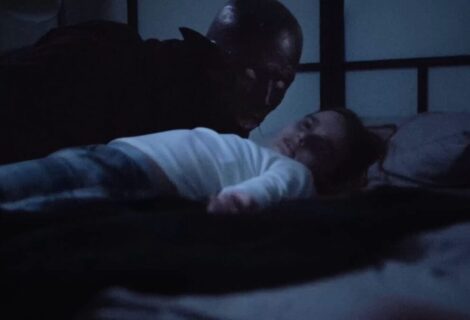
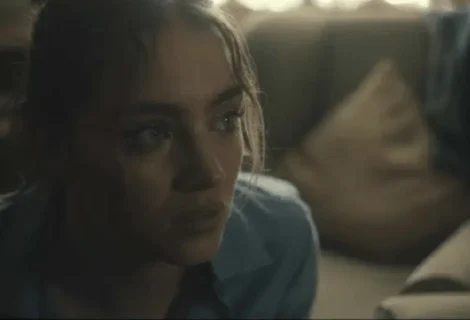
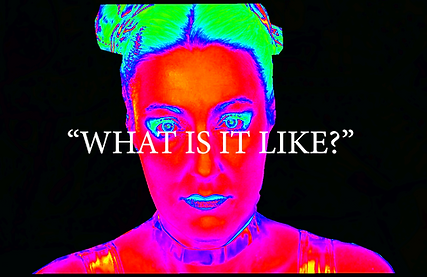
A. The Film asks the questions: “What is it like to have autism?” And “What is it like to be normal?” These are two questions that are very difficult to answer because every autistic person’s experience is different and the same can be applied to people who are termed as being normal. Our film gives the perspective of the poet and performer, Christina Jane, who likens her feelings as being like a robot or an alien, but poses the question that perhaps everyone is on the spectrum. The 4-minute film is shot in vivid colour with atmospheric music and visual effects, filmed at my art/film studio, the surrounding grounds and at Clacton Pier.
Q. How did the film come about and what attracted you to the script?
A. This is the third of 4 films about Autism and ADHD based on 4 poems by Christina Jane on which we have collaborated on over 2021-23. So far, the four films have received 84 awards from film festivals across the world, with this film receiving 14 awards to date. Christina and I met in 2020 when she was looking for a filmmaker to transform some of her poems into short films. Both Christina and I were diagnosed autistic as adults just a few years ago.
Q. What were some of your favourite moments whilst making the Film?
A. My favourite moments are towards the end of the film where slides of my own paintings are projected onto Christina’s face, aimed at conveying the changing feelings she experiences as an autistic person.
Q. Did you experience any issues whilst making the film?
A. The filming when very smoothly and was completed in around 2 days. The tricky part was in the editing, trying to match the visuals to the words of the poem and adding atmospheric music and sounds effects.
Q. What do you hope people will take away from the film
A. We hope the audience will enjoy the film, both the message of the words and the striking visuals and sound. And also have a greater insight and understanding of what it is like to be autistic.
Q. Do you have any other projects which you are working on?
A. Christina and I have now completed the four films we agreed to make. I plan to try and get these taken up on a tv network at some time in the future. Personally, I am also a visual artist and currently completing a series of 24 artworks made recently while on artist residencies in Tuscany and Norway and 6 short films based on my experiences at these two locations. Plus, possible collaborations with a local novelist and playwright. So very busy!
One of my student films “Just Before Dawn” won the recent Colchester Indie Short Film Festival and another film “Appropriate Social Response Number 3” is showing later this month at the Short and Sweet Film Festival.
Q. If someone is looking to direct their first film, what advice would you give them?
A. My mantra on any artist project is “Think big. But keep it simple!” Personally, I became interested when an art student where I ran the University Film Society. After I completed my art degree, I applied to the London Film School in Covent Garden and was accepted on the 2-year full time course. This was probably the best educational experience of my life, being taught by giants of the cinema like Nicholas Ray (Rebel Without a Cause), Don Siegel (Dirty Harry) and Stanley Donen (Singing in the Rain) with my main tutor the German Director, Wolf Rilla (Village of the Damned). At film school you learn all the skills necessary in the film industry, so I would recommend this to anyone serious in a long-term career as a filmmaker. For a beginner get a good second-hand mirror less camera, microphone, tripod and lights. Invest in an editing suite like Adobe Premier Professional. Join a a local film society/ club and a group like the Essex Filmmakers Collective. Go to local and regional short film festivals. Get training online or through personal short courses. Watch lots of films, particularly those classics from the 1940s – 1960s. Watch these films twice. First time for enjoyment and second time to analyse why they are good in terms of script, performance, direction, lighting, sound, etc. Look up the BFI list of “Greatest Films” and put them on your watch list (especially foreign films). Don’t be afraid of making mistakes. Mistakes are good! That’s how you learn. Don’t give up!
You can find out more about the Southend Film Festival on the website

Published in various websites, Philip is a reviewer who is best known for his interviews and media coverage of independent projects including; films, books, theatre and live events. Always on the lookout for something different to cover!