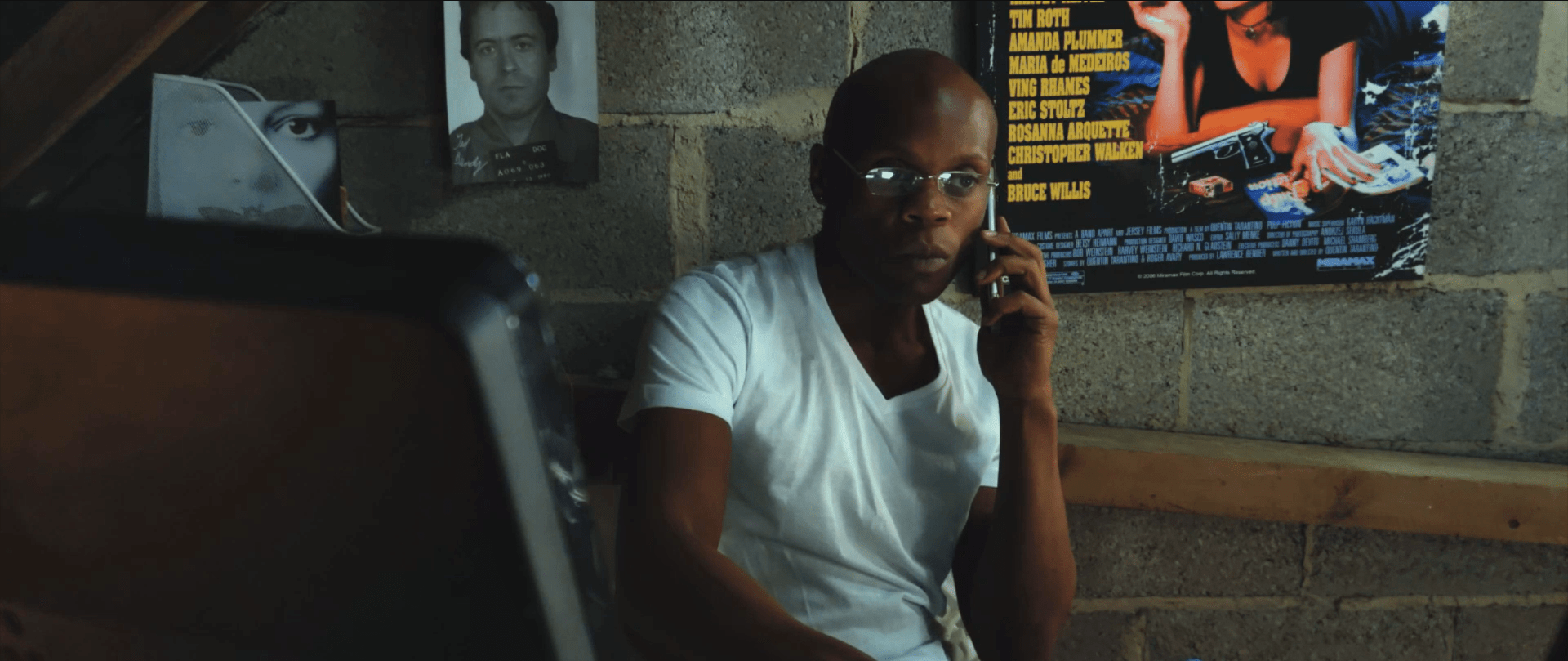
Film Name: Surveilled
Director: James Smith
Writers: James Smith, Caroline Spence
Starring: Dywayne Thomas, Timothy Skyler Dunigan, Mia Mills, Nathan L Weller, Dee Quemby
Surveilled is a study in psychological manipulation and the perception of justice.
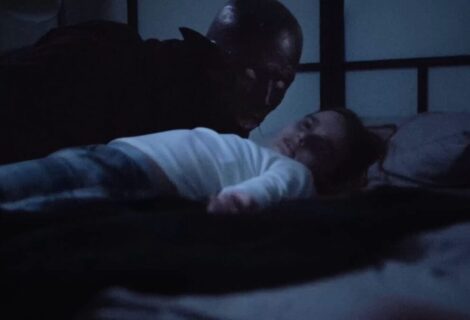
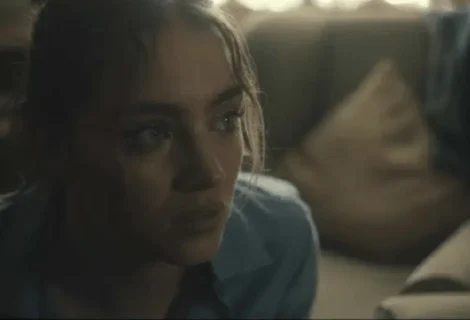
Joe Brooke has dark interests. As well as working under the radar for low-level criminals as a surveillance operative, he also has a fascination with serial killers – his bookshelf is filled with biographies on the most notorious murderers of modern times.
Ironically, however, Joe’s hometown of Clairmont is the home of the country’s latest serial killer. Three local women have been brutally murdered by an attacker dubbed The Clairmont Murderer, a copycat killer who re-enacts the sickening murders depicted in a series of violent crime novels, the fanatical popularity of which is sweeping through the country.
Having recently watched a TV crime show highlighting the case, Joe finds himself embroiled in the world of The Clairmont Murderer when he witnesses some disturbing behaviour in the course of his work.
In another interview leading up to the Horror-on-Sea Film Festival I got a chance to ask Surveilled director and co-writer James Smith a few questions about what we can expect from the film. Surveilled will play at Horror-on-sea on Saturday 22nd January at 17:30.
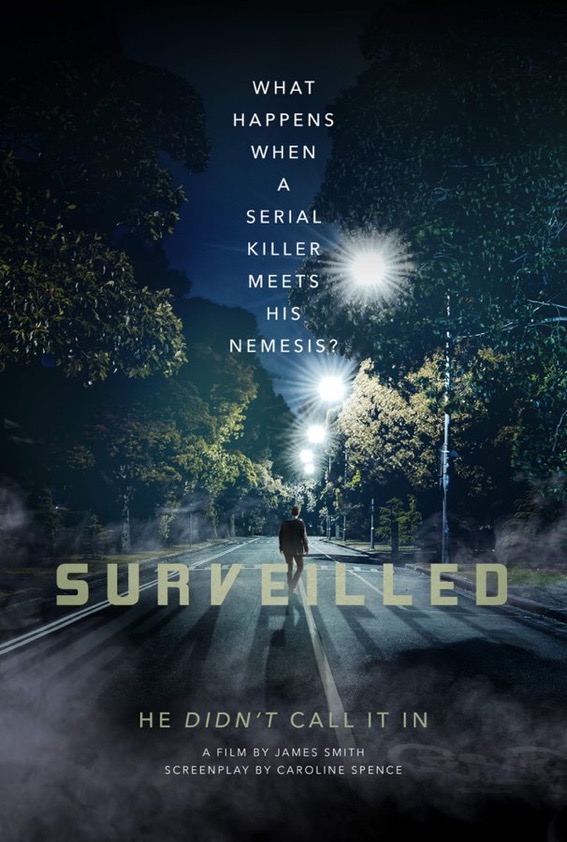
Q. Your horror film Surveilled has been selected to play at Horror-on-Sea. Can you tell us what we can expect from the film?
A. I think audiences can expect to see a mashup of ‘whodunnit’, horror, and mystery. I wouldn’t call it a ‘conventional’ indie film horror, say a slasher, since it draws suspense primarily from dialogue, intrigue, and story, rather than gore or physical threat. So, I believe that if the Horror-on-Sea crowd want a break from some of the more extreme horror, they may want to give Surveilled a try!
Q. You co-wrote the script with Caroline Spence based on your original story. What were some of your influences for the story and what is the process when writing the script?
A. The story of Surveilled goes back at least ten years when I was watching a crime busters-style TV programme in the UK. It detailed the hunt for a serial killer who’d formed horrid ways of stalking and then killing women in Europe – eventually bringing his heinous deeds to the UK. I developed a treatment loosely based on these crimes, but was not happy with detailing the murders too closely for fear of upsetting the family members involved. Therefore, we rewrote the idea and, today, Surveilled is much different, but still captures the essence of an elusive serial killer on the loose in a local community.
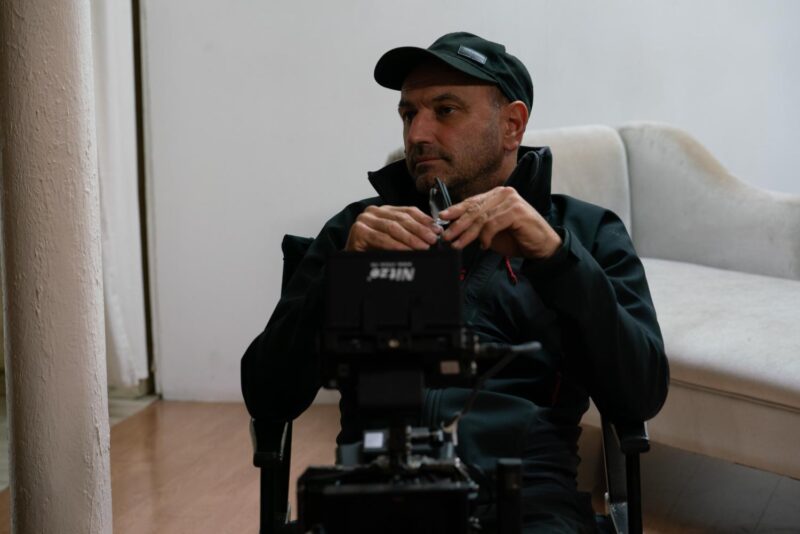
Q. What were some of your influences for the look and style of the film?
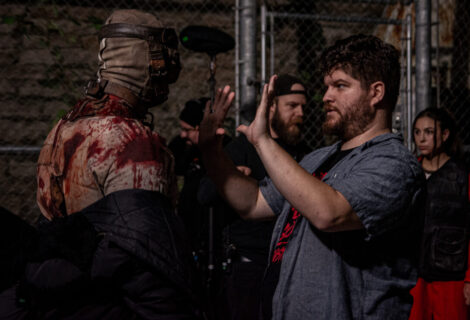
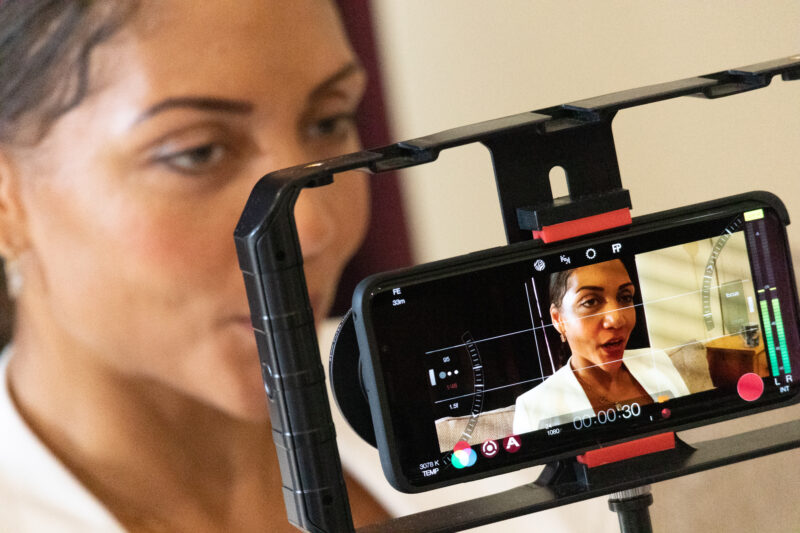
A. For budgetary reasons and speed of shooting, Surveilled was shot on a mobile phone with a few bells and whistles attached, and so the look and style of the film was driven to some extent by the technology – one lens, wide shots, extensive handheld work, and so on. Despite this, I tried to capture the mood of films by David Fincher or Paul Greengrass (albeit on much smaller film sets!). Unfortunately, we ran into blazing sun with clouds sweeping across the sky, which made for lighting continuity headaches and a departure from the gloom and bleakness I originally sought. Despite this brighter look, Surveilled may still creep people out with its odd characters and generic Stepford-type setting.
Q. Did you make any changes from the original script during filming?
A. We made considerable changes to the screenplay, not only during filming, but also in pre-production, essentially to adapt to the locations and cast available, and again to the limited budget. To some extent, I harbour some reservations about how we changed the original story, which is fabulous, but the upshot is that we have another film that we can now make, since it is so vastly different from the version to be screened at Horror-on-Sea. Ultimately, despite those reservations, the feature film was made, an incredible achievement for all, and now we move on with that experience in the bag.
Q. What were some of your favourite moments during filming?
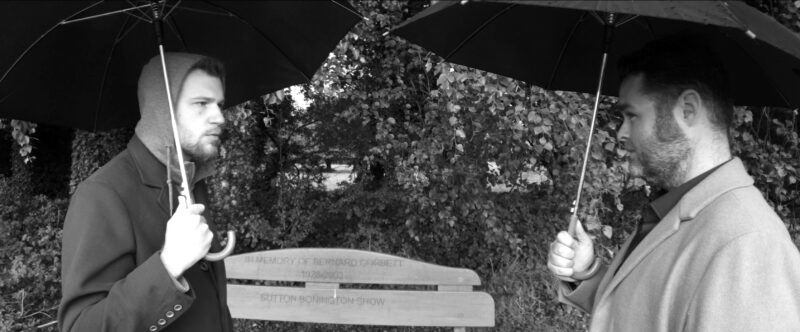
A. Although people might think we’re mad, getting up at four or five am and seeing the world in a different light is always a great experience in filmmaking. On most days, we’d also stay up late, logging and checking footage and preparing paperwork and gear for the next day’s shoot. This is a side of director/producer life that people don’t often see. Despite the sleep deprivation, we kind of loved the buzz of it all – and the sheer physical and mental endeavour was undertaken to an even greater measure during our recent Casting Kill shoot. On Surveilled, I also enjoyed some of the moments when shooting quickly was the only option, for example, when a squall and rain shower hit and we needed to film a dialogue scene out in a park – that’s one of my favourite scenes in the film, and everyone was working as a team to get it done.
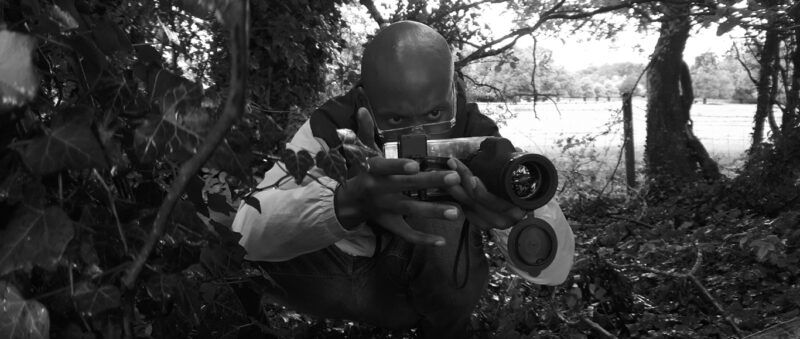
Q. Did you experience any issues during filming?
A. Apart from the weather, there were a few nasty ‘tech’ problems on the shoot. Using mobile phones takes a different approach, and you can often run into unexpected issues. Software crashes happened frequently (we used an app on the phone to apply manual camera settings) and we also had some nerve-wracking days early on in the shoot when the software decided to make the darker shots incredibly grainy and unusable. We promptly ordered a different phone and resolved the problem without too much disruption. Noise was also a major problem, as it often is with many film shoots. Even though we were filming in supposedly quiet villages and towns, angle grinders, aircraft, school playgrounds, and leaf blowers all added to the audio recording hell! It’s an interesting point to bear in mind: filming in the UK countryside, outside of cities, is not always as quiet or as easy as you may think.
Q. What makes Surveilled stand out as something different in the horror genre?
A. Surveilled was an ambitious undertaking, no doubt about it, and it gave opportunities to a mix of film enthusiasts, and professional and non-professional actors alike, some of whom flew in from as far afield as Austria, The Netherlands, and Australia to take part in our little crowdfunded indie film shot on a phone! Furthermore, the story involves heavy dialogue and suspense-building from components other than chainsaws and knives and creepy basements. So, I think in that sense, it really does stand out as a very different horror film project, and definitely one for people who like a good plot.
Q. What do you hope people take away after watching the film?
A. I hope that people enjoy the film as perhaps an experiment in the lighter side of horror – and not something to be taken too seriously. In fact, I hope they enjoy the plentiful humour that forms part of the build-up. Also, the project provided new experiences and opportunities for actors to try their hand at this guerilla-style way of getting a feature film made, so it would be great if people appreciate that aspect and are equally inspired.
Q. Do you have any other projects which you are currently working on?
A. I’m currently working on a comedy feature film called Best Geezer, which we’re shooting in the Southend area of Essex (UK). Humour is a big part of our work, but we haven’t broached a full comedy, so it’s a tantalising prospect, especially with the abundant local talent on hand, and London of course. The Finca, a supernatural horror set in Spain, is slated to follow – it involves just a few characters, so it should be a wonderful opportunity to get back into international work. Oh, and Casting Kill, our London-based horror, is now in post-production, so life is as busy as ever!
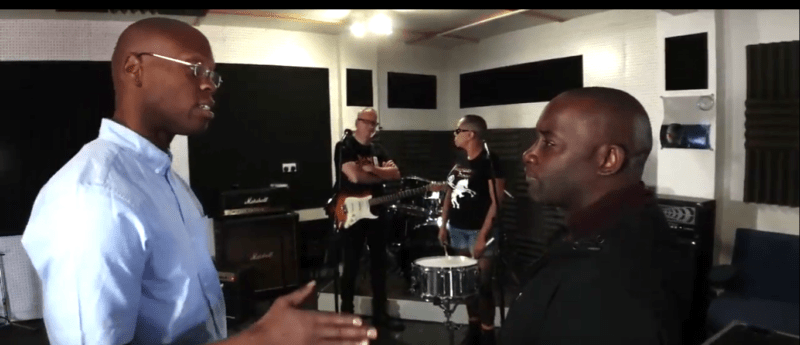
Q. If someone was looking to direct their own film what advice would you give them?
A. With all of the great directors out there, and wealth of information online about the discipline, it’s humbling that people ask me at all about film directing (and even acting and other aspects), yet it does happen occasionally. But what does one say, other than the usual cliches: follow your dreams; be true to yourself; never give in, and so on? Some people spend all day loading that stuff onto social media, but when the phone’s dead and no one’s interested in your ‘incredible’ screenplay, you need more. You’ll probably need to take the hard road, build a project by yourself, and that may pay dividends in the long run. I would say those looking to direct their own films also need to ask whether this is genuinely the route they wish to take. There are hundreds of fascinating and rewarding roles within film production, of which directing is just one. When you have problems on set, you’re behind schedule, over budget, and you have a crowd of people looking at you for guidance, you can’t run off into a room and hide you need to know from the outset that this game is for you.
You can find out more about the Horror-on-Sea Film Festival on the website https://www.horror-on-sea.com/

Published in various websites, Philip is a reviewer who is best known for his interviews and media coverage of independent projects including; films, books, theatre and live events. Always on the lookout for something different to cover!