

In the Campfire Light (2019)
Director: Samantha Michelle
Writer: Samantha Michelle
Stars: Steven Brand, Sarah Rich, Alison Fraser, Chrissie Capobianco, Torsten Johnson, Madeline Ruskin
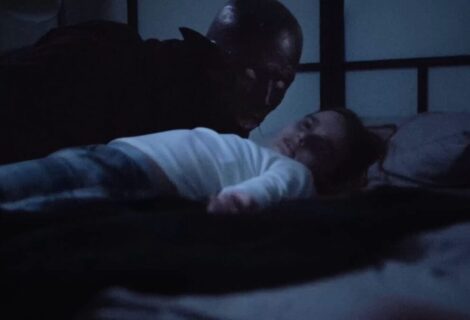
An ex-ballerina joins an acting class conducted by a very charismatic teacher. As she explores training as an actor, and pursues her new ambition, she becomes closer and closer to her new mentor, who harbors desires of his own.
In my latest in my latest interview on Blazing Minds, I got an opportunity to ask the multifaceted actress, filmmaker and DJ Samantha Michelle a few questions about her latest short film In the Campfire Light.
Q. How did you get into filmmaking originally?
It started back when I had a vintage shop called The Treasure Chest in Toronto. I wanted to create cinematic, narrative-oriented ‘storybooks’ essentially in place of traditional ‘lookbooks’. I then moved on to make my first film, a fashion film for the iconic 1970s London shoe cobbler Terry de Havilland. I had met Terry and his wife in London and I decided to bring his designs over to Canada and I wanted to celebrate that and share the spirit of who he is as – an extraordinary, entirely irreverent artist.
Q. You have a new short film In The Campfire Light is currently being submitted into festivals, can you tell us a bit about what we can expect from the film?
It’s a project that’s very near and dear to the heart and I hope it’s those elements of authenticity and humanity that shine through. It’s a story that came out of a frustration with the sound-bite and simplified quality of the ‘me too’ conversation and a respective desire to complicate and expand the discourse of exploitation in the entertainment business, begging the question of what happens to our sense of volition when under the influence of our dreams. It was very important to me that subtlety reigned supreme – I hoped to give cinematic and narrative form to the intrinsic and defining intricacy of these sorts of controversial exchanges, positioning the audience in this same place of bizarre bewilderment and essentially, disappointment. I wanted to paint a portrait of an active and engaged female protagonist and illuminate her journey in pursuit of external approval, working against her own self-doubt and examine where that road takes her.
Q. The film has some underlying messages within the story which are also open to interpretation, what were your influences when writing the script?
I’ve always loved stories that lend themselves to a real diversity of interpretation, that invite the audience to ask and wonder and in doing so consider potential parallel truths within their own experiences. My favourite films are those that really focus on the hero’s journey, particularly when that hero is at war with themselves and their own internal realities in the arena, on stage, or in the public sphere. I think there’s something so interesting, visually, about the staged battle, a physical manifestation of the thing that lives in all of us, that is, the desire to be applauded, approved, praised, essentially – valued. In that vein, and perhaps bizarrely, I’m a huge fan of boxing movies – Rocky (all of them, but special shout to IV), Cinderella Man, The Fighter. I’m also a huge admirer of Cameron Crowe, Almost Famous and Jerry Maguire are two of my top all-times; you root so hard for his faulty heroes and his use of music is just beyond brilliant, and certainly, music was a huge source of inspiration for this particular film.
Q. Has being a female effected how you have been initially perceived as a filmmaker and the opportunities, which are offered to you?
The entertainment industry is like so many others, undoubtedly one that structured by experience – the more of it you have, the more you can do. And so, starting out as a filmmaker, it is just not an easy thing. And then when you throw being female into the equation, and you position yourself in the minority in the profession. I think people wonder whether or not you’ll be able to essentially ‘pull it off’ because it is a position of authority, directing a film, and positions of public authority, it’s a relatively new thing for us females. And if you look at the history of Hollywood and movie-making, for a long time, men have been writing the stories. It’s cool and very exciting that that’s changing now.
Q. Following the media exposure with the #MeToo movement, do you think there has been a change in the industry?

I think so. I hope so. Casting couch sexploitation is as old as Hollywood itself and so change takes time, and we – as a culture and as a collective – we’ve got to tackle it at all angles. Sharing personal stories on social media, ousting perpetrators of abuse, it’s all important work, but we also need to consider and develop how we treat one another as women. We need to constantly work to replace competition with collaboration, forming coalitions of creative effort striving to shift narratives, and gender prototypes so that women of our generation, and generations to come, conceive of their potential differently, so that we continue to learn to value ourselves and conceive of ourselves as so much more than pretty things to be possessed; we need to say it, and practice it, and believe it.
Q. Did you experience any issues which making the film?
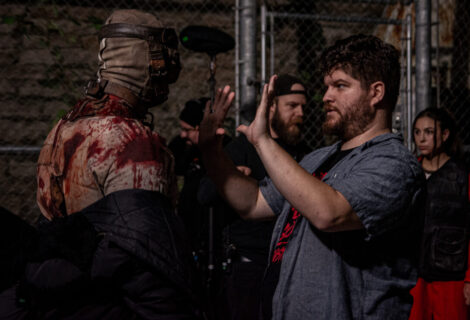
Course! It’s a series of hopping hurdles. There are so many moving pieces, and it’s incredibly challenging to get it all together in one place and at one time – it’s a juggling act. I’ve got to admit our experience on set though – it was pretty dreamy. I was incredibly fortunately to find myself surrounded with exceptionally talented individuals working both in front of and behind the camera, all of whom, without singular exception, were super generous in spirit. Together, we built an energy and an immaterial space of sorts, and I will forever be grateful to these collaborators for building that together with me, and giving us all a place to play, experiment, and create.
Q. What were your inspirations for the look and style of the film?
I’m endlessly drawn to F. Scott Fitzgerald’s books and the images his words paint in your mind. The idea of The Beautiful and Damned (also the title of one of my favourite novels), it is a significant point of inspiration for me. I’m interested in cinematically illuminating the realities of illusion itself and looking at how bright and beautiful things – people, places, experiences – that register as exciting, evocative, promising, harbour darkness and damage. And so I think, well, I hope that interest lives in the style of this film – easy on the eyes, but rough on the soul.
Q. What were some of your favourite moments during filming?
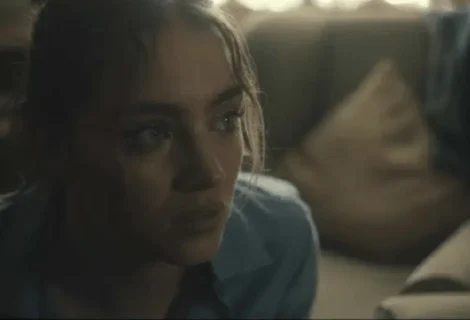
I absolutely loved shooting Elizabeth’s monologue, which is in many ways the climax of the film. Firstly, our actress, Sarah Rich, is beyond magnificent and she nailed each and every take so I knew we had room and space to play. And by this point in the shoot, Joel Crane, my exceptional DoP and I were in a real good groove together and I’d completely fallen for this way he went about shooting, where he got all nice and close, almost as if he were dancing with the spirit of the actors, and so I just let them dance and see what happened. It was magic. And the intertwining of talents and time like that, it’s just the most special thing to witness.
Q. What do you hope the audience will take away from the film?
I just hope it makes people feel less alone. That’s always my intent with storytelling. I believe that’s the purpose of storytelling. And so I hope folks find within it, something that they can connect to, even if only a flickering sentiment, something that gives people that wonderfully soothing sense of being heard and being part of something bigger than themselves.
Q. In addition to your film work both in front and behind the camera you are also a successful DJ. Can you tell us a bit about how that came about and the musical styles that you like to create?

That one started as one wild and happy accident that quickly transformed into a full-time pursuit. I love music from the 60s and 70s – rock and roll, soul, blues, funk, ska – particularly and so that’s what I specialize in. I’m deeply passionate about spreading my love for these genres and the free-spirited, irreverent ethos of the time in which the music was recorded. These songs are beautifully filled with human imperfections, bursting with the spirit of their creators and the energy of the recording studio space, and that’s what I hope to spread out into the world.
Q. Do you have any other projects which you are working on?
I’ve got a couple of new film projects, in both the short and feature form that I’m working on writing at this stage. I’m interested in the artists’ journey and truth for me is always the starting point, and so that’s where I’m at thematically.
Q. If someone was looking to write and direct their own film what advice would you give them?
DO IT! Find a way, or build a way, and get it done. Back yourself, admittedly that’s something I struggle with daily, but fight for it – for the belief in yourself. Surround yourself with those who believe in you (and keep you laughing) Let it rub off and run wild together. And, practically speaking, make sure it’s a good story, that it’s one a fire lives inside you to tell.
In the Campfire Light will be premiering at the Ojai Film Festival with screenings on November 1st and 9th.
You can see my original review of In the Campfire Light here:

Published in various websites, Philip is a reviewer who is best known for his interviews and media coverage of independent projects including; films, books, theatre and live events. Always on the lookout for something different to cover!