Hanging around the bar at the Romford Film Festival 2024, I got chatting with a man who turned out to have a feature playing later which he directed. I had been planning to go home, but something told me I should stick around. I’m really glad I did and you can read my review of the grounded yet poetic Straight Through Crew here and my interview with David below.
1. Without including spoilers, can you tell us why it is called Straight Through Crew?
To achieve straight-through status, one must party all night.
2. Your film revolves around a will they/won’t they between Jamie and Aden. Are you fan of that dramatic element and do you have any favourite films or TV shows who also have it?
I always liked the idea of Jamie and Aden moving in separate circles on the dance floor, making eyes at one another under the flashing lights, eventually drifting back into one another’s orbit….
I feel like this potential romance could have been the logline, but I was always more interested in the ensemble nature of the story. Like the character of Fran (Aden’s new girlfriend)- if the film was wholly invested in Aden and Jamie’s romance, then Fran would be considered an obstacle. A natural rival for Jamie, but I wanted her feelings to be just as valid and present as theirs.
I love these dynamics. In terms of longing- In the Mood for Love is obviously the best. Rules of Attraction celebrates the messiness of a love triangle and isn’t concerned with portraying its characters as likeable. I really love Rules of Attraction.

3. My guess is that there is a lot of you in the screenplay, but what would you say are your biggest influences from a screenwriting craft perspective?
Dazed & Confused was the basic template. Keep a loose structure, fill it with characters and allow them to exist for 24 hours.
I watched a lot of teen films, coming-of-age films, 90s American indie, Mumblecore, and French cinema- particularly Mia Hansen Love’s Eden, which has a slim narrative but feels so fluid and Bruno Dumont’s The Life of Jesus was another coming of age film which really hit, but it’s also pretty grim.
So many filmmakers have tackled this type of subject and it seems just as personal for them. Even Fellini made a film about small-town living- I Vitelloni- and it too features characters dealing with similar existential fears and he also shoots a banging party sequence.
From an autobiographical point of view, I was aware that I was reflecting on past times, but the story is also present. Like, I’m still in that village. I’m not far removed from these parties at all. I’ve been Jamie- returning from the big city with my tail between my legs. The sense of frustration and discontent from the characters is authentic.
4. I would say Straight Through Crew is a character piece. What is your approach to writing characters?
I was so conscious about remaining true to these characters. Take Jesse and Celine from Before Sunrise- we spend the entire film wrapped up in their conversation, but they’re intellectually curious and philosophical. The art of the film is in their dialogue. Most Mumblecore films feature neurotic, very self-aware, educated characters… which warrants more elevated conversations.
The characters in STC are largely working class and raised in the bubble of their village. Their concerns are more matter-of-fact, potentially even trivial, but no less important. I wanted the narrative and themes to come directly from them- there’s no dividing line between the filmmaking and the characters…. I wasn’t using them as conduits for a higher meaning. What you see is what you get.
This is most true in Fran’s monologue towards the end. Fran has this grand soliloquy about the meaning of life. I guess this could be considered my final statement- the filmmaker’s true sentiment on rural living, but really it’s just shit talk.
5. You achieved something incredible on a very tight budget. Was there a moment when you were tempted to give up because it seemed the film that you wanted it to be was not achievable?
It was a smooth production. Even the rave, which was chaotic by design (we hosted a real rave) didn’t cause us too many issues.
Then we hit post. Post-production is always a bit of a nightmare for indie films. For one, you never hold back enough money to get through. We blew our entire budget on the shoot, so all of the money for post came from my day job. We edited for about 18 months and then finishing to a professional level- sound design, sound mix, colour grade…etc. It’s a lot of outsourcing to other creatives. I like the collaborative aspect and it’s heartening to see the film improve, but it’s time consuming and costly.
We screened the film at the Peckhamplex in January- first time on the big screen- we had about 100 people in attendance and it played so well, but we only had a stereo mix so we lost a lot of the dialogue to the music. At this point, we had already been accepted into Manchester Film Festival and I knew we had to get a 5.1 mix for it. This opened a whole new can of worms, which lead to syncing issues- we fixed it 48hrs before it screened in Manchester.
Indie filmmaking is an endurance test. Once the high of principal photography is over, you have to be prepared to sit with the project for a few years. You have to live with the mistakes you made and love it for what it is.
6. What was the one aspect of filmmaking you had to swot up on the most during the process of the production?
I’m definitely not a working director. It’s usually 4-6 years between films, so each time I approach a new project, I’m questioning if I still know how to do it. Luckily, you surround yourself with good people who help you on the journey.
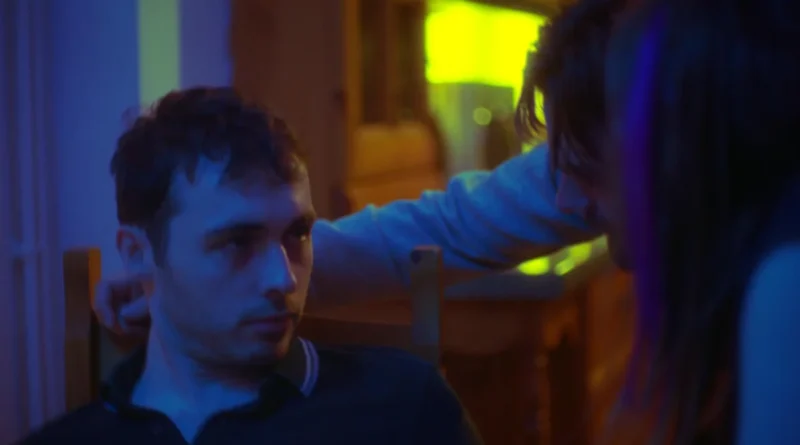
This was my first time working with Tom O’Keefe (DOP) and along with the camera/lighting team he brought in, he elevated my game. I love how the film is shot- the neon energy of the rave, more static shooting around the village, characters existing in drab locations. And the close ups. I’ve never been more excited to shoot close ups. I credit our cast for this. So many lovely faces.
I’m definitely still working on my approach. Better blocking. More dynamic master shots. Less coverage.
7. If there was one aspect of the film business you could change, what would it be?
I’m not sure how close to the business I feel. I can’t speak for those who have to navigate the business on a daily basis, but as an indie filmmaker, I definitely have some opinions…
Film Freeway has turned into the wild west. So many festivals have sprung up, promoting themselves as ‘IMDB qualifying’ (even though it’s easy to get a film on IMDB yourself), holding awards ceremonies every 3 months, offering laurels and nominations, but very little else. They’re clearly just taking your submission money.
The industry is in such a weird place right now. We’re currently seeking distribution and VOD seems to be the only option. It’s sad. What happened to terrestrial TV channels playing fringier stuff late at night? BBC3 and Channel 4 seem less interested in independent films. Very few festivals in the UK have markets, so how do you go about selling a film? I’ve mixed and graded this film for the big screen, but the chances are sales agents/distributors will see it via our private screener link on their computers. They can’t gauge an audience reaction based on that.
Cinema is in transition. It’s not the juggernaut art form that it once was, but I also don’t believe it’s going anywhere.
8. How has the general reaction to your film been?
Generally, quite positive. I think there’s a universality to the film, despite it being very specific to my village. People can relate to the hedonism and friendship vibes. Maybe it’s nostalgic in that sense.
Letterboxd has been so good for looking at honest reviews. Every time we screen, I’m straight onto Letterboxd to check the ratings/reviews. After the Manchester screening, we got a 1 star review… they absolutely savaged the film, but I also understood their perspective and don’t disagree with their criticisms. I enjoy these different points of view and it’s invaluable to the creative process.
When I was 21, I made a feature film (Patrol Men) for £1k and it got a DVD release. One of our first reviews said something like “the filmmaker should never pick up a camera again”…
I guess you can’t get any worse than that, so everything since has felt like progress.
9. What are you developing now?
I’m writing a bare knuckle film set within the traveller community. I’m always writing this bloody film, but recently ‘cracked’ the story. I have travellers in my family, so I feel like I can bring an air of authenticity to the story. Working title is ‘Fair Fight’, which is a bit shit sounding, but it makes sense for now.
I’d also like to adapt Children of Paradise by Camilla Grudova. Have you read it? It’s about a group of hipster misfits working in this old ass cinema. They do lots of drugs and watch classic films. I swear I was born to make it.
10. Where are all the places we can see Straight Through Crew next?
At the moment, nowhere really. HAHA. We’re waiting to hear back from festivals, so future screenings should happen and I guess it’ll be available to watch on VOD around Christmas (did I mention it’s a Christmas movie?)
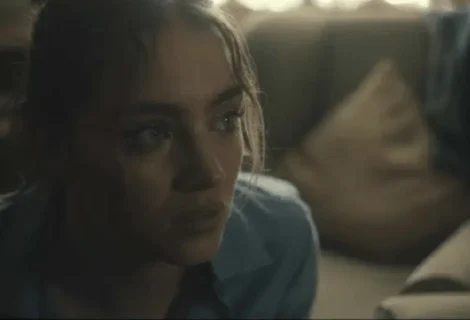
Follow us on Instagram @blackmathpictures for some sexy stills.
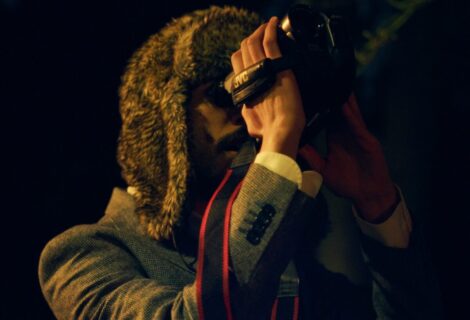
As a screenwriter, Peter Stead has had short scripts produced in the Netherlands, Germany and the U.K. Believe, a found footage short he also produced and starred in, won awards at Romford Horror Festival and the Fortean Film Festival. In terms of short stories, Camera Anima Mea was published by Horrified Magazine and When We Fall is set to be included in the forthcoming anthology ‘British Gothic’ by Red Cape Publishing.