

Hunter (2018)
Director: David Tarleton
Writers: Jason Kellerman
Stars: Jason Kellerman, Nick Searcy, Shannon Brown, Adria Dawn, Rachel Cerda
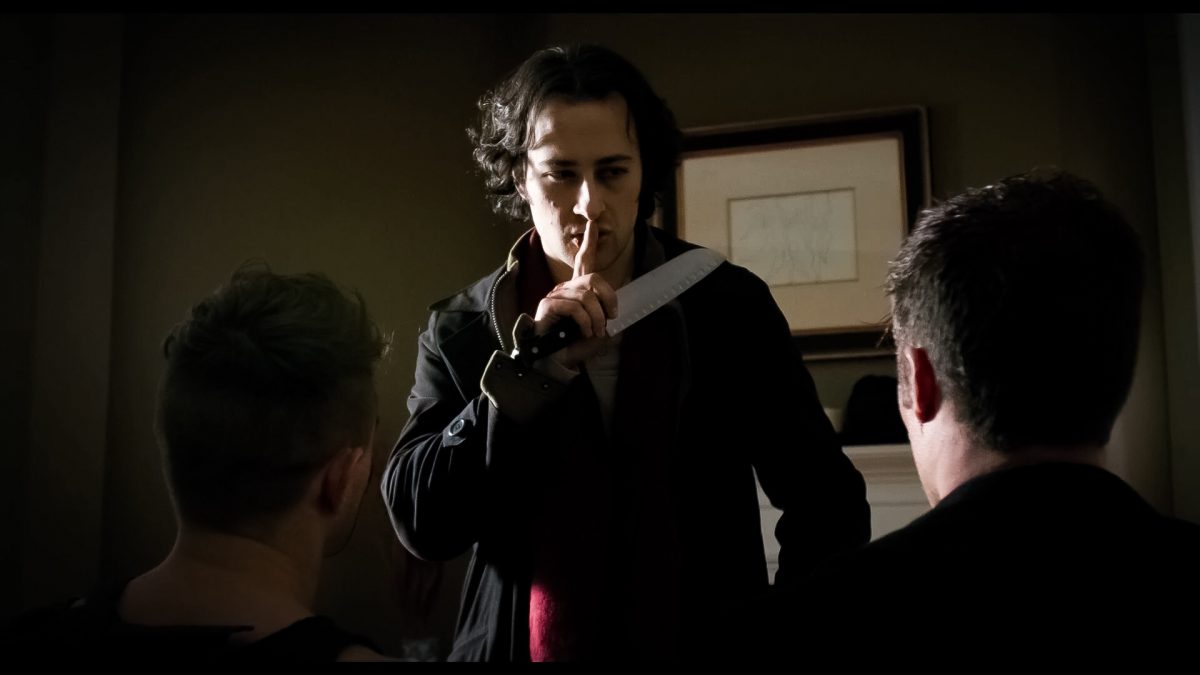
Haunted by demons real and imagined, a young homeless man grapples with the truth about the shadowy figures that killed his mother and sister.
Hunter is a new independent thriller from director David Tarleton, which is being released on on-demand and on all digital platforms on February 12.
I got a chance to talk to writer and lead actor Jason Kellerman and ask him a few questions about what we can expect from the film.

You appear in the upcoming supernatural-horror ‘Hunter’ which you also wrote. How did you come up with the original idea for Hunter?
The original idea came from an argument that I was having with a friend of mine about superheroes and the plucky protagonist takes on the super powered baddies. I was having an argument about a really well-known version of that story that ran for many series and has a huge fan base which he wanted me to watch. I don’t want to say which one because that kind of gives away a bit of a twist about what Hunter is actually about. My argument is that in a lot of these stories the hero has too many resources. If they were real bad guys whose whole job was to kill, mutilate, hurt people and were really good at that. If you had a regular life, even with an auto ego they would track you down and kill you, because that is what they are good at. So, to be effective you would have to be off the grid. Either an ultimate survivalist or in a city you would have to be homeless and weirdly that statement is where it came from. That idea of someone coming up against some really nasty characters that are dangerous without a lot of resources at his disposal was what really fascinated me and kept me interested enough to make a feature film out of that idea.
When creating that character what sort of research did you do?
Absolutely. The beginning at least when we meet Hunter, he is living on the street and that is not an experience which I am familiar with, but it was something I wanted to give justice to, both in the writing of it, as well as the performance. I spent a couple of months serving on the soup kitchen, I figured if I am going to use contents of people lives and experiences that are not my own, I should at least do something good for that community in return. Just talking to people there and getting a sense of what its like to live on the street as part of the in-depth research. I also talked to two different psychologists whose speciality is in the social work field, very much like the work Danni does in the film. They tend to work with underprivileged communities and people living on the streets, providing therapy and resources to them. Just to get a sense of what those sessions are usually like, what the focus usually is, the approach of the therapists, so that I could incorporate that to make the characters feel as authentic as possible.
When you were writing the character and the script did you always envision you would be playing the lead character?
I think so. I initially wrote it as a short and showed it to a writing group that I was a part of in Chicago, who kept insisting there was more story there, so by the time it was a feature I had been working the script itself and conception of the idea for about a year and a half. I am an actor, at this point I had done a couple of indie films and TV here in America. I have a secret theory that most writers are writing about themselves in some way, so by the time it came down to production I was pretty bent on playing the lead. My producing partners weren’t actually sure about that, when I told them that I wanted to do it, they did a screen test to make sure I wasn’t gonna be terrible and ruin the film. Luckily, I was able to convince them that I was able to play it.
What sort of preparation did you do for the character itself?
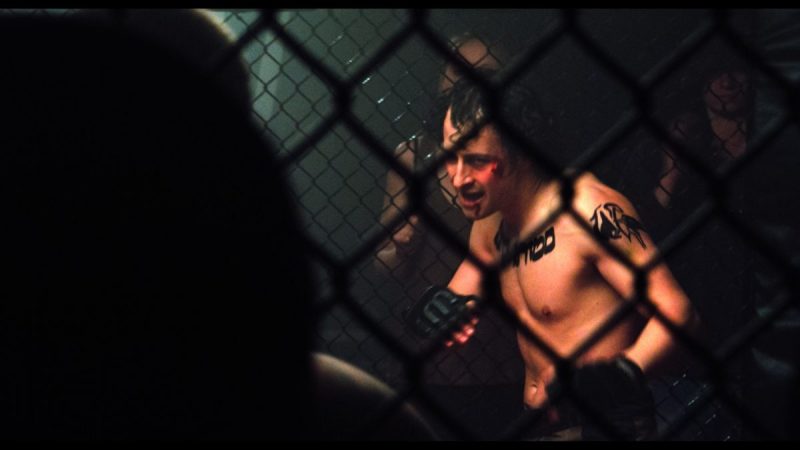
The surprise for me really came for me when approaching the role. Because I had written it, I assume I would know what to do as an actor, but that turns out not to be true. I went to school for this and the hypothesise you learn to approach any role, regardless of whether its one you wrote or not is still applied. I was dipping into darker emotional work to find an inner monologue of my own life, which are certainly not as severe as what Hunter goes through, but it gives me an understanding I can build on. A lot of research I had done as a writer, the people I met whilst volunteering helped a lot to make that feel very real. Beyond those things just making sure I did my work as an actor, not just showing up on set assuming that I knew it. It was working out a lot to make sure I could shoot the 12 hours long day where we did nothing but the mixed martial arts fights. Making sure I could do that without passing out was one of the larger tasks in terms of preparation.
Talking of the action, where you tempted to include more action in the film? It is obviously based a lot more on the character and his struggles than the action?
Using the limited resources, we had, we weren’t trying to complete to be the best action film ever. The one thing we wanted to develop was the story, the characters, storyline and to tell the story in a way which was unique and as powerful as possible. There is a bit of action that bookends the story, action at the front, a lot at the end and a fair bit in the middle. The internal struggle with what Hunter was going through is most interesting to me as a writer and certainly as an actor – and his relationship with Dann, I feel is I think the emotional core of the film. Although I am coming at it from a very internally biased level so it may not be your experience watching it.
Q. During the filming process were there any changes made from the original script?
There were, the core stuff, the Hunter and Danni scenes looking back were pretty close to the original script. There was some stuff that we took out for time, we wanted to make sure it was a clean 90 minutes and keep the pacing, because it doesn’t matter how much you love the characters in the film at least you can watch then sit across at a table and talk to each other. We wanted to make sure we didn’t run into trouble by dragging the film out. In terms of filling out and making the loop story lines feel very real, one of my favourite scenes in the film was written and then subsequently shot after production. It is the scene where he goes down the stairs with Peter and Paul and is shown in no uncertain terms what will happen to him if he didn’t contribute to the organisation. We had another scene a phone call with Nick Searcy, but that just wasn’t cutting it. We wanted something to really juice it up, step up the steaks and really show what Luke was so terrified of.
Q. Did you experience any issues during filming?
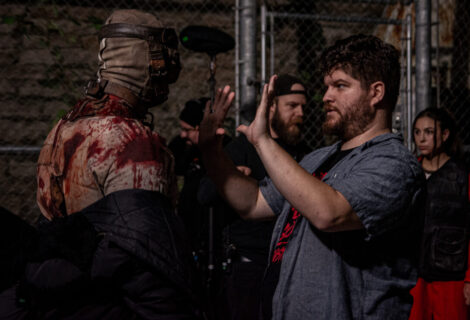
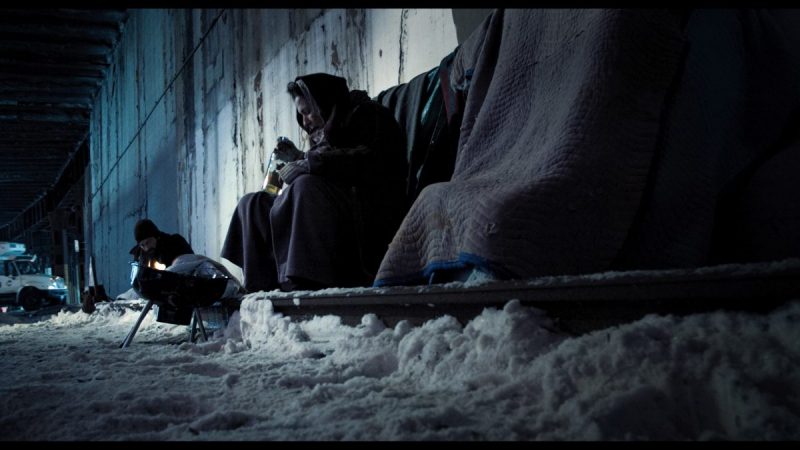
Well if you take a look at the film you will see that we spent a lot of time outdoors in the cold, in Chicago! Which looks really wonderful and is really visually beautiful, but it was kind of a huge pain to film in a lot of ways. I can probably spend an hour telling you why it’s terrible to shoot when its minus 10 degrees outside. One of our cameras kept freezing, we were shooting with Black Magic Cinema Cameras, which is a wonderful camera which brings all the colours out and things look really good on it. Turns out when you expose to below zero temperatures for long periods of time it will either freeze and shut down or develop the rolling shutter noise – only really dorkey film people will know exactly what that is over the footage. That will need to be scrubbed at length laboriously by our colour guy. We had other stuff happen, we were filming the chase scene at the end and I just remember we had to keep resetting the make up on my hand because the blood kept freezing, cracking and falling off, so there was a continuity issue. At one point on our third day of filming we were shooting a sequence where Gilda, she is a small character in the very first part of the film. That night our director slipped and injured his knee on some black ice, he still says that when it gets cold, he can still feel that knee. Also, a non-production vehicle, so somebody that was not part of our crew ignored the street closure signs that we put up, and in swerving to miss one of our generators that we had going she jumped the curb and ran over our camera – which was not the best thing at two in the morning. There were certainly many trials in terms of getting the whole thing in the can and we could finally sit down in a warm editing room and put it together.
You will learn from that and hopefully next time it will be in the summer when it’s a bit warmer
The ongoing joke on set was “Hunter 2: Hunter Takes Hawaii” That was one that everyone kept saying and “Who wrote this?” which was hilarious. (Laughs) The next one I do will be either in doors or in a warm outdoor location, I don’t know if I will do this again it was pretty rough.
Are there any plans for a sequel from yourself to carry on the story?
Absolutely, if we get the type of attention that we would like. It is an origin story and I personally think it would lend itself well to episodic content and for any Netflix executive currently reading this interview I do have five series planned out for where the Hunter story can go following this. I do have other projects I am developing right now, but if we could make more Hunter stuff, we would not turn that down in any way.
Would you prefer to develop it more as feature films or a series?
It could go either way, personally I would like to add a little more time to expand the story. I do think the world we have created, our take on a tried and true drama is a very unique and interesting one. With the content, appose to 90 minutes you have 12 hours over the course of a season, that is really attractive to me. The chance to expand the world and the characters.
Q. What were some of your favourite moments on set during filming of Hunter?
So many, it was really a blast! There is something uniquely thrilling about watching a crew of 150 put together something that looks pretty close to what you would envision in your head when you are writing. Especially as an actor, being able to step into that world is really neat.
A couple of highlights. Filming the final chase sequences on the bridge was really neat with all the cop cars that we were lucky enough to rent out from Chicago PD who weren’t using them. Sprinting up the bridge being pursued by a couple of cop cars with the lights flashing, our director hanging out of the window of the picture car trying to get a shot from me was just awesome. A little dangerous to be honest. We closed down the whole bridge we had the whole crew out, it was cold and physically tasking, but I am the sort of person who freestyle jumps out of aeroplanes so that was really fun for me.
The fight was really fun to film for similar reasons, especially as one of the fighters was a professional mixed martial artist, the really big guy, the third one that Hunter takes down in the first five minutes of the script. The guy is Matt ‘Monster’ Paul who is now a professional MMA fighter. He is a really sweet guy, but this part where he picks me up and slams me into the mat. We had shot the scene of that particular sequence three or four times and it was at the end of a twelve-hour day of fighting. I was not feeling great and I was starting to feel a little bit dizzy and I told him “Hey Matt I think we got the slam; can we take it a little bit easy because I think we got it”. We were doing the fight and he picks me up and he is 6 ‘2 and 220 pounds, he is gigantic. He picks me up ang starts to throw me down again on my head, I am thinking ok here we go and about 6 inches from the ground he stops and gently lays me down on the matt. I was like “Oh my god you’re so strong”. It was sort of surreal, it was awesome.

Working with Rachel Cerda as Danni was just a star, so being about to really dig into the depth of our scenes together. I had a great time honestly it is hard to pick out one moment in particular that stands out because it was such a good experience.
Q. Do you have any other project which you are working on at the moment?
The next film that I have just finished a third draft of and people either really love it or really hate it. It starts out with an office worker that finds out that his wife is pregnant by a rival co-worker in the office that he hates; and it ends with the two of them fighting to the death in a Mad Max Thunderdome (1985) style arena in a proprietorial drug rave/orgy. It’s nuts! The people who have read it are really excited about it or they absolutely hate it. Its 90% love it 10% hate it and I am really excited about that.
That does seem to escalate
rather quickly from an officer worker to an apocalyptic style fight scene at the
end, I wasn’t really sure where you were going to go with that, but it sounds interesting.
For the record I am not going to act in that one. I may just produce or even
have a crack at directing. But I am excited about the project it should be
really fun!
Q. What advice would you give to someone who is looking to get into acting themselves?
I would say if you have the urge to tell stories you pursue it. Ultimately speaking it’s certainly not the easiest road, especially if you do not know anybody who can put you in touch with very powerful people in the industry. It can be a long road and a bit of an arduous one full of rejection and that kind of thing. But there is so much joy in perusing it, if you don’t know where to start take an acting class, find a community of people. The only thing that allowed me to get Hunter done and anything I have done is that community, this is a team sport. Find other people who are interested in doing it, who are doing it, people you admire and look up to. Figure out a way to work with them or work for them to a point where you gain some experience.
If you have that urge in you, follow it. Don’t let anybody tell you shouldn’t, because a life making art if you have the urge to is way better than whatever life you might lead. I believe that I really do.
You can see the original review of Hunter Here
Hunter will release on-demand and on all digital platforms February 12

Published in various websites, Philip is a reviewer who is best known for his interviews and media coverage of independent projects including; films, books, theatre and live events. Always on the lookout for something different to cover!