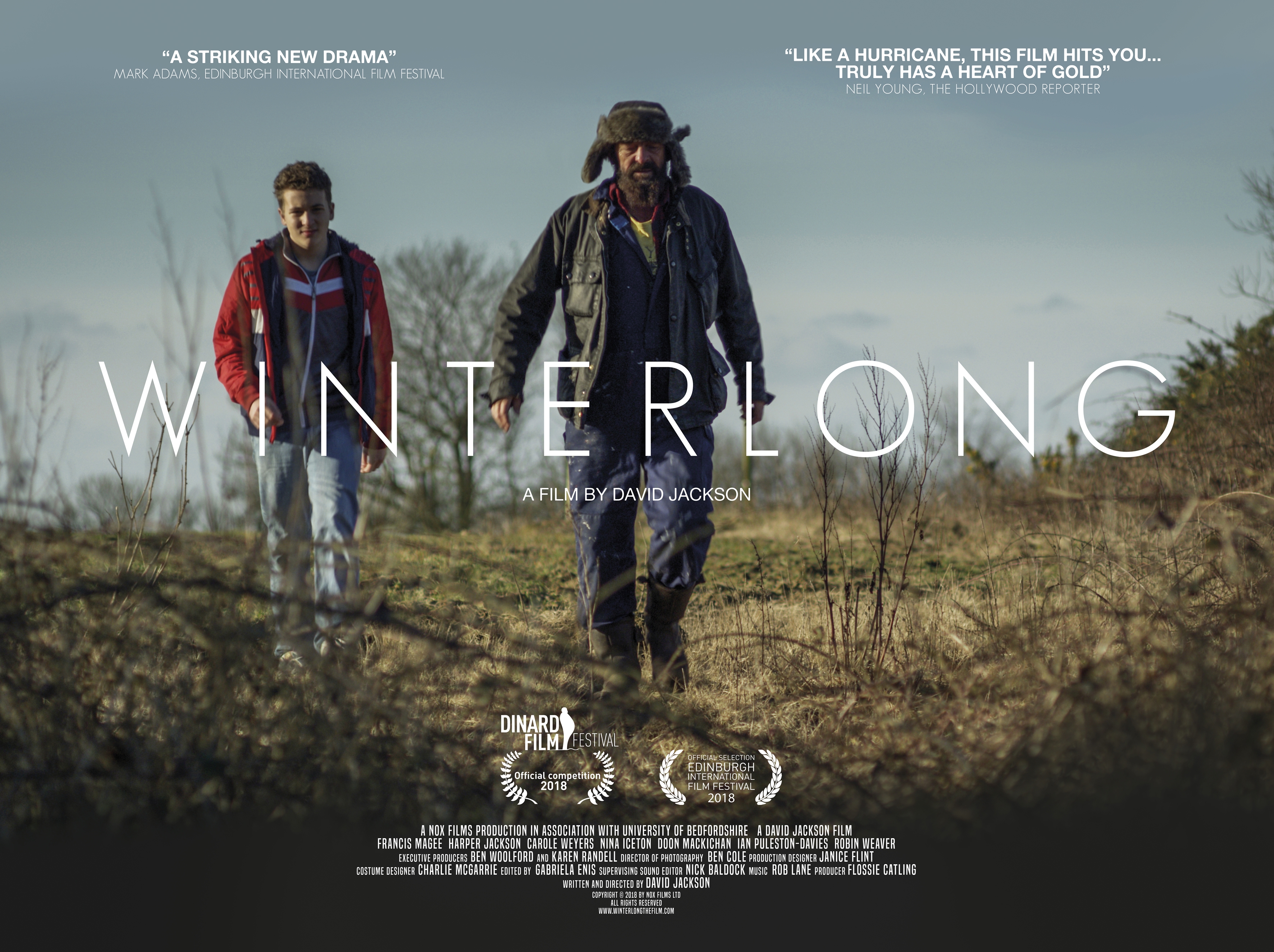


Winterlong (2018)
Director: David Jackson
Writer: David Jackson
Stars: Francis Magee, Carole Weyers, Doon Mackichan, Robin Weaver, Ian Puleston-Davies

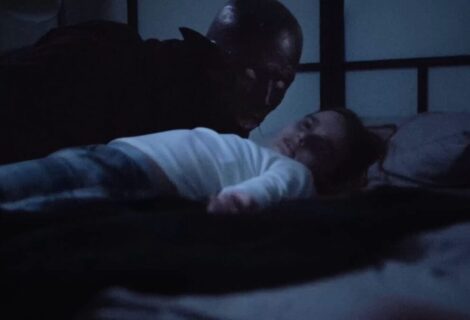
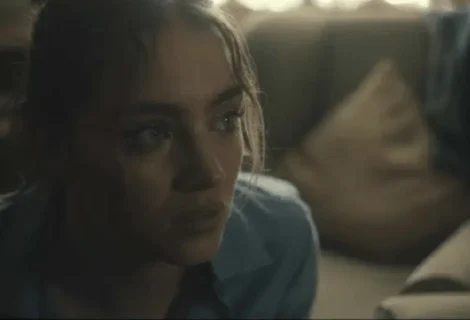
When his estranged son is left on the doorstep of his caravan, a poacher living on the margins of society must change his feral lifestyle or risk losing his son forever.
The Southend-on-Sea Film Festival will be returning for its 11th year from 23rd May to 27th May. In preparation for the event I got an opportunity to ask co-writer and actor David Jackson a few questions about the film
Winterlong which has been selected to play at the festival.
Q. Winterlong has been selected to play at The Southend-on-Sea Film Festival. What can we expect from the film?
Expect the following: a tremendous central performance from lead actor Francis Magee. He’s so brilliantly charismatic and deserves accolades galore. The widescreen cinematography is simply gorgeous: the colour, the light, the landscapes. Rob Lane’s music does what the best film music should do. His remix of Kid Kipichi’s Blossom d’Amour over the end credits is worth the price of admission in my book. And a final close-up of Harper Jackson’s face fills my heart (and hopefully the audiences’) with love every single time I see it. I absolutely love this film and you will too. Or your money back!
Q. What were your inspirations for the story when writing the film?

Winterlong comes from a patchwork of influences, situations, events, encounters that all got woven slowly together during the long making process. Hastings and the surrounding semi-rural hinterlands played a part, as did my friendship with main actor Francis Magee. But what influenced me most was the simple fact of being a father and having a young family and all the day-to-day demands, frustrations, responsibilities that go with that. On the front page of the shooting script I put a quote from the American novelist David Vann: ‘A father, after all, is a lot for a thing to be.’ I didn’t include it in the film because it’s too literary, but it seems to sum up in all its strangeness as a sentence the weight of what it means to be a father in the world. And I suppose I wanted to try and test that idea out in the script and the film.
Q. Did you have any of the actors in mind when you were writing the script for the film?
Yes, I did, and that made the writing process much easier for me. I wrote it knowing that Francis Magee, Carole Weyers and Doon Mackichan would all be in the film. Francis formed the character just by being himself in front of me. I just observed him being who he is and wrote it down. Obviously, I had to pull all those details together and weave them into the pattern of fiction, but what you see onscreen is true of the man himself. Carole Weyers, on the other hand, has never sung in a band and doesn’t play an instrument. But that didn’t stop me enshrining her best qualities as a person and as an actor onscreen. The same goes for Doon, who I knew sang opera. And what was really rewarding creatively was to watch the relationships emerge between the actors during the shoot and for those relationships to become concrete through the editing. And I had it in mind that my own son, Harper, would play the boy. So, I wrote it for him too.

Q. What were your influences for the look and style?
I knew from the outset that Winterlong wasn’t ever going to be a straight social realist film. That isn’t my aesthetic. I come from a background in photography and I’m always more drawn to composed images over handheld rawness. Winterlong was always something and the joy of making the film was discovering what that something else might be as we moved through the production process. I think a film owes a lot to who you choose to work with and how you work with them – especially when you don’t have money. I’d already made a couple of shorts with production designer Janice Flint. We’ve developed a shorthand over the years: Janice understood intuitively that getting the right location was all about finding the landscape of the film. It may be the interior of a house or something like that, but to me, it’s all landscape. Similarly, with cinematographer Ben Cole: I showed him Kelly Reinhardt’s Wendy and Lucy (2008). There’s a simplicity and concreteness to the way that film is shot that gives an accuracy to the images. And it’s exactly this accuracy I was looking for in Winterlong. Throughout the process I kept posing the same question to my collaborators: what do we really need to make a good film? My answer was always to keep it simple and tell the story. Every decision has been to this end – especially during the editing with Gabriela Enis. Of course, we still wanted to keep the production values and quality high, but that comes down to the skill and commitment of the crew and actors.
Q. Did you experience any issues or challenges whilst making the film?
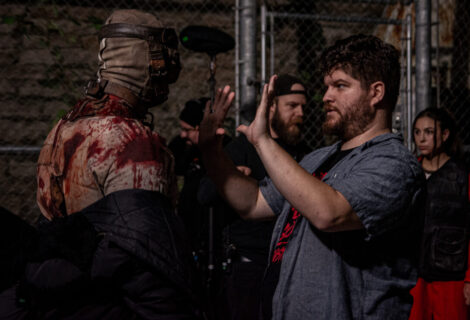
Winterlong is certainly a triumph against the odds. We made the film with very little money and the whole process was very stop-start from the outset. The script was developed to second draft during a six-month writers’ workshop with brilliant story editor Kate Leys. I wrote it as a micro-budget feature I could make, but for one reason or another the script went into a drawer whilst I developed another project through the Creative England iFeatures scheme. That project got to the final stages of selection but wasn’t greenlit into production. Months later, when I got over the disappointment, I took another look at the Winterlong screenplay and thought: you know what, this is actually very good and I’m making it, one way or another. The film was shot in its entirety in 18 days in East Sussex with a small crew in the middle of winter. It was probably the hardest 18 days of my entire life, but I had a brilliant team around me who really believed in the script. Editing and final post-production took a year and we had our world premiere at the Edinburgh Film Festival last summer and got a nomination for the Michael Powell Award. That was a real thrill. I’m immensely grateful to everybody who said ‘Yes’; without them I’d still be lying on my bed dreaming this film.

Q. What were some of your favourite moments during filming?
Shooting a film is like falling in love (well, that’s how it feels for me!); the world seems like a brighter, better place when you’re doing it. You feel fully alive, fully receptive to whatever experience gets thrown at you. You’re invincible! You can fly! I totally loved every single moment. The shoot may have been the most stressful, difficult thing I’ve ever had to do, but it was also the most exhilarating, most joyous experience of my adult life (apart from my kids being born, getting married, and all those real-world experiences, obviously!)
Q. Did you make any changes from the original script during filming?
Only when something didn’t go according to plan–which was usually on a daily, if not hourly, basis. For instance, we’d get thrown off a location half-way through shooting a scene, or we couldn’t get a location as scripted, or there were no extras on set as expected: directing Winterlong was a daily juggling act. It was pointless to whinge because one way or another I just had to shoot or not have the rushes, so improvisation was the name of the game. Anyhow, 95% of being a director is thinking on your feet, so that’s exactly what I did. It was either that or not have the rushes. And as a very sage grip once advised me: ‘Better to be looking at it, than for it’, meaning: get the shot because you’ll be kicking yourself in the edit if you don’t have it!
Q. Do you have any new projects which you are working on?
I keep thinking you could build a house for what it costs to make a low-budget feature film. A house is a lot more useful than a film. At least I could live in it.

Q. If someone is looking to direct their own film, what advice would you give them?
Talent plus perseverance equals luck (be ready when it happens).
You can find out more about Winterlong on the website
www.winterlongthefilm.com and social media pages Twitter, Instagram and Facebook
The Southend-on-Sea Film Festival runs from Thursday 23rd May to Monday 27th May. You can find out more about the event and purchase tickets on the website https://www.southendfilmfestival.com

Published in various websites, Philip is a reviewer who is best known for his interviews and media coverage of independent projects including; films, books, theatre and live events. Always on the lookout for something different to cover!