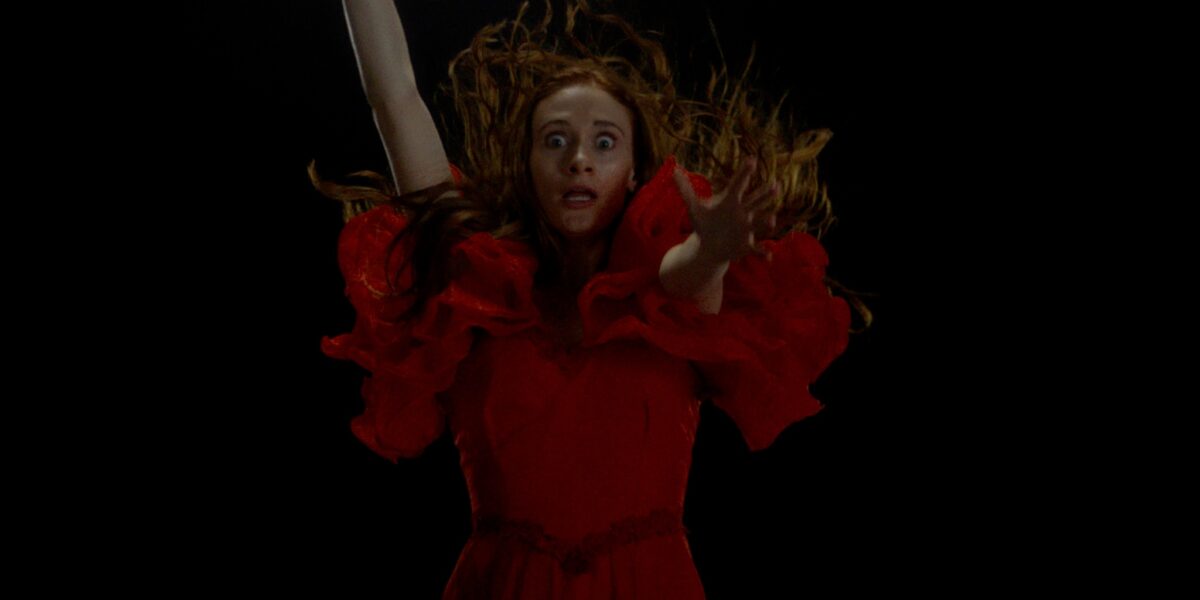


Film Name: The Red Hourglass
Director: B. C. Jones
Writer: B. C. Jones
Starring: Marcia Broadway, Todd Warren Howard, David Andrew Lloyd, Megan Powers, Caroline Quigley
After an encounter with a black widow in her sleep, a virgin woman becomes impregnated. After the mysterious spawn is brought to this world, a cult begins to form around her home and she begins to suspect the child is a demonic entity.
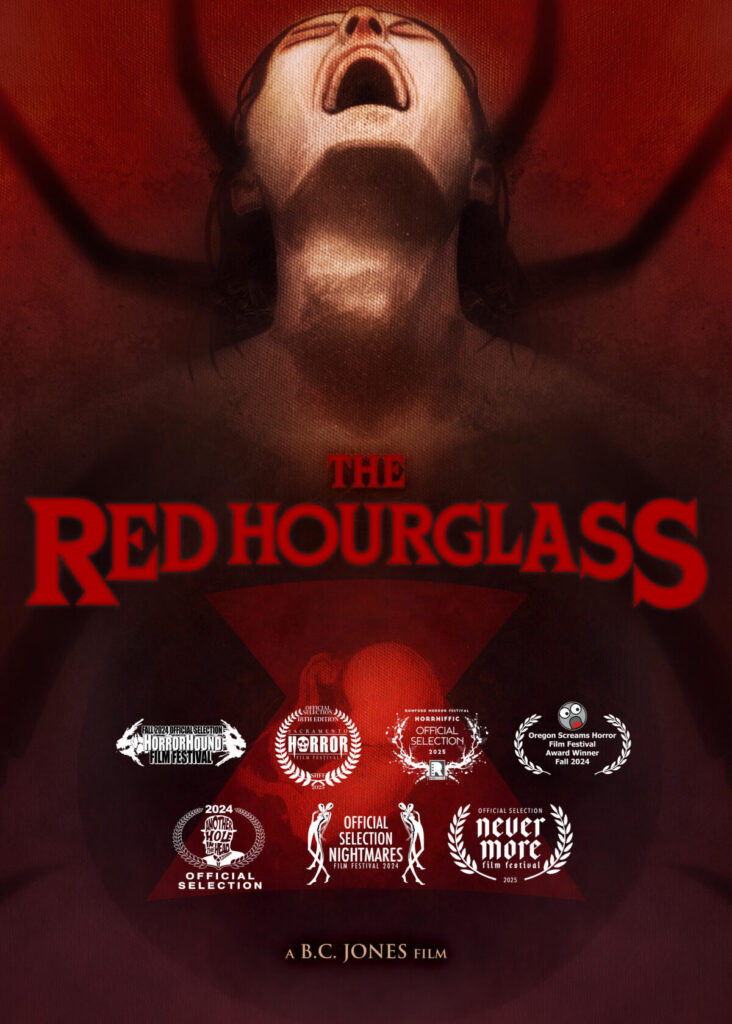
Q. Your film has been selected to play at the Romford Horror Film Festival. Can you tell us what we can expect from your film The Red Hourglass?
A. You can expect an overarching, creeping dread that continues to escalate as we progress through the story. Haunting images accompanied by uncanny sound design and a lonely, alienated mother being slowly seduced by a dark and enigmatic cult. Also, there’s spiders.
Q. What were some of your influences when writing the script?
A. Rosemary’s Baby has always been one of my all-time favourite films. After becoming a parent in the midst of a global pandemic, my admiration for that film, combined with the anxiety of navigating new parenthood during such a crisis, had a profound influence on my own work. Additionally, John Carpenter’s Prince of Darkness played a significant role in shaping the cult that surrounds the protagonist’s house.
The main character was also deeply inspired by Carrie White from the classic Carrie. Musically, as well as in certain visual elements, the influence of 1970s Italian horror—particularly the work of Dario Argento—is unmistakable. The sense of isolation and the nuanced use of sound were influenced by the 1960’s film Repulsion, while the atmosphere and tone drew heavily from J-Horror, especially films like Pulse.
Ultimately, it’s a broad pastiche, blending a diverse array of cinematic influences.
Q. What were some of your influences for the look and style of the film?
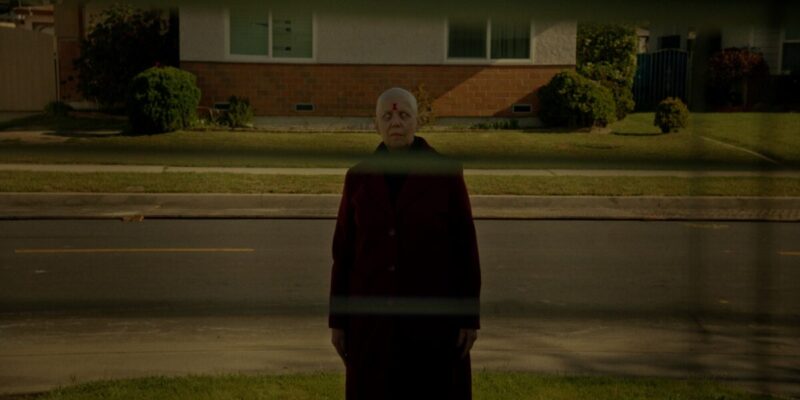
A. The Spanish film Spirit of the Beehive greatly influenced both the composition and art direction of this project. I was particularly drawn to its use of lower quadrant framing and its sparse set dressing. These elements felt ideal for portraying the devoutly religious character, who is unknowingly manipulated by cosmic forces beyond her comprehension. My goal was to visually convey her smallness in this world, both in the grand scheme of God and in relation to the mysterious entity at play. As the character faces the cult and the child, the framing shifts toward more symmetry, symbolizing her gradual consumption by their presence and her slow indoctrination into a new belief system.
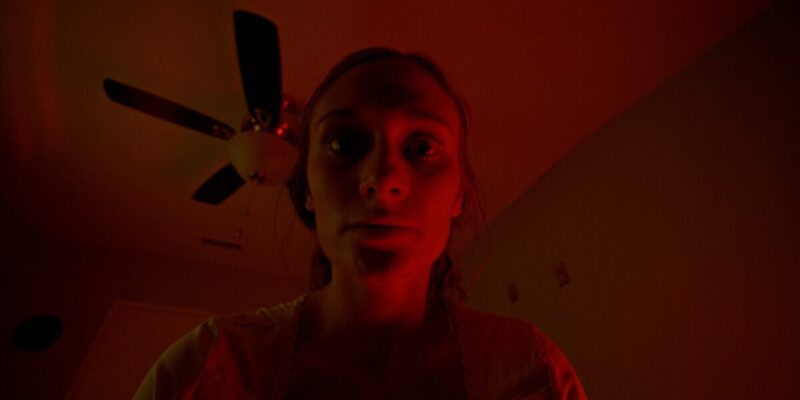
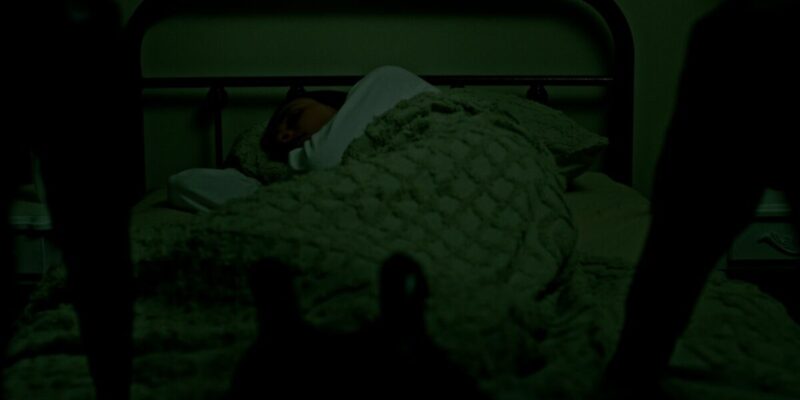
The lighting and colour palette were inspired by the recent film Saint Maud. The scheme features earthy tones—browns, golds, greens, and reds. Red is always tied to the entity, while green is predominantly associated with Rebecca, the main character. To further enhance the visual tension, we aimed for high contrast throughout, much like the films of David Fincher.
Q. Did you make any changes from the original script during filming?
A. We didn’t actually get to capture everything as we started to run behind during principal photography. There was a whole sequence towards the end of the film where she walks out and the house is filled with cobwebs that we never got to film because the schedule was so jam packed.
Also, the ending was changed during post production as well. There was a sequence where she is falling in the black void and then she gets engulfed in webs that I was not entirely happy with so I removed that from the final edit. The ending also changed as I was unhappy with the effects so we shot a totally different ending which is the one you see in the film.
Q. What were some of your favourite moments during filming?
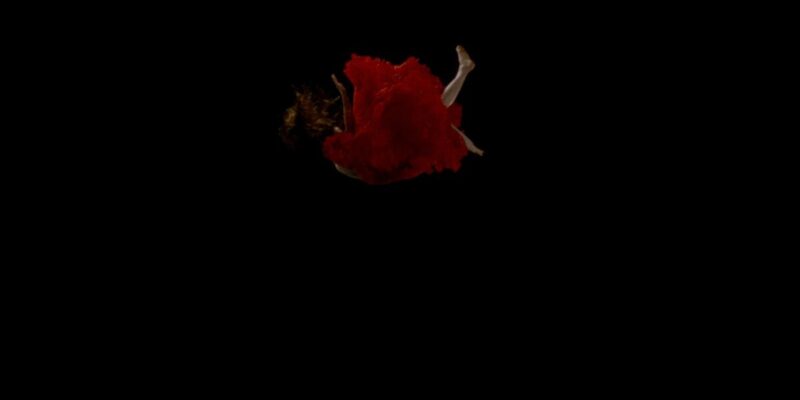
A. I was really happy with how the black void footage turned out. We captured that by having Caroline jump up in front of a black wall and fall backwards on a trampoline that we shot at a very high frame rate. This simple trick was very effective, I think most people are shocked to find out that it was all in camera. I also love the poor man’s snorricam shot when she is walking down the hall after she confronts the cult. We achieved that with a gimbal that I owned as well as a belt that has an attachment port for the gimbal that was worn by Caroline. The actress was the primary camera operator for the shot and it’s a really cool moment in the film.
In addition to the visuals, the performances from both Caroline Quigley and Marcia Broadway, who plays the old blind woman, were absolutely fantastic. Caroline comes in so prepared and has great instincts for how to play each scene. Marcia just looks absolutely terrifying in this film and adds a creep factor that is so ominous and unnerving.

Q. Did you experience any issues during filming?
A. Yes lots. As previously mentioned, we fell behind early on in the schedule and we had to cut a big sequence out. I was also really unhappy with the creature effects in the film. The effects artist ended up spending only half of the budget I had given him and created some pretty mediocre looking creatures for the production. Outside of the dream sequence, all of the other effects were cut out because I was so unhappy with the quality of the work.
Q. What makes it stand out as something different in the horror genre?
A. I’ve always loved horror films that are also great dramas like The Exorcist and recently Hereditary. Its very character focused and it doesn’t rely on jump scares (not that there’s anything wrong with that) to scare the audience. It’s more of a slow burn with an emphasis on atmosphere and really cranking up the tension as you go along. I think the set pieces and the visual language are what really stand out though compared to other horror films. The film has it’s own cinematic language and that gives it a different style and feel compared to other horror films.
Q. What do you hope people take away after watching the film?
A. That indoctrination is a rather insidious and terrifying thing and that we have to resist the urge of a strong leader to fix all of our problems.
Q. Do you have any other projects which you are currently working on?
A. We’re developing the feature film version based on the short The Red Hourglass. The feature really expands on the world and the plight of the character in a unique way that it will be like nothing horror fans have ever seen before. Very excited to get this off the ground.
Q. If someone was looking to write and direct their own film what advice would you give them?
A. For the writing aspect, remember that you’re going to be revising the story all the way into post production so be prepared to kill your darlings as they say. As a director, you need to be the most prepared person on set. Make sure every detail is thought through but keep yourself open to fresh ideas as cast and crew really bring new perspectives that you had never thought of.
Production will be filled with laughs and heartache and disappointment and everything else in between so just keep your spirits up and don’t let anxiety overtake your focus. The more prepared you are, the smoother it should go but crazy things happen so be willing to pivot on.

Published in various websites, Philip is a reviewer who is best known for his interviews and media coverage of independent projects including; films, books, theatre and live events. Always on the lookout for something different to cover!