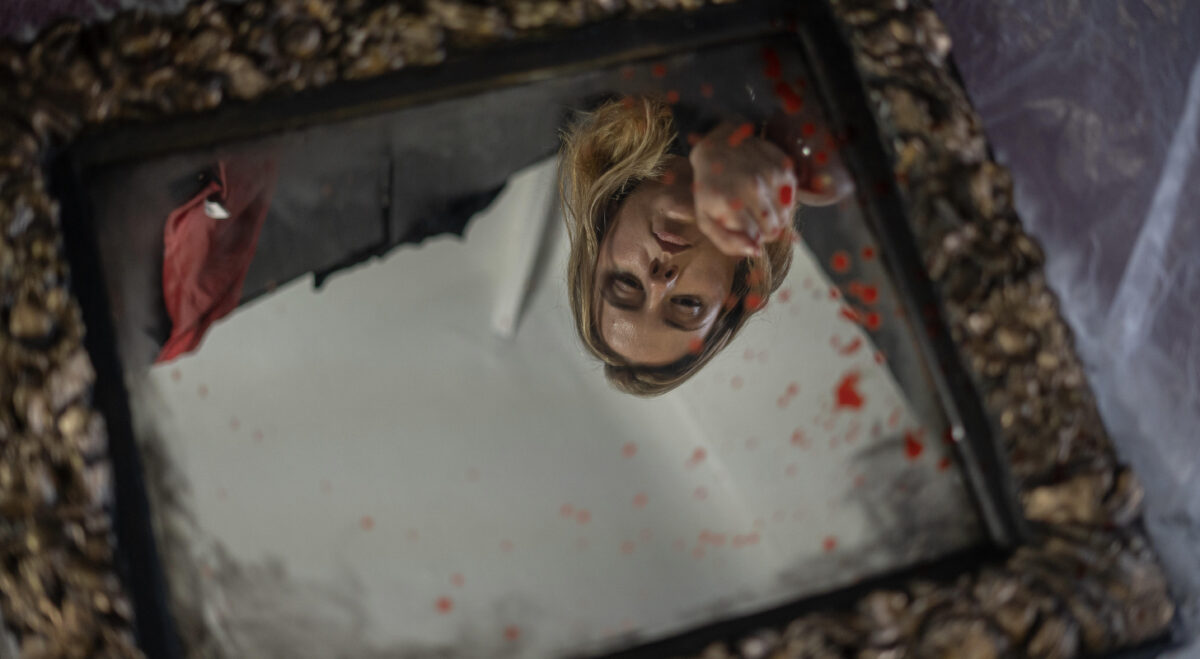
Film Name: Mirror
Director: Justin Carter
Writers: Justin Carter, Caneshia Voisey
Starring: Nicholas De Jasay, Daniel Gilderthorp, Stuart Partridge, Caneshia Voisey
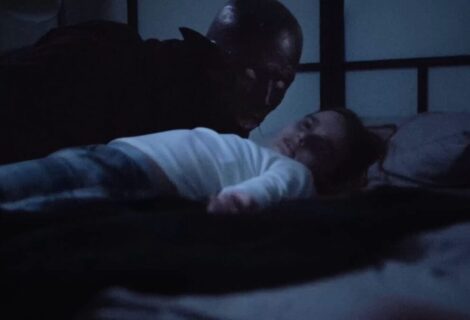
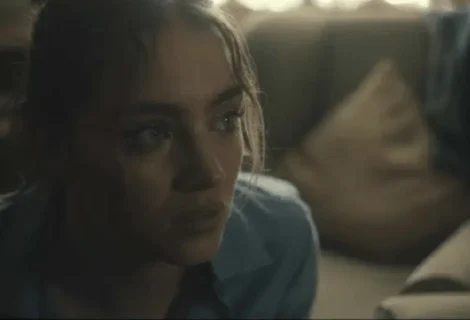
Athena is haunted by nightmarish visions that are reflected in her new mirror.” A throwback to trashy
VHS horror flicks of the 1980’s/90’s.
In a new exclusive interview on Blazing Minds, I got the chance to ask segment Director / Co-Writer Justin Carter a few questions about his film Mirror will have its UK Premiere at Horror-on-Sea on Sunday 18th January at 15:00hrs
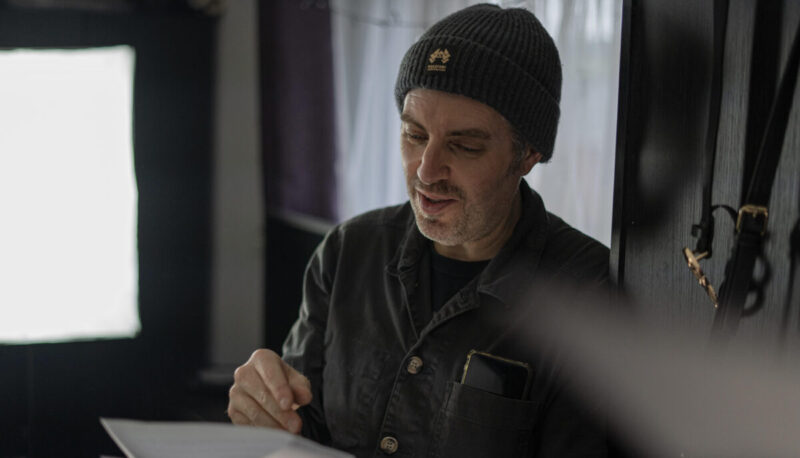
Q. Your film Mirror has been selected to play at the Horror-on-Sea Film Festival. Can you tell us what we can expect?
A. Well, MIRROR is a micro short with a narrative that leans into a kind of 80’s or 90’s supernatural horror movie. The story has a trashy VHS vibe but we kept the gore level to a minimum so that there wasn’t an overreliance on make-up FX to sell the horror. I also shot it with a 4:3 aspect ratio with some movement to mimic a pan and scan VHS appearance on a couple of shots. But the film is less about replicating a VHS video nasty and more about me conjuring up the feeling of what the era of VHS and video rentals means to me.
Q. You co-wrote the script with Caneshia Voisey, who also plays Athena in the film. What were some of your inspirations when writing the script and what was your process for writing together?
A. It wasn’t a case of us sitting in the same room together to type it all out. I think I’m credited as a writer on IMDB, but not on the credits of the final film. I didn’t think it was fair to take credit given that it is entirely Caneshia’s concept and all I did was take her initial writings and construct them into a form fit for filming. I pretty much do that on any film that I’m not the original screenwriter of, usually to get my head around the material or to iron out the creases in any content that might trip us up during production.
Caneshia and I have worked together on a number of occasions, and have a great working relationship, so she welcomed any suggestions that I had. The inspirations for my input were all about possession pictures and the numb nothingness that can wash over the characters as their lives spin out of control.
Kaufman’s INVASION OF THE BODY SNATCHERS (1978) is an obvious one, I guess. There’s a helplessness to that movie, and I love a bleak outcome. So the design of it might be mine, but the narrative and its purpose are all Caneshia’s.
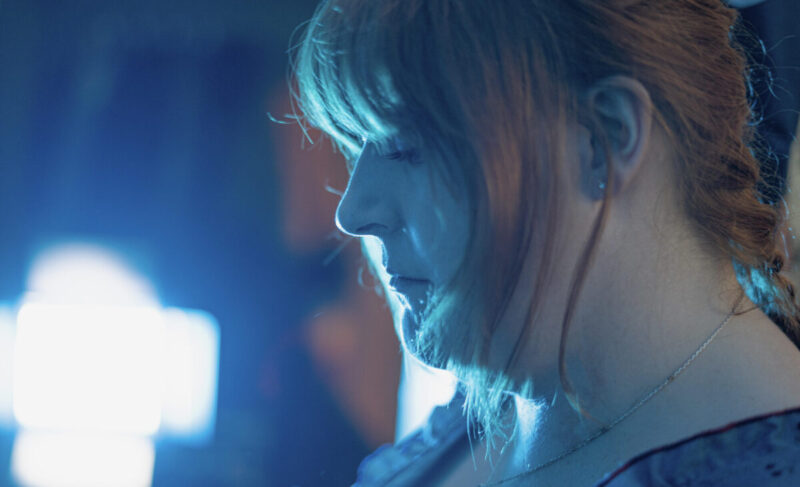
Q. Did you have any of the cast in mind for the characters when writing the script?
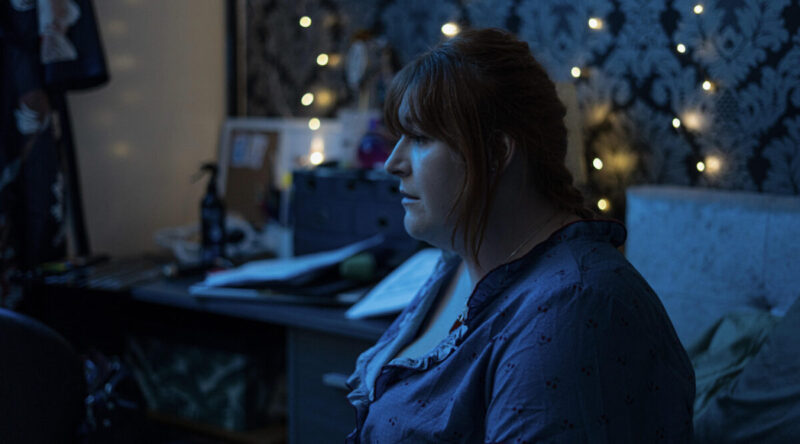
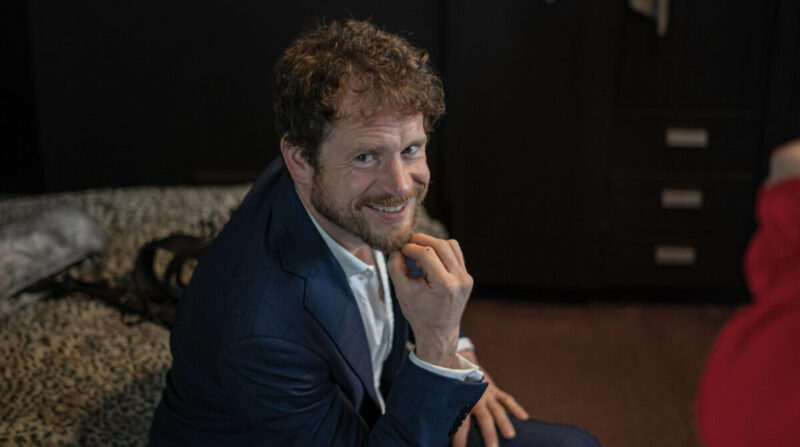
A. As it’s Caneshia’s production she had always intended for herself to be the lead. We put a casting call out for a couple of the minor roles, but I was keen to include Nicholas De Jasay as the co-lead. I worked with Nick on a feature I shot at the beginning of last year and he’s a compelling screen presence. I’ve got a couple of films percolating that he’d be perfect for, so I hope to join forces with him again in 2026 if he’s game. Everybody’s screen time is short, so we needed a cast that could deliver the goods very quickly, and they all absolutely nailed it.
Q. What were some of your influences for the look and style of the film?
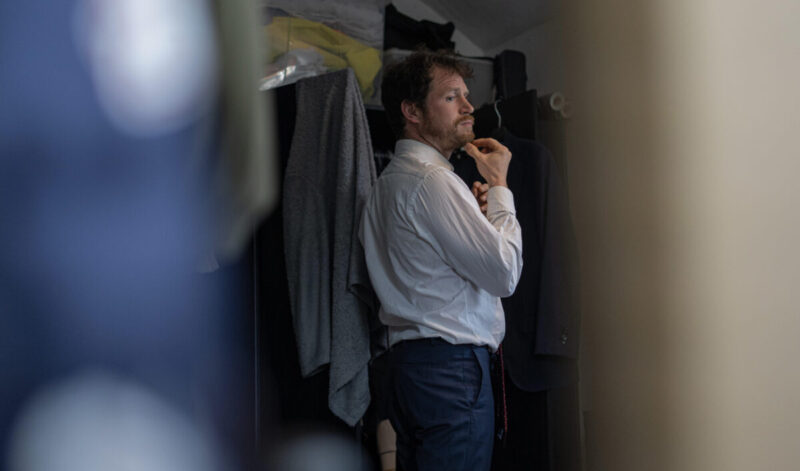
A. I operate as the cinematographer on the majority of the productions that I work on, and I did on this occasion, too. I was trying to replicate a look that I associate with VHS tapes. They lacked vibrancy. Colours didn’t pop, which is a world away from the bright, gaudy, neon inspired looks that people usually associate with 80s shows and movies. I was aiming for a colour palette similar to THE SILENCE OF THE LAMBS (1991).
I wanted something that mostly felt like an overcast day. A little dreary. That doesn’t sound very sexy, but that’s how I remember VHS tapes. Not that heightened, clichéd effect that everybody throws onto their footage with the bleeding colours, on screen crackles and distortion from tracking. I achieved our look in camera rather than to throw a digital effect on the film in post production.
I wanted to evoke the feeling of the VHS format even though we were shooting digital. The haunted mirror narrative felt like a relic of that period as well, so that’s what I went with. That informed the aspect ratio, too. For many years VHS cassettes were only available in pan and scan, so that’s why I chose the 4:3 aspect ratio. And I think that was a natural fit to present the shape of our mirror, too. The production design was managed by another of my regular collaborators, Isabella Esposito. She’s a marvel and was on top of it all, even the design of the mirror and the dust that had collected on it. The design of a film is often overlooked in low budget production because the money usually isn’t there to put stuff on screen, but it’s so bloody important. There’s little point in me having an incredible cast and magnificent lighting if there’s nothing interesting on camera to set the scene. And luckily, Bella always makes sure there’s something brilliant to photograph. The only shot choices that were definitely and deliberately inspired by another filmmaker were the tight headshots of our co-leads looking down the barrel of the lens as if they are looking directly into the eyes of the other person. That’s what’s called The Jonathan Demme Close Up. It’s a technique that he and Tak Fujimoto employed on films including THE SILENCE OF THE LAMBS. So, LAMBSwas a huge inspiration for me on this despite the focus of the narrative being a supernatural one, which is quite unlike the grounded content of that Jonathan Demme film.
Q. Did you make any changes from the original script during filming?
A. No. That’s a terribly boring response, right? The script was literally four or five pages long, and the shoot took place over just a few hours, so there wasn’t much room for change. I only like to change material if it’s not working or logic gets in the way. That didn’t happen here as we’d already straightened everything out prior to filming.
Q. What were some of your favourite moments during filming?
A. Well, the crew are all very familiar with one another, so these shoots are always fun even though we mean business when we’re working. I really enjoy spending time with them. I also enjoyed the process of replicating multiple versions of characters in the mirror’s reflections. The timing, movement, positioning and lighting all had to be perfect so that they could share a frame at the same time and not look out of place. The stabbing sequence was also a fun one. We attempted that a number of times because I wanted the blood to spill out in just the right way. I didn’t want it gushing from the wound because that’d look tacky, but at the same time, I wanted the stab to feel like it was fatal. I needed an initial burst of fluid
escaping from the wound, and that was it. I needed enough to represent the impact of the attack.
Filmmaking is all about problem solving, and this film presented me with these additional problems to solve. Luckily, our reflected doppelgangers turned out perfectly and the blood squelched out of the knife wound exactly how we needed. There’s something deeply satisfying about conquering problems such as these when you’re working with no time or money.
Q. Did you experience any issues during filming?
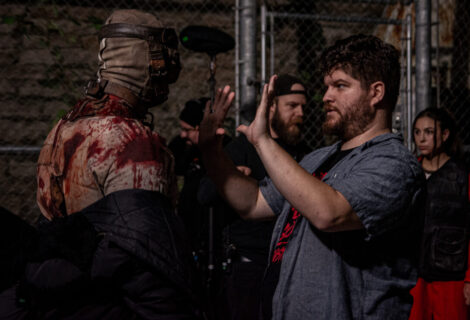
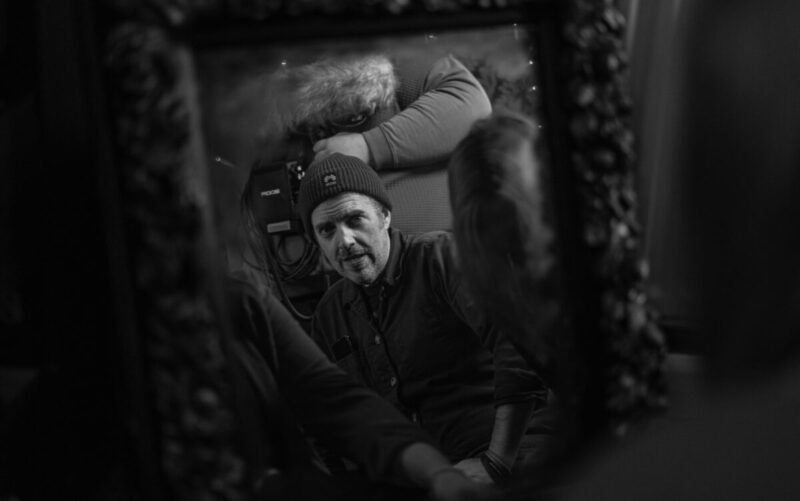
A. We didn’t have much room at the location we were filming at. That bedroom didn’t allow us much room to move at all. I had lights all over the room, taking up space, my buddy Sam McLoughlin tucked away in the corner with the mic boomed in overhead, equipment, and our BTS Photographer, Jim Elton, hidden off camera. It was horrendous. I hate working in such small spaces. I walked out of the location when we wrapped that night, promising myself that I’d never do that ever again. Unfortunately I found myself directing a short in the lounge of a tiny Airbnb just 4 days later, so that promise didn’t last very long at all.
Q. What makes Mirror stand out as something different in the horror genre?
A. Look, it’d be pretty ballsy of me to claim that we’ve created something unique; something totally different to everything that has ever existed before. We haven’t done that. Nobody is doing that. Everything has been done before. Nobody is reinventing the wheel. What we have done is produce a well crafted slice of entertainment that doesn’t outstay its welcome and it also might encourage the audience to check out some other films that we have made.
Q. What do you hope people take away after watching the film?
A. I hope that people see the film and think that for the few minutes they were watching it, they had an absolute blast. I hope they get a kick out of it. We’re not trying to teach anyone a lesson or encourage our audiences to think or behave a particular way, we are simply trying to entertain our audiences. And, like I said before, I hope people see this and then want to check out some of our other work.
Q. Do you have any other projects which you are currently working on?
A. I wrapped on a feature film last Tuesday, and I’m taking a break now through Christmas and New Year. I’ve got to oversee post production on that. That’s the second feature that I’ve been lucky enough to direct in 2025. So, the distributor has those two features scheduled for release in the New Year, and I also have a number of short films and a web series pilot that I photographed or produced that have premieres from now until March. I’d like to focus on work that I’m the screenwriter of in 2026 as it’s been a while since I’ve done that. I have a romantic crime drama that I’ve been keen to produce for a few years now, and I’ve also got a werewolf survival horror that I’d like to get into production. They’re both excellent
screenplays and they both have mainstream appeal, so fingers crossed for those.
Q. If someone was looking to write and direct their own film what advice would you give them?
A. I’m asked this question a lot and it has evolved over time. I used to tell people to go and make mistakes because you’ll learn more from those than from your successes. Allow yourself to fail. But then the answer became something along the lines of; go out and learn how to use a camera. It’s a visual medium, so you should know. But I’ve added to it of late. I think newbies should learn how to block people. More than two people. I know a lot of filmmakers that sit a couple of people down and have them exchange dialogue in a static frame and they call themselves directors. These things are called “movies” for a reason.
Write agendas and purpose for these characters and get them and the camera moving. If I wanted to look at people and images that don’t move, I’d look at photos in a magazine. At the start of a take you call “Action”, so you should expect to see some. To be fair, there’s not a great deal of this on display in MIRROR, but I’ve directed two features this year and on both of those films I had dozens of scenes where I had five or six people’s movements blocked for camera. Anyone looking to work in film is going to need to know how to do this effectively. So, my advice is to learn about cameras and lenses and also how to block your talent. Get those sussed and that’s a pretty solid start.
You can follow Director / Co-Writer Justin Carter on Instagram and Facebook
Mirror will have its UK Premiere at The Horror-on-Sea Film Festival on Sunday 18th January at 15:00hrs.
You can find out more about Mirror and purchase tickets for the film here

Published in various websites, Philip is a reviewer who is best known for his interviews and media coverage of independent projects including; films, books, theatre and live events. Always on the lookout for something different to cover!