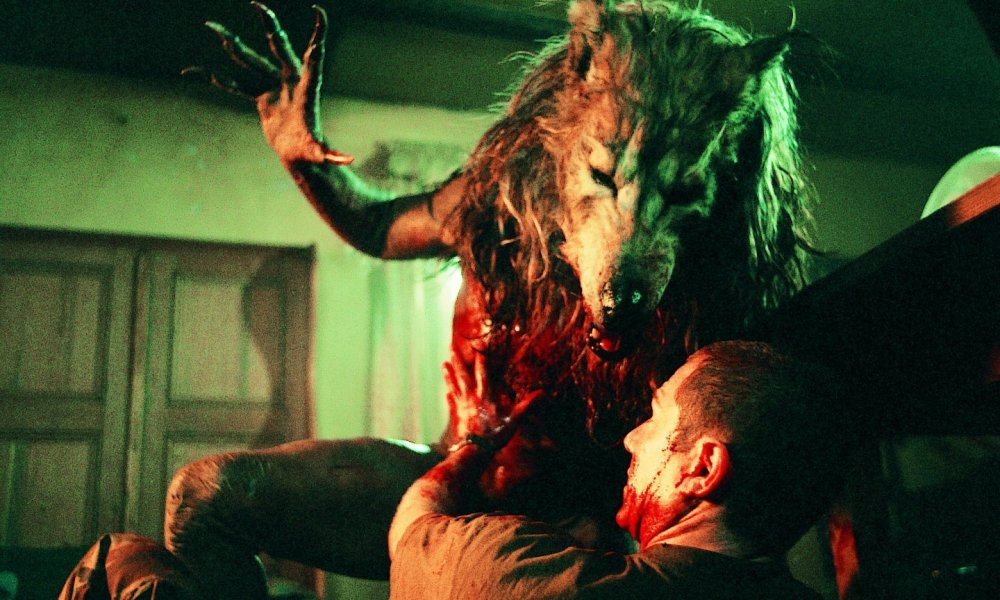


In a new interview on Blazing Minds I got an opportunity to ask horror expert MJ Simpson a few questions about his book ‘21st Century British Horror Films, Volume 1: Dog Soldiers and Doghouses’, in which he reviews hundreds of British horror movies, many which never before documented.
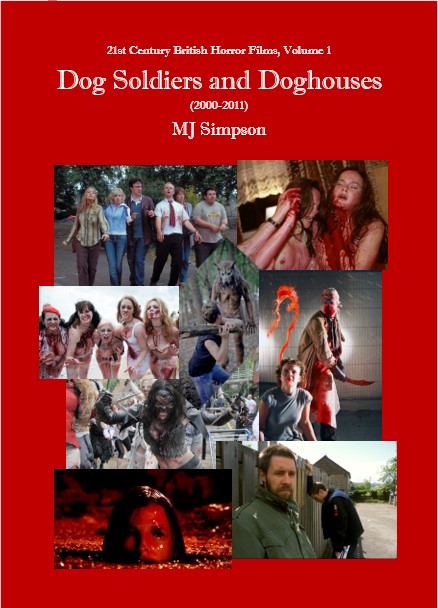
Q. Your book ‘21st Century British Horror Films, Volume 1: Dog Soldiers and Doghouses’ is available now. Can you tell me what we can expect from the book?
Dog Soldiers and Doghouses is a collection of 316 film reviews, documenting every British horror movie released between January 2000 and December 2011. Each review has basic cast/crew credits, a mixture of synopsis, critical analysis, production history and trivia, and details of release dates/formats. Plus, a colour reproduction of the DVD sleeve or poster. It’s a reference work but it’s not a dry catalogue of information. I write things to be read so I hope people find it entertaining as well as informative.
What you can expect is some interesting things about films you’re familiar with, an insight into films you’ve heard of but not seen and a startling realisation that there’s a vast body of home-grown horror cinema that you had no idea existed.
Q. The book covers British horror films which were produced and released between 2000 to 2011. Why did you decide to write about this period of British horror?
21st Century British Horror Films is a series of three books which between them cover the first two decades of the 21st century. Now, this is actually a massive undertaking as that’s about 1,050 feature films! To put that in context, it’s about four times the total amount of British horror films released in the entire 20th century. In other words, I’m writing about the 80% of British horror movies that have been largely undocumented until now.
In the early noughties there were a handful of British horror films released each year and now there’s regularly 80-100 new films every year, so to split 1,050 films reasonably equally across three books has meant splitting the 20 years into a twelve, a four and a four. So, there’s nothing significant about ‘2000-2011’, it’s just the first third or so of the full work.
As to why I’m writing about British horror films 2000-2019, it’s because someone should, and I’m in the possibly unique position that I can, because I’ve spent those 20 years collecting information and watching these films. If I don’t produce these books, a lot of these movies will simply disappear from the historical record.
Q. What sort of preparation did you do prior to writing the book?
Back in the 1990’s I worked on SFX Magazine and was there when British horror cinema, which had been pretty much dead for years, spluttered back into life. It did so by shaking off the Gothic traditions of the past and instead embracing social realist themes and settings in ground-breaking films like Urban Ghost Story (1998), Darklands (1996) and I, Zombie: The Chronicles of Pain (1998). At the same time, independent VHS labels started to create a market for straight-to-video independent horror films. And the early days of the internet let filmmakers find new ways to sell their movies directly to horror fans. It was an extraordinary time.
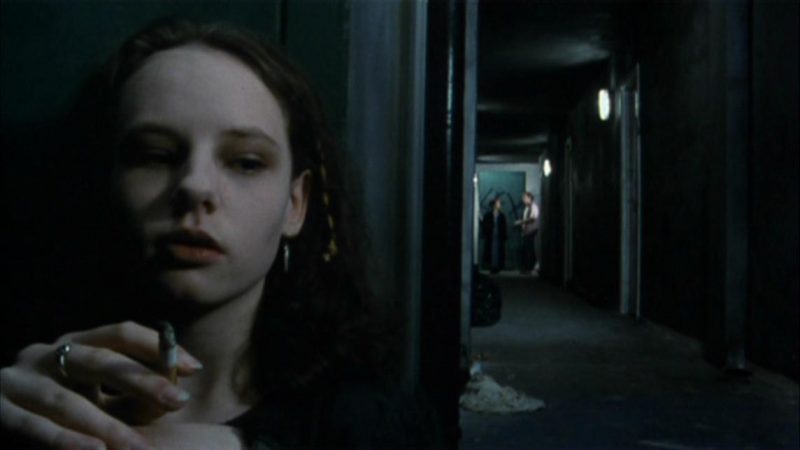
In the early noughties, while I was keeping track of these developments, I found the number of films being made and released was gradually increasing and I realised that I would need to keep some sort of checklist of movies otherwise some would end up forgotten.
From that came my previous book, Urban Terrors: New British Horror Cinema 1997-2008 which documents in detail, with lots of interview quotes from the filmmakers themselves, this fascinating period in British cinema history when everything changed completely. This is still available from Hemlock Books.
The number of films being made kept increasing and increasing so that a follow-up to Urban Terrors would prove impractical. So eventually I realised that what was needed was a full-on encyclopaedia of post-millennium UK horror movies.
I had seen a lot of these films – quite possibly more than anyone else on the planet. And I had contacted, interviewed and got to know many of the filmmakers who were becoming regular names within the genre: people like Jason Impey, MJ Dixon, Richard Mansfield, Steven M Smith and Andrew Jones. So, as with Urban Terrors, I was in a unique position to complete this project. All I had to do was track down and watch the films I hadn’t seen yet.
But with 80-100 new titles being made and released each year, this stuff was appearing faster than I could watch it. Two films a week may not sound much but I have a life, a family and a day-job. And also, I do like to watch other stuff! However, once I decided to cut off my research at the end of December 2019, the project once again became viable. I had seen a lot of films for all three volumes and then I realised that I was getting close to completion on the volume one list, so I concentrated on that. And here we are.
Q. In addition to the more mainstream releases which horror fans may be familiar with, you also cover the more micro budget and obscure titles – some of which were only released on YouTube. Why did you decide to include such a diverse selection of films?
That’s a bit like asking the compilers of the Oxford English Dictionary why they decided to include such a diverse selection of words. This is an encyclopaedia, a definitive record. If I were to pick and choose which films to include – well, I can’t see what the point would be of that. A film is a film is a film. If someone has made a feature-length horror movie, even if they shot it in their own backyard, and it’s available for you to watch, I see no difference between that and something like 28 Days Later (2002) or Shaun of the Dead (2004) that cost several million quid.
If you really want to fully understand the independent music scene in the 1980s, you have to consider bands that were releasing their own recordings on cassette. If you want to fully document the significance of football culture in this country, you’ve got to consider Sunday morning matches in parks. This is grass roots stuff; it’s often more real and honest than the high-profile stuff and invariably more interesting. The movies you’ve not heard of can tell us far more about the state of horror film-making in the UK – influences and themes and artistic/commercial movements – than the few atypical big name, theatrical releases that are all the mainstream media ever notices.
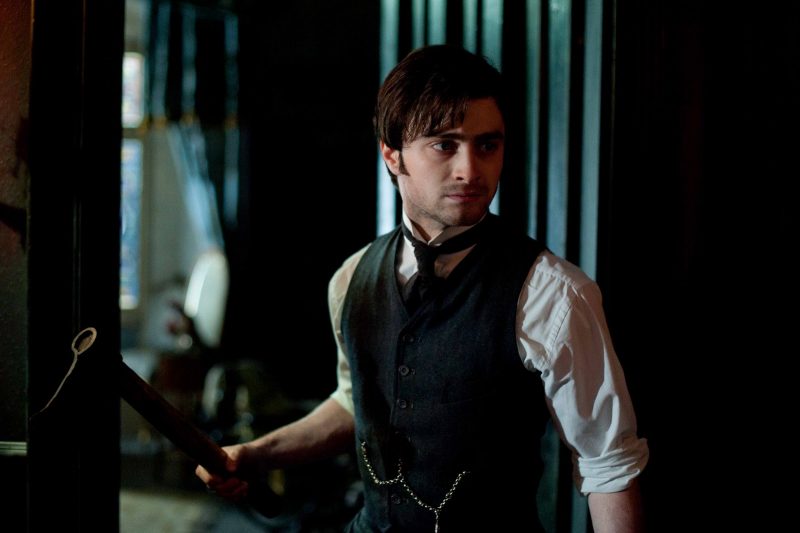
For example, it’s hard to think of a film less representative of recent British horror cinema than The Woman in Black (2012), but because of the Hammer (Horror) link, the Harry Potter casting and the huge marketing campaign, that generated more coverage and discussion than the other 82 British horror films released in 2012 put together.
Q. There are often conflicting opinions as to what is a ‘British Horror Film’. When selecting films for the book, how did you decide what titles are suitable for inclusion?
This is a very good question. Everyone who writes about this subject has to decide for themselves what makes a film British, what makes a film horror, and indeed what makes a film a film? My criterion for the last – and this is purely personal – is that a feature film is anything running 60 minutes or more that was not made specifically for television. TV is a whole other thing. And short films, well, you’ve got to draw a line somewhere. Blockbuster Video used to say a feature film was at least 70 minutes long. The BFI actually says features start at 45 minutes duration. I picked one hour.
Most of these films are inarguably British: made in Britain by British cast/crew using British money. The debatable ones are international co-productions. For example, Dog Soldiers (2002) is technically a UK/US co-production (shot in Luxembourg) but it’s clearly as British as a plate of roast beef and Yorkshire pudding. On the other hand, there’s nothing really ‘British’ about, say, Resident Evil (2002), even though it’s got some British production involvement. The two things I look for are: does it ‘feel’ British and/or was it marketed as British. If I had gone ultra-completist and included everything the IMDb says is partly British, I’d have twice as many films (and, as I hope I’ve made clear, I’ve already got plenty, thanks!) and it would just be a random collection of titles. It wouldn’t be the history of British horror cinema across two decades.
As for ‘is it horror?’, I use the wisdom of crowds. If something is borderline, I look at where it was shown and where it was reviewed. If it played horror festivals and it was covered by horror websites and horror magazines, that’s a horror film.
Q. Did you experience any issues whilst researching or writing the book?
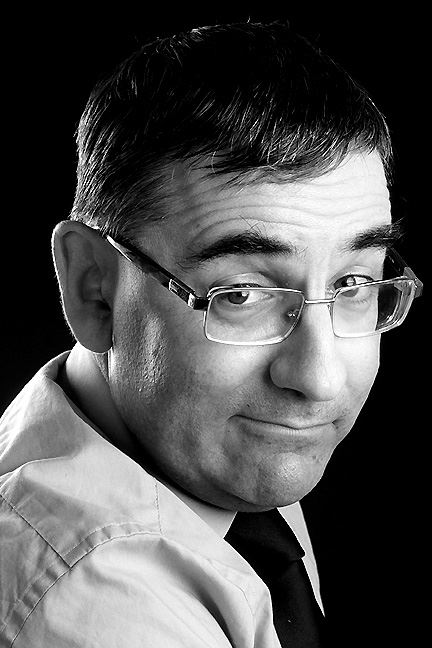
The biggest challenge is in tracking down the more obscure films. You might think that ‘lost’ films all date back decades but in fact it’s very, very easy for movies to simply disappear, especially now that so many never have a physical incarnation. That’s one of my prime motives for writing these books.
For example, there was a very good VOD website a few years ago called Distrify and several of the films in this book were released via that site. But Distrify went bust. So where have those films gone? In some cases, there’s never been a DVD so what was once available for anyone to watch now sits on the film-maker’s hard drive, and maybe a few discs that were sent to cast and crew.
I’ve seen about 90% of the films in Dog Soldiers and Doghouses, and most of the ones that escaped me were made by two gentlemen. Trevor Barley makes rather awful violent horror-porn so frankly I didn’t look too hard for his stuff. And then there’s Jonathan Ash, a Tyneside auteur who made a bunch of amateur horror features in the ‘90s and ‘00s which he sold through his MySpace page. I didn’t buy them at the time, and now I’m regretting it! In these cases, I’ve pieced together what I can from trailers, contemporary reviews (if there are any) and archived websites.
Sometimes filmmakers come through and send me a screener of their ‘lost’ film, but sometimes even they can’t (or won’t) help.
Q. What do you hope people will take away after reading the book?
A burning desire to buy volumes 2 and 3 when they come out, and a passionate urge to recommend the entire series to their friends.
Seriously, I want people to take away an understanding that we are living through an unprecedented time in domestic horror cinema. That the films which play their local cinema, or that they read about in Empire or Total Film, are just the tiniest, teeniest tip of the iceberg. I’m not claiming this is a golden age of British horror cinema, but we should remember that nostalgia robs us of perspective. Like any genre, British horror has always been a mixed bag. For every Blood on Satan’s Claw (1970) there’s a Dr Blood’s Coffin (1961). Sifting the wheat from the chaff among 20th century horrors is easy because there’s relatively few titles and vast amounts of wordage analysing them. Identifying the gems among the current crop is a lot harder because the situation is reversed: vast numbers of films with almost nothing written about them.
Q. Dog Soldiers and Doghouses is the first volume in the series. Can you confirm when we can expect the next volume and what is it likely to cover?
Volume 2, White Settlers and Women in Black, should hopefully be available next year. That will have about 350 films released from 2012 to 2015. Then Volume 3, Killer Clowns and Demonic Dolls, will follow in 2022, with about 400 films released 2016-2019.
If I’m not sick of the project by then, I might release a fourth volume, an appendix, covering everything which was either started but unfinished or finished but unreleased within this 20-year period. That would also cover about 300 films. I’ve also toyed with the idea of doing a volume zero covering the 1990s, which would be a slim tome indeed!
I am absolutely not continuing my research beyond the cut-off point: 31st December 2019. David Dent has gamely taken up the mantle of keeper of the British horror flame and is keeping track of this decade’s releases over on his blog Dark Eyes of London. And good luck to him!
Q. Taking into your account your previous answer were there any films that you would like to have included, but decided not to?
No, because as I say, I didn’t make qualitative decisions about what did or didn’t go in the book. I included every film that met the criteria I had established. But this is the crazy thing: I’ve actually been really conservative in my definitions, and I still ended up with a thousand films!
Q. Do you have any other projects which you are working on?
For the past 20 years I have been working (not continuously, I’ll admit) on a biography of Elsa Lanchester. In fact, I was doing some work on it today. She was a fascinating woman whose life has never been documented. Even her own ‘autobiography’ is almost entirely about her husband, Charles Laughton, who has been the subject of several other books.
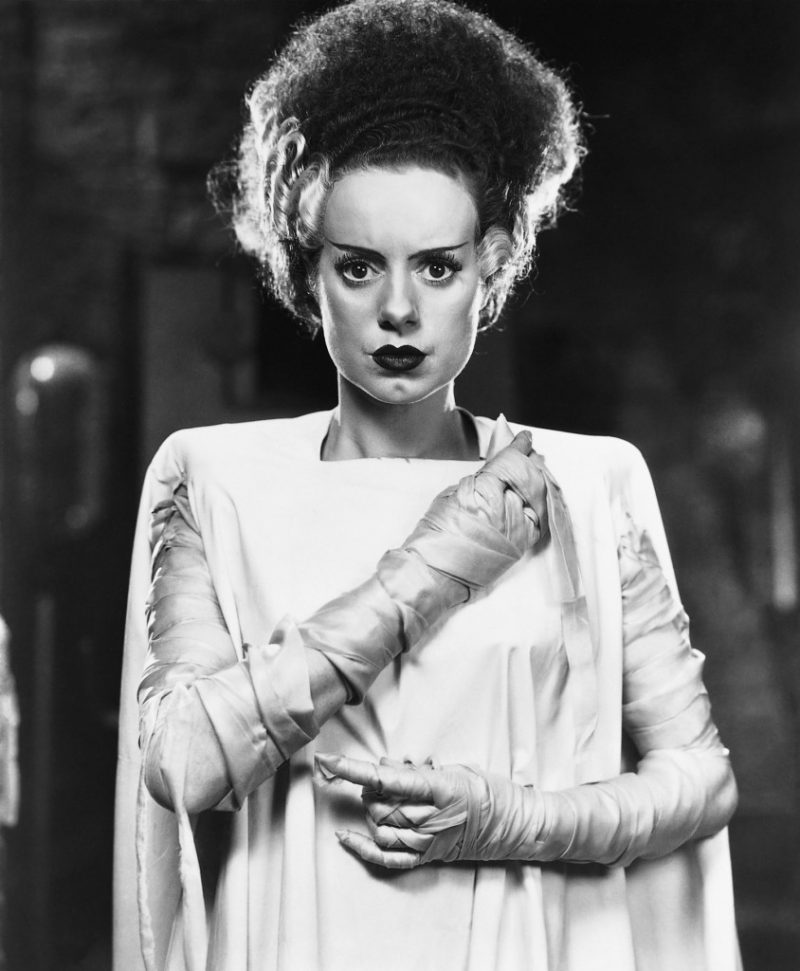
Horror fans know Elsa from Bride of Frankenstein (1935) of course, and possibly from some of her later roles such as Willard (1971) and Terror in the Wax Museum (1973) (and Mary Poppins (1964)). But there is so much more to her than that. She made about 60 films, from the silent era to the early 1980s, as well as dozens of radio and TV appearances. She was in the first British multi-reel sound film, appeared on television before the Second World War, recorded albums, worked as an artist’s model and was a massive stage star, in both straight theatre and cabaret. She’s probably the only person who ever worked professionally with both Stravinsky and Elvis!
The book is called Bride of the Hunchback. It’s my magnum opus. I’ve just got to get the damn thing finished before I die.
I used to also write a lot of magazine articles but now I just do the odd feature for Allan Bryce, for The Dark Side or Infinity. Just to keep my hand in.
Q. If someone was looking to write their own book what advice would you give them to get started?
A. First, pick a subject that you’re passionate about, then research the hell out of it. There are two good reasons to write a book: because someone offers you a stupidly large amount of money (this happened to me once, with my Douglas Adams biography) or because – and this is the best reason – you want to read a book about something and no-one else has written it yet.
The basis of good non-fiction is ordered information. Start by picking all the stuff you know about your subject and put it into a list or a spreadsheet. Then go looking for stuff to fill the gaps. Pretty soon, you’ll spot connections or contradictions that you didn’t know were there. And if you didn’t know about them, chances are no-one else did.
Once you’ve done all your research, writing the damn thing is the easy bit.
21st Century British Horror Films, Volume 1: Dog Soldiers and Doghouses is available now from: https://mjsimpson.bigcartel.com/

Published in various websites, Philip is a reviewer who is best known for his interviews and media coverage of independent projects including; films, books, theatre and live events. Always on the lookout for something different to cover!