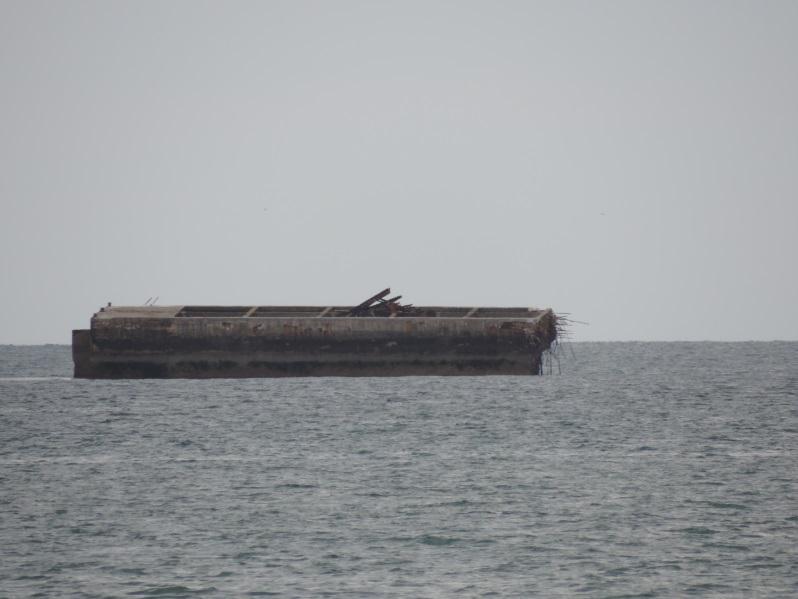


On a recent holiday to the Normandy region of France It was difficult to miss the shops, restaurants and streets decorated to commemorate the 70th anniversary of the D-Day landings, when France was liberated from German occupation during World War II.
I have to say that my own personal knowledge of this time was from school history TV, and parents who were children during the war years. So I was intrigued by the celebrations and the stories the local people had to tell from their experiences in the occupied villages of France.
On The return leg of our journey home we took the opportunity to visit the quaint coastal towns that hug the French Coast looking out across the Channel, from Port au Bessin to the port of Caen. During a stop at one of these towns, the town of Arromanches, I noticed a number of large concrete structures protruding from the water, some on their side covered in moss, some still upright, now I had no idea what I was looking at but a fellow traveler told me that I should look into the history of these structures especially as I live in North Wales. Now they had my attention…
After a few hours of visiting the amazing museum and chatting to the local historians it seems that these concrete structures (caissons) were called Mulberry Harbours and without these floating monoliths the troops would not have been able to reach the shore let alone land the vehicles, equipment and supplies for the invasion at Gold beach, which was the designated British beach in the landings.
It was always known that it was going to be impossible to land without a harbour, so Winston Churchill and a team of engineers came up with the idea of a floating harbour, which was built in the North Wales coastal town of Conwy at Y Morfa…
They were built in secret and towed across the English Channel in terrible weather conditions, assembled into the harbour formation which allowed the troops to land.
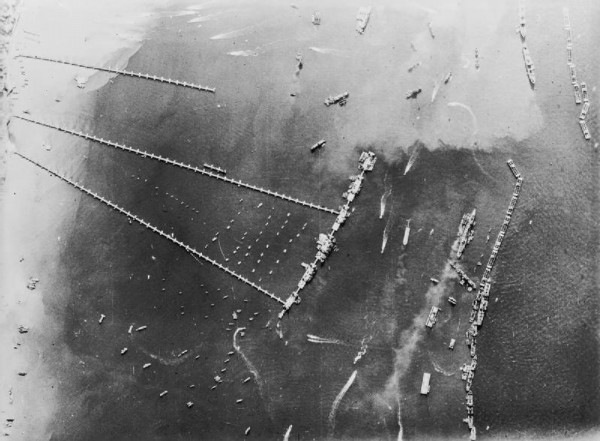
So what I was looking at was Mulberry B, a piece of history that was actually constructed in secret about 20 miles from my home town. It was quite humbling to see these floating and beached remains, when you consider its use and the role it played during WWII. But more importantly we must never forget the men and women from our shores who gave their lives to give us freedom, safety and peace.
So care of Wikipedia here is a small description of what happened to the harbour (Made in Wales).
By 9 June, just 3 days after D-Day, two harbours codenamed Mulberry “A” and “B” were constructed at Omaha Beach and Arromanches, respectively. However, a large storm on 19 June destroyed the American harbour at Omaha, leaving only the British harbour still intact but damaged, which included damage to the ‘Swiss Roll’ which had been deployed as the most western floating roadway had to be taken out of service. The surviving Mulberry “B” came to be known as Port Winston at Arromanches. While the harbour at Omaha was destroyed sooner than expected, Port Winston saw heavy use for 8 months—despite being designed to last only 3 months. In the 10 months after D-Day, it was used to land over 2.5 million men, 500,000 vehicles, and 4 million tonnes of supplies providing much needed reinforcements in France.