

Approval Needed (2018)
Director: Karen Anstee
Writer: Karen Anstee
Stars: Paul Baichoo, Jessica Bennett, Ekow Otoo, Arinder Sadhra, Anna Skye
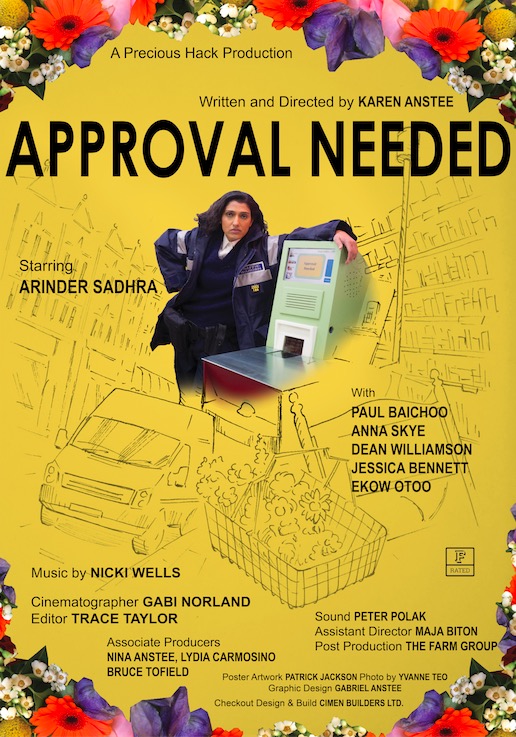
Amita, a lonely traffic warden, has a terrible day at the hands of angry drivers, and home is no picnic either. But just when it seems her day can’t get any worse, she makes an unexpected friend at the supermarket checkout, and finds the one who will love her, even though she’s a traffic warden.
The Southend-on-Sea Film Festival will be returning for its 11th year from 23rd May to 27th May. In preparation for the event I got an opportunity to ask co-writer and actor Karen Anstee a few questions about the film Approval Needed which has been selected to play at the festival.
Q. Approval Needed has been selected to play at The Southend-on-Sea Film Festival. What can we expect from the film?
Approval Needed shines a light on the lonely life of a traffic warden, so there are some uncomfortable realities to face about our society in these Brexit days, but it’s also a film about hope and love, with plenty of laughs and possibly a few tears of joy to be shed in the end.
Q. What were your inspirations for the story when writing the film?
Approval Needed was a response to the sense of powerlessness and sadness I felt upon seeing the shocking rise in intolerance and aggression towards minorities since the Brexit vote, and also the general dehumanising treatment of vulnerable, disadvantaged people in our society. I wanted to make a film that highlighted and talked about this as well as the disconnection our growing dependence on technology can cause.
I chose to write about a traffic warden because even the most right-on, liberal-minded people in my circle of friends hate them and wish them no good. I enjoyed the challenge taking on the strange societal acceptability of this hatred, turning it around and inspiring empathy for the character.

I’ve been thinking about this a lot recently and it suddenly struck me that the powerless I’ve been feeling about the way things are headed in our society and issues such as climate change, is very similar to how it felt to be a child in the Reagan/cold war years, living in fear of nuclear Armageddon. Therefore I see that, in way, what I’ve done with Approval Needed is deal with my angst by revisiting the films that came out of that other era of fear, films that used magical realism and often humour to foretell what the future might look like in the computerized world we now actually live in – so movies such as LA Story, War Games, Short Circuit, Westworld are definitely all influences. Hence, the origami peacock in Amita’s apartment, and the origami crane left on the self-checkout at the end of the film, are grateful nods to the king movie of them all, Blade Runner.
Q. What were your influences for the look and style?
My aim was to make the beginning of the film feel very like a piece of social realism – almost reminiscent of Mike Leigh’s north London films, in order to make the film’s surprising leap into magical realism, with the accompanying quirky camera angles, all the more startling. The idea was to gradually move from depressed cold blue/grey hues to a feeling of the sun coming out at night in the supermarket as the story reaches its hopeful ending.
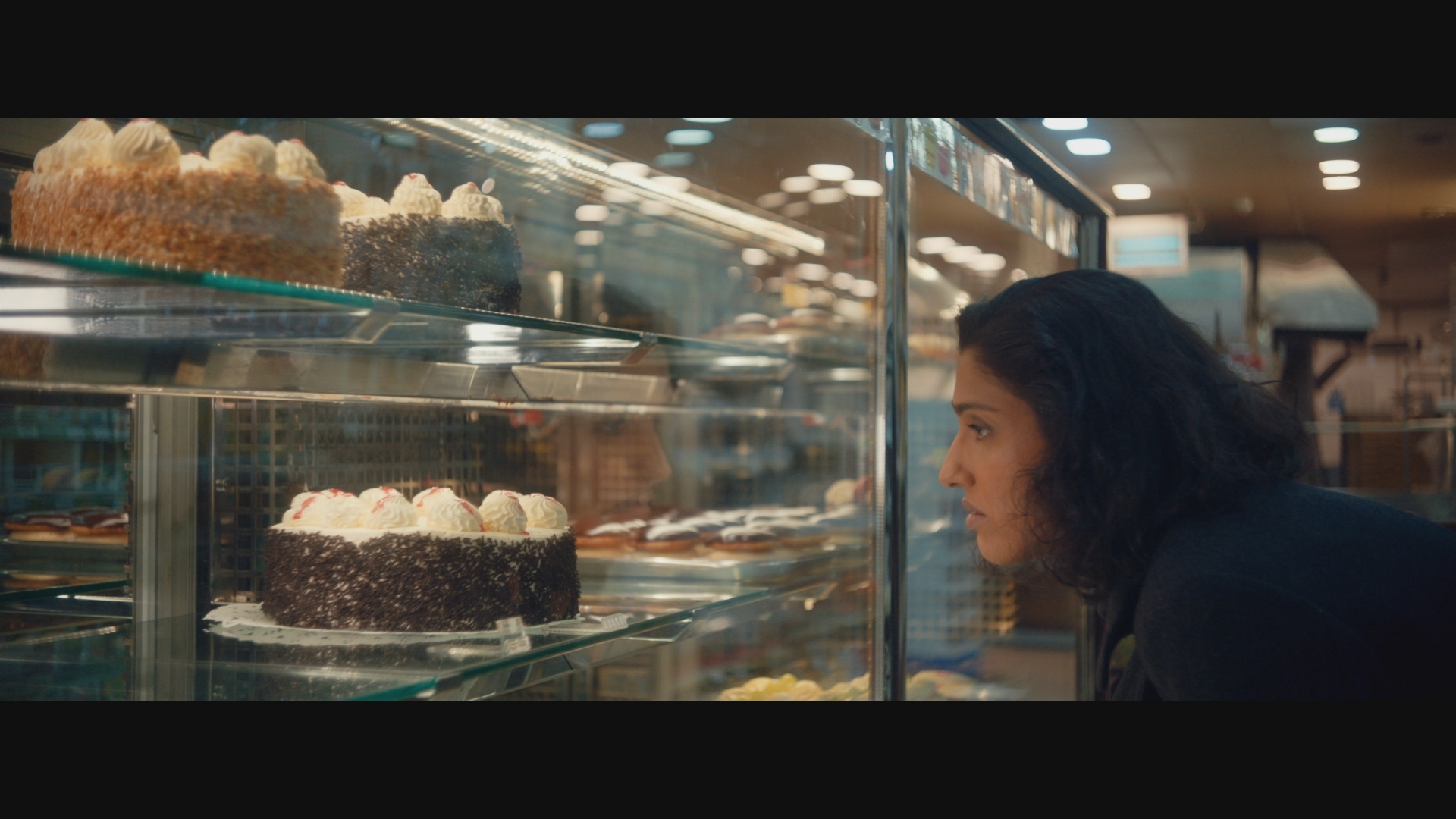
The supermarket location we used was a big influence on the development of the overall look, with its old yellowed lighting, beautiful rich colours and exotic packaging guiding the choice of colour for the self-checkout machine and even the clothes worn by the traffic warden in that scene, whilst also providing a lovely otherworldly backdrop for the fantasy element of the film.
The music was also very important. I wanted it to express the changing fortunes of the traffic warden whilst also acknowledging an underlying tension that exists for many who are born and bred in the UK, but whose ancestral heritage is visibly from elsewhere. Consequently, I commissioned composer Nicki Wells (who sings with Nitin Sawhney’s band) to write a theme and variations for the traffic warden based upon a traditional Indian chant. Nicki is blonde and very pale, but spent most of her childhood in Indian, so she was able to bring her own experience of being “the other” to the music.
Q. Did you experience any issues or challenges whilst making the film?
Many, but here are the top few:
Most importantly, none of the major supermarkets would agree to us filming, and it felt at times like we wouldn’t be able to make the film at all, so it was a massive relief when a local Turkish market, Yasar Halim, kindly agreed to give us five hours to shoot the scene after closing on a Sunday. To be honest it was not really long enough time to get the equipment in situ, then film five pages of dialogue/half the film, and complete the get out too, but we made it work and we were very grateful for their kindness and patience.

Also, Yasar Halim doesn’t actually have any self checkout machines, so I had to organise the design and build of a self-checkout machine, and coordinate several people to animate it during the shoot.
Meanwhile, our lead actor – Arinder Sadhra – was on tour with the National Theatre’s production of Warhorse for all of last year, so we had to schedule the filming for the one weekend she could be in London, so time was extra short and we needed to shoot four exterior scenes at different locations in one day.
But, probably the most difficult thing was obtaining the filming permits for those exterior street scenes especially as, in order to make the point that it’s not right to park illegally in a disabled bay, we had to get permission to close a real disabled parking bay. I ended up having to request permission from the Met police and meet a man from the local council at the location early one morning in order to discuss the details of the “stunt” we were planning – can’t imagine what it must be like to manage a film like Fast and Furious.
Q. What were some of your favourite moments during filming?
I really enjoyed it when a couple of traffic wardens came by to see what we were doing, thinking we were parked illegally in the disabled bay, and then told us all these really sad stories about how people abuse them – they were just so thrilled to hear that we were making a film that made them look like the good guys for a change – that was truly lovely moment.
And our final scene to shoot on the exteriors day was the moment a van drives through a puddle and splashes the traffic warden, but when we checked the street early in the day we discovered, to our horror, that someone had cleared the huge puddle we were planning to use. When we arrived at 4pm – tired and hungry – expecting to spend ages carrying buckets of water and fearing the light fr filming would be lost, we instead found the puddle was miraculously restored – David Williamson, who heads up Talkies Community Cinema had generously spent his afternoon sorting it for us, and he had coffee and cake waiting at his place after the shoot was done.
Q. Did you make any changes from the original script during filming?
Some lines got cut in the editing phase but the most important change came during the making of the self-checkout machine, when I was playing around with how the actor would eventually interact with it. I sat down on the machine to think, at which point it suddenly dawned on me that I was missing a vital line for the machine, and just as well I realised because it’s the gag that usually gets the biggest laugh in the film. (Spoiler alert – that line is, “Unexpected item in the bagging area.”

Q. What do you hope people will get from the film?
I hope people will find the film thought provoking and be moved to think twice before treating a fellow human like a machine with no feelings, especially if they are doing those jobs we wouldn’t ever want to do ourselves. And I very much hope the audience will feel uplifted by the message that there is someone for everyone, and that even when things feel terrible and hopeless, there is still a chance of something magical happening and life changing for the better.
Q. Do you have any new projects which you are working on?
I’ve just recently completed a psychological crime thriller called Living With Honor, which is not only a short in its own right but also a mood piece to go with the fundraising pitch for my first feature film. I’m also working on a screen adaptation of my opera novel, When The Fat Lady Thins, which has recently been optioned by a film production company.
Q. If someone is looking to direct own film, what advice would you give them?
For me, it’s all about good communication skills, exhausting/unwavering attention to detail through the whole process, and a willingness to risk failure. It’s a learning process and each story throws different challenges in your path. It’s unlikely you’ll make a perfect film first time out, every time, or perhaps ever, but the only way to learn how to make a film is to make a film, so have courage and go for it, especially if you are from an underrepresented social group – your stories need to be told just as much as any other and now is the time we need them most.
You can find out more about Karen Anstee on the website www.karenanstee.com
You can find out more about the Approval Needed on the website www.approvalneeded.com and the following social media Instagram, Twitter, Facebook

The Southend-on-Sea Film Festival runs from Thursday 23rd May to Monday 27th May. You can find out more about the event and purchase tickets on the website https://www.southendfilmfestival.com

Published in various websites, Philip is a reviewer who is best known for his interviews and media coverage of independent projects including; films, books, theatre and live events. Always on the lookout for something different to cover!