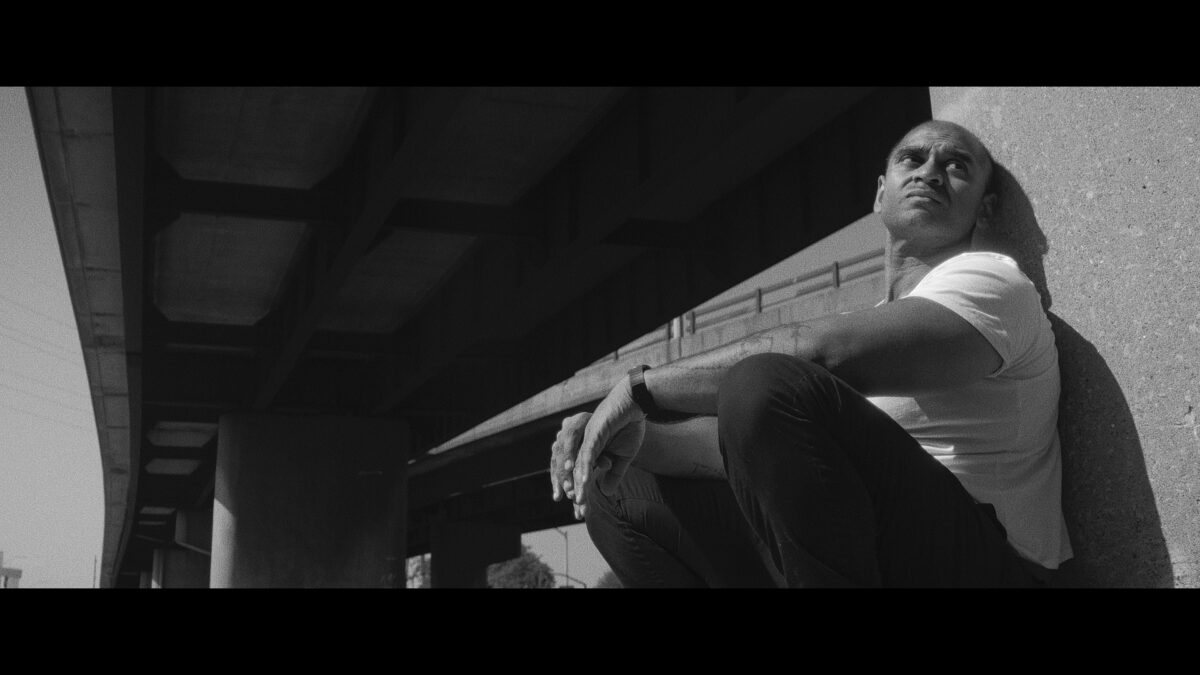
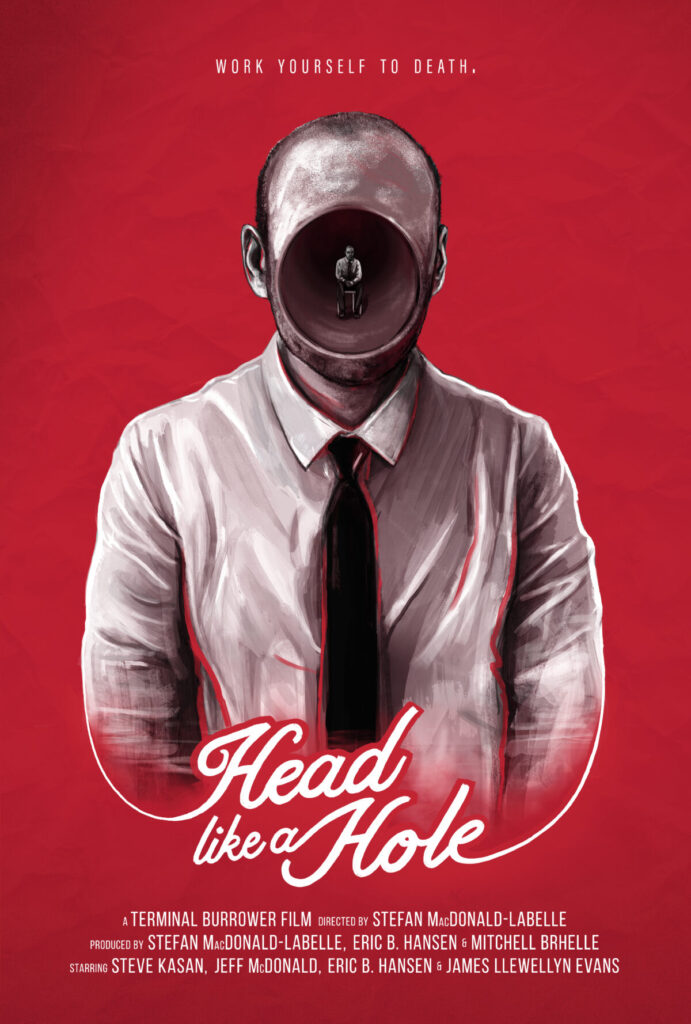
Film Name: Head Like A Hole
Director: Stefan MacDonald-Labelle
Writers: Mitchell Brhelle, Stefan MacDonald-Labelle
Starring: Steve Kasan, Jeff McDonald, Eric B. Hansen, J. Robert Bellamy, Mitchell Brhelle
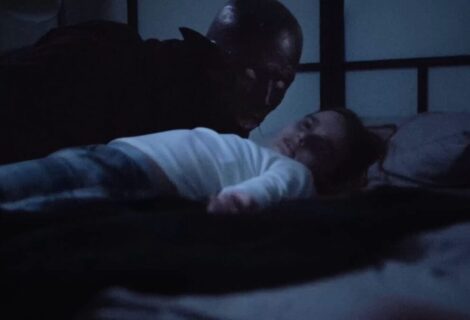
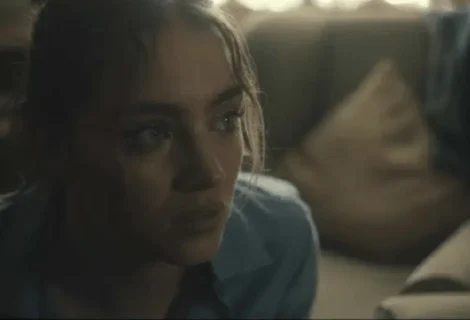
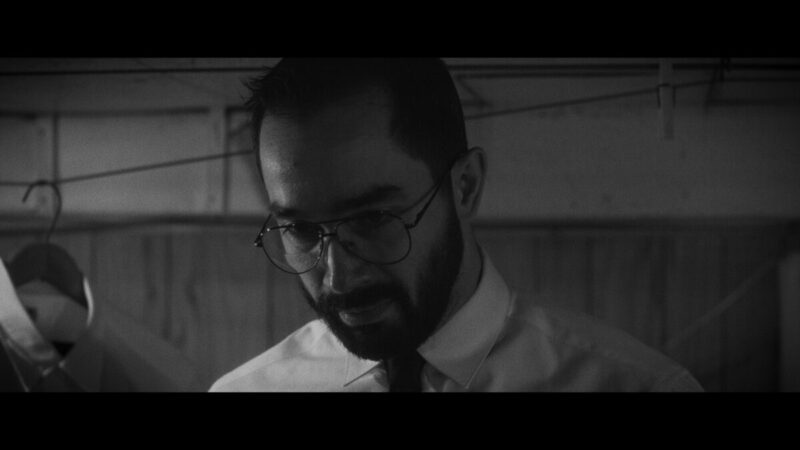
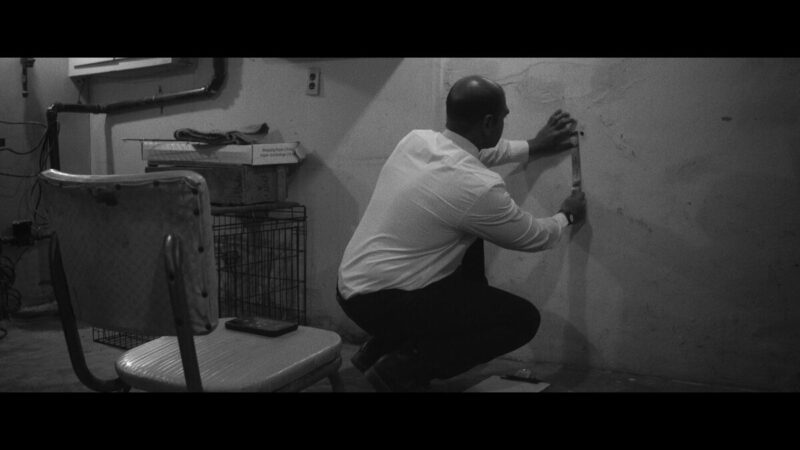
In financial dire straits, a man accepts a strange, high-paying job where he must take up residence in a home and measure a hole in the wall of the basement to determine whether or not it’s growing in size.
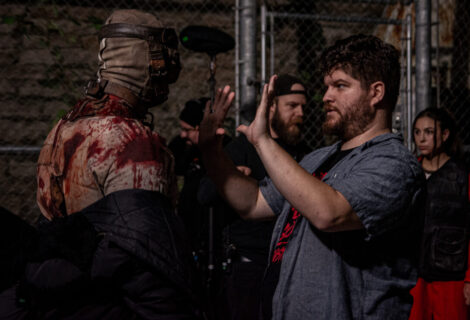
In a new exclusive interview on Blazing Minds, I got a chance to ask Director / Co-Writer Stefan MacDonald- Labelle a few questions about his film ‘Head Like A Hole‘, which will have its UK Premiere at Horror-on-Sea on Saturday 17th January at 15:00hrs.
Q. Your film Head Like A Hole has been selected to play at the Horror-on-Sea Film Festival. Can you tell us what we can expect?
A. Expect a bleak, off-putting and sometimes humorous time, where our central character merely tries to exist in a late-stage capitalist hellscape. With this project, I tried to cultivate a sense of pervasive dread as we navigate the central character’s isolation, which is very much based on my own feelings of isolation. This is a movie for anyone who feels out of step with the world – for all of the weirdos out there.
Q. You co-wrote the script with Mitchell Brhelle. What were some of your inspirations when writing the script and what was your process for writing together?
A. I kind of tipped my hand slightly while answering the last question, but I pulled a lot of inspiration from my own life. I know that sounds really odd based on, well, everything about this movie. I deal with a great amount of anxiety, which can contort mundane life experiences into waking nightmares. I wanted to present an absurd reality that conjured these feelings. Much of this movie is aimed at taking the piss out of some of my rougher experiences. I’m looking back and laughing at some of the darker moments of my life.
In terms of real-life inspiration, while I’ve had a ton of really odd jobs throughout my life, the main basis for this film is one office job in particular, which took the soulless, drudgery cake. I held a pretty useless role in the corporate office of a retailer. I felt like a sardine, forced shoulder to shoulder with people I would never associate with otherwise as I sank deeper and deeper into a sea of anxiety. It was a truly awful experience and I stayed there for far too long because I felt otherwise unemployable. However, one of the few people I love dearly there helped nudge me into the world of film production. I am forever grateful for that. I honestly want to get way more descriptive here, but if I do, I’ll spoil so much of the film and explode the word count of this answer. After seeing the film, if folks have questions, I’m (for the moment) around on social media.
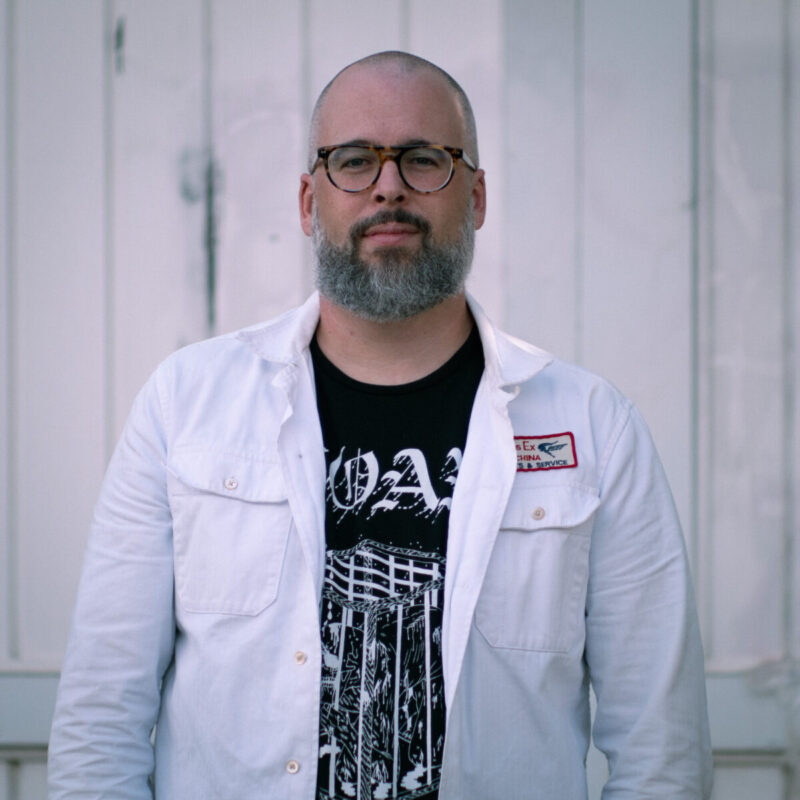
In terms of writing with my producing partner, Mitchell Brhelle, I knew I wanted a script where we simply exist with our main character, so it’s maybe less a traditional narrative where we are constantly forcing our character to be active throughout a typical three act structure and, instead, a more amorphous experience. I want the contents of the film to feel like they are bearing down on our central character. This type of structure allowed Mitch and I to work together on narrative moments that carried thematic importance. We then organized these moments to create a kind of dark carnival ride that explores this character’s life. From there, I wrote the script and we revised elements until we were happy with our shooting script.
Q. Did you have any of the cast in mind for the characters when writing the script?
A. Our lead, Steve Kasan, has been a long-time collaborator. He’s a wonderfully supportive friend and is just keen to help out in whatever capacity he can. When you’re working with no money to make a movie, the folks working on it need to have that kind of energy to help alleviate the mountains of stress and anxiety that you’re presented with. Like Steve, I knew the rest of the actors, so I think it’d be fair to say I wrote with them in mind with one exception… Jeff McDonald.
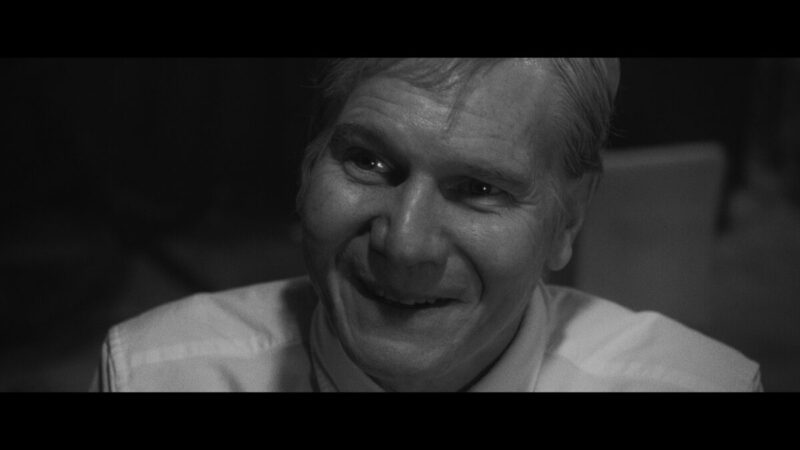
We tried to cast the role of Emerson, Asher’s boss, locally, but it really wasn’t working out. This movie hinges on this character’s performance and there’s so much dialogue to work through that the actor must come correct. It’s a staggeringly tall order. We widened our casting call and netted a self-tape from a Los Angeles based actor and it was perfect. It was so perfect, we agreed it was worth the cost of flying him over to Canada. Enter Jeff McDonald. For a no-budget movie, this was really the main production expense aside from prosthetics and location sound costs. While having an actor I didn’t really know fly in for a massive role did cause my hair to gray, it was ultimately worth it. He became Emerson and took the character in directions I hadn’t initially conceived, which is part of the joy in welcoming others to work on a project.
Q. What were some of your influences for the look and style of the film?
A. From a filmmaking perspective, I enjoy a sparse, no frills aesthetic. I grew up listening to hardcore and a lot of what appealed to me about that style of music was the stripped-down musicianship and the honest discussion about feeling wrong for the world. I want to port over those elements to filmmaking. I feel like when people make movies drawing from their punk roots, they make them loud, frenetic, aggressive, but that’s really not what I’m trying to do. I want to carry the stripped- down side of the music I grew up with and bring that to my filmmaking. I think this benefits the overall themes of this movie in particular, because the whole world the character lives in has this bleak austerity to it. It just feels constantly off. Desolate. Decayed. Neglected. It’s all completely absurd.
Q. Did you make any changes from the original script during filming?
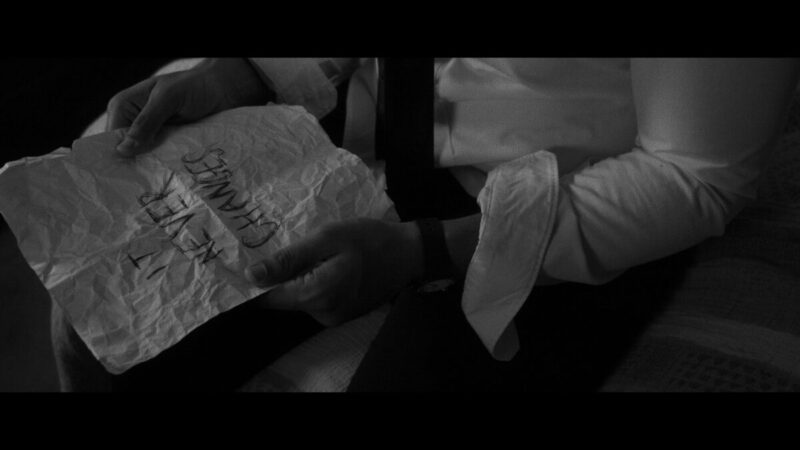
A. Ever so slight spoilers incoming… Our cold open was added while filming. For the uninitiated, it’s our opening scene where we meet a disgruntled employee wielding a hammer. I’ll leave it at that for now, but I’m sure fans of genre cinema can telegraph where the scene goes just based on this scant information. I honestly can’t see the movie without this scene. Its exclusion in the original script feels criminal. In my mind, this is a movie that, hopefully, rewards patient audiences, but I was worried audiences wouldn’t feel the gravity of Asher’s off putting work situation without this scene setting the table for what’s to come. Just tone-wise, it felt like it needed something to suggest to the audience that we’re marching towards something awful. While darkly humorous, I still wanted the story to feel like a conveyor belt dragging us to something evil.
Q. What were some of your favourite moments during filming?
A. It was a largely drama-free filming experience, so we were mostly having a blast the w(hole) way through even if it was a tremendous amount of work. Although, if you twisted my arm, choreographing a dance number was endlessly hilarious. I think it was really a moment for us to reflect on how free and fun it was making a movie in our particular DIY fashion. Many thanks to Steve for just going for it. We need to normalize dance numbers in movies.
Q. Did you experience any issues during filming?
A. We filmed this in a week*
*Technically, our final sequence has shots that were filmed a year apart. Here’s that story: We filmed in a straight shot of seven days, ending with our prosthetics and special effects day. It was going to be a big mess, so it made sense to just have it be a hilarious way to wrap filming. We’re exhausted, burnt out, why not just introduce some gooey madness to send this thing off? This would’ve been on Sunday. On Saturday, our prosthetics person called to cancel. They provided a catastrophic reason, one that no one should reasonably lie about. I told them we’d reschedule once they were ready to get back to work and provided my condolences. Finding an alternative on such short notice was impossible, so we had to accept that our initial plans were out the window. To make matters worse, Jeff was set to fly back to LA the following day and we couldn’t afford to fly him back just for one more shoot day. I took a quiet moment to myself after all this happened and came to the only conclusion I could: all my ideas for the blocking of the scene had to be jettisoned, and that’s fine. Ultimately, I love working with what I have. Accept the circumstances you’ve found yourself in and see what you can create out of it. All of Jeff McDonald’s coverage became singles and we did everything we could to ensure it would cut together with the rest of the scene. It was a hard day, but we got it done. So much of this film was working on the fly, so we were well-prepared to acclimate to our new circumstances.
A few months later, I rescheduled with the prosthetics person to complete our filming. The day before we were supposed to film this scene, I received a call. It was another catastrophic reason they couldn’t make it to set. Either this person is doomed to a hellish existence exactly one day before they’re supposed to appear on set or they’re a goddamn liar. I’m relatively certain it’s the latter.
I don’t believe in karma, but I wish I did so I could take some small solace in this person being dealt a rotten hand down the road for lying about things that should be best left alone.
This time we opted to commission an actual special effects company for the shoot day and nearly a year to the date, we filmed our final bits and it’s a miracle the scene works at all. I will say, it felt like at one point this movie would never be finished, but I’m glad we all made it happen.
Q. What makes Head Like A Hole stand out as something different in the horror genre?
A. When you make a film on your lonesome, you have a lot stacked up against you. You’re afforded one luxury, though… Complete creative control. It’s a film that doesn’t have to be sold to a myriad of producers to get made. There’s no languishing in pre-production hell for years. The decision to make the movie rests at your feet, so you can create your own deeply personal, weird movie. I know it seems like this movie is too absurd to be autobiographical, but so many of my experiences are melded together and recontextualized here to create something deeply individual. This did cause me to worry that the film would be so particular to my tastes that it might bounce off of viewers, but, thankfully, it’s been a pleasurable experience sharing it with audiences.
Q. What do you hope people take away after watching the film?
A. I would hope that for any fellow weirdos out there who are trudging through their own isolated, bleak existence (much like Asher), watching the film provides some solace in the fact that they aren’t alone in feeling that way. We’re all out here trying to exist.
Q. Do you have any other projects which you are currently working on?
A. We’ve filmed about 80% of our follow up feature, Rewilding. The story follows a character who is given the opportunity to become an expeditioner and chart a course through a renaturalization area – essentially a cordoned off forest where human interaction is strictly prohibited. He unfortunately finds that the forest has little interest in its self-imposed human stewards, and is healing in unique ways to defend itself. I am constantly mining my deep well of anxiety, so I’ll be tackling AI and the growing climate crisis with this project.
Early next year we’ll finish up production and go full steam on post-production. I imagine we’ll have the project finished for festivals in late 2026/early 2027. There’s a ton of connective tissue between Head Like a Hole and Rewilding, so for those that enjoy the former, please stay tuned for the latter.
I have a few other scripts ready to go afterwards and a few white whale scripts that require greater resources. One day, hopefully.
Q. If someone was looking to write and direct their own film what advice would you give them?
A. If you want to make a film in the fashion we did, learn how to do as much as you can. Ultimately, there are a lot of moments you’re going to be on your own, and no one is going to help you. But that’s ok, because you have an immense collection of hats and you’re ready to wear them all.
On the writing side, draw from your life experiences and cloak them in whatever richly fantastical ideas you have. However, if you’re working with no money, make sure those richly fantastical ideas are within reach. Remember, big ideas don’t have to be expensive.
Head Like A Hole will have its UK Premiere at Horror-on-Sea on Saturday 17th January at 15:00pm.
You can follow Stefan MacDonald-Labelle and Terminal Burrower Films on Instagram.
You can find out more about Horror-on-Sea and purchase tickets for Head Like A Hole here

Published in various websites, Philip is a reviewer who is best known for his interviews and media coverage of independent projects including; films, books, theatre and live events. Always on the lookout for something different to cover!