

Smack Edd (2019)
Director: Greg Hall
Writer: Greg Hall, George Russo
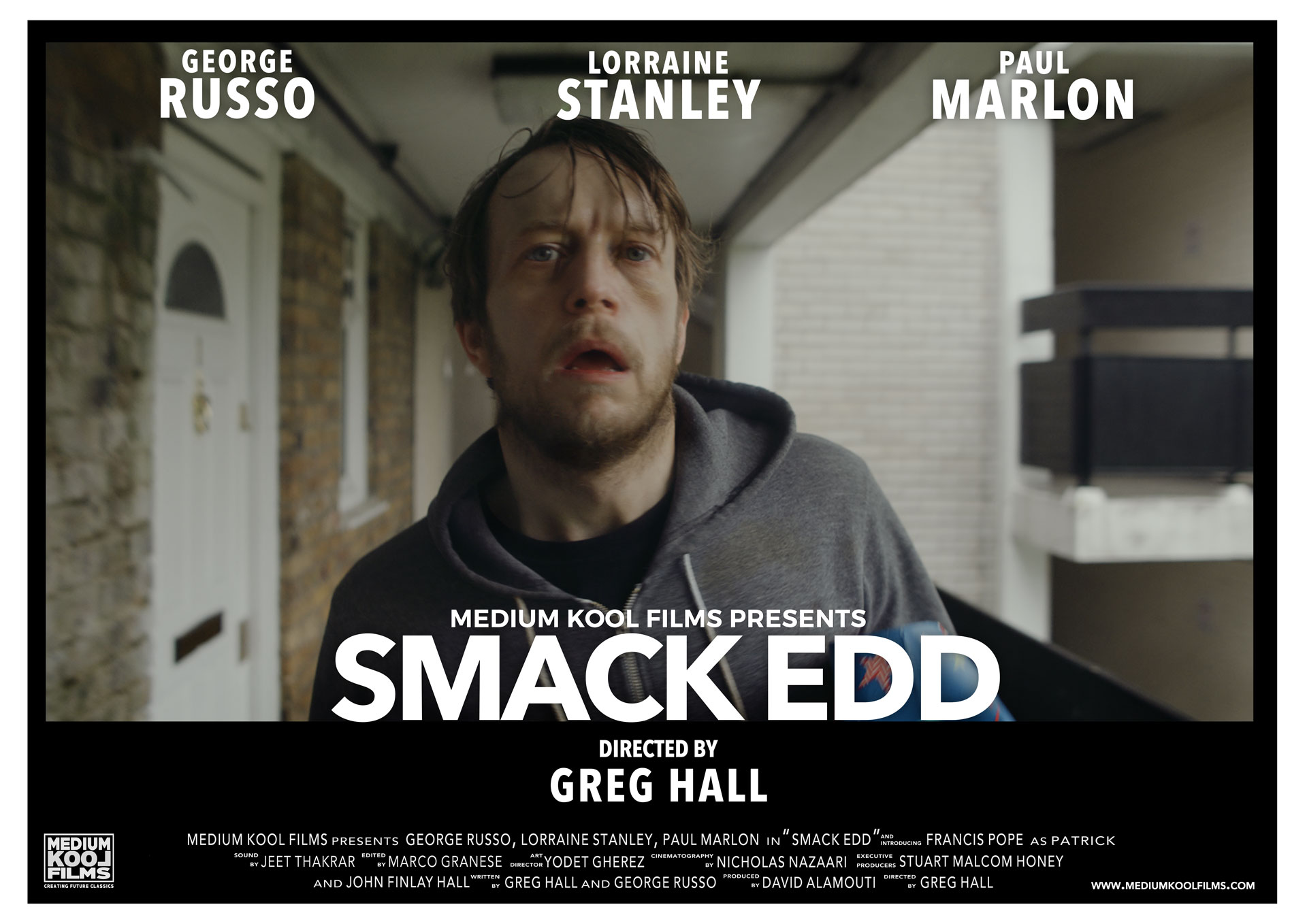
Stars: George Russo, Lorraine Stanley, Paul Marlon

Heroin addict Edd (Russo) unexpectedly turns up to his son Patrick’s eighth birthday celebration, Mum Fran (Stanley) and her new partner Mark (Marlon) must do everything to make sure he doesn’t ruin the party. A social realist slice-of-life that looks at the consequences of addiction through the relationships of a dysfunctional family.
The Southend-on-Sea Film Festival will be returning for its 11th year from 23rd May to 27th May. In preparation for the event I got an opportunity to ask writer-director Greg Hall a few questions about the film Smack Edd which has been selected to play at the festival.
Q. What can we expect from your new short film Smack Edd?
Short film Smack Edd is a slice-of-life British working-class drama, it’s about heroin addict Edd (George Russo) uninvitedly turning up to his son Patrick’s eighth birthday party with the goal of giving him a stolen computer console as a present. His ex-Fran (Lorraine Stanley) and her new partner Mark (Paul Marlon) have to manage the situation and ensure the party doesn’t get ruined. It looks at the consequences of addiction through the relationships of a dysfunctional family in a very real, unrelenting and unashamedly bleak manner. If you like your drama gritty, performances real, cinematography raw and believe art should be an emotional experience then it’s probably for you.

Q. You co-wrote the film with George Russo how did you come up with the original concept for the film?
I had previously shot a feature with George, so originally, we collaborated in a director-actor relationship and on that project, we used a lot of improvisation and enjoyed what we did with the material. From that a friendship grew, we both had similar tastes with interests in underground music and indie cinema. And as creative people we just started developing a few ideas together, it was incredibly organic and Smack Edd was to become the first script that solidified our writing partnership. In our previous writing work, we had touched upon similar themes, my debut no budget feature The Plague (2004) and George’s debut feature (co-written with Lee Sales) that he starred in Turnout (2010) both deal with drugs and the consequences they have on relationships.
We always shared that frame of reference which Smack Edd grew out of. George is also in his tenth year of sobriety, during his recovery he has spent much of his spare time working with others who are dealing with addiction. Many of his immediate family are themselves addicts, in fact his father was a long-time heroin dealer and user, so there is a lot to draw upon for inspiration. George originally sent me a heart-breaking documentary called Junkie Junior (1987) and in return I sent him Lech Kowalski’s Gringo aka Story of a Junkie (1985), plus we both adore William Burroughs novella Junkie which all became the foundations of the idea. But it took a funny journey, firstly we wrote it as a short film outline to be devised with a collection of actors, but then one of those actors who we both greatly admire encouraged us to write it into a feature.
So, four drafts later Smack Edd became a 90 page episodic tale about East London, addiction and the drug trade. But George and I had spent so long writing that we were hungry to actually make something, so we decided to carve a proof-of-concept short film from the larger feature script. Hence the short we have now just focuses on Edd unexpectedly turning up to his son’s birthday party. Interestingly since we’ve made the short, we’ve completely re-thought the original feature idea, we are currently writing a new feature called The Damage Done that will interweave the three timelines of Edd’s life of getting into drugs, living as a raging street addict and then becoming clean in recovery. The Damage Done will have a far wider journey through the stages of addiction, whereas Smack Edd is a standalone short that captures the bleak existence of being in the grip of addiction.
Q. Writer Russo also plays the lead character of Edd in the film. When writing the script did you always have Russo in mind to play the lead character?
The decision to write Smack Edd was so that George and I could satisfy our main urges of acting and directing, so without a doubt we went into the writing of the project with myself as director and George as the lead. In my opinion it’s the role he was born to play, he brings such understanding, depth, nuance and realism to the role of an addict that it really strikes a chord with others that have been affected by addiction. I wouldn’t want to tell this story with anyone else to be honest, I don’t think I could. We wanted to use this opportunity to have full control over our work, this is in fact the first film from our production company Medium Kool Films which was established as a home for us to develop our ideas. So, it was very much a joint venture to showcase ourselves as writers and indulge in our mutual loves of acting and directing with no creative limitations except our own.

Q. What were your influences for the look and style of the film?
A huge influence was director Andrea Arnold and cinematographer Robbie Ryan’s work together, beginning with short Wasp (2003) through to feature American Honey (2016), their whole neo-realist aesthetic of the camera becoming a character, not in the literal P.O.V sense but in terms of the visual language engaging the audience emotionally was a major inspiration. I had come to making Smack Edd off the back of being a director-for-hire on a couple of low budget straight-to-dvd feature films, which had been enjoyable but not wholly satisfying experiences creatively. You have very little prep, most of your time is taken up with working around problems, as a default you end up shooting a majority of the film in what’s called ‘coverage’. Basically, a wide master shot covering all the action, then shot-reverse shot on the actors saying their lines, which will all cut together cohesively in the edit. But shooting in that fashion starts feeling like a conveyor belt after time, sort of painting by numbers. So, when I approached Smack Edd I knew from the outset that I did not want to shoot coverage, especially as it’s such a dialogue heavy script it would be easy to just frame the actors and record the lines.
Cinematographer Nicholas Nazari took this idea and ran with it, creating the concept that the camera would follow emotional beats of the stories subtext and focus the audience on where or who their sympathies should lie with. For example, when protagonist Edd turns up at the front door we keep the camera purposely behind him outside of the house as he pleads with his ex and her new partner to let him in. Usually you would move the camera inside and shoot Edd’s coverage from that angle but on a subconscious level the audience would then be inside the house and have more power as it’s exactly where he wants to be. Instead we keep the camera / audience stuck outside with Edd so their sympathies are aligned with his goals. It was an experimental way of shooting the story, we broke the script into sub textual chapters and the entire film is told in twelve shots. It’s handheld, long takes with purposeful lens flare is intended to give the film an intense, visceral, and very real feeling for the audience as it plays out practically in real time. Likewise, I chose the colour palette of Autumn to also draw out the stories subtext, the house party is golden browns, mustard yellows, rusty oranges etc., on a subconscious level representing the season of change whereas Edd is just in grey. I would also add that the work of British working-class director Alan Clarke was very influential, the choice to use no film music was a direct influence of his work, also the title and credit font is a nod to his own heroin influenced film Christine (1987).
Q. Did you make any changes to the original script or story whilst filming?
Yes, the script is always in a state of evolving as the story is being brought to life through the films production. I’m a true believer in the fact that screen writing, directing and editing all overlap and come under the definition of ‘storyteller’, so the script is never truly finished. Making a film is a constant process that needs to remain open to change, during each stage of the production as the story translates from the page to the screen with more people’s input, the creative wheel must always keep in motion so it can grow into a stronger overall piece. I’m a director who loves improvisation, plus the script is co-written with the lead actor so we had no constraints and were free to build upon the piece. The core parts of the script remain the same – for example the characters, relationships, structure – but the performances, setting, blocking and shooting style all evolved the script so that the best story could be told. So, I would say the story is always being shaped in some way through the process of making the film, even up until the final sound mix.

Q. Did you experience any challenges whist making the film?
Apart from the usual problems of not having enough money and enough time that plague all filmmakers output, the most challenging experience was the fact we needed to use a number of children around eight years old to replicate the birthday party. Recruiting them wasn’t difficult as I’m a parent myself, so I worked my daughter’s playground and friendship networks to ensure we had real parents and children. I was adamant about trying to make the party as a realistic as possible because of the nature of how we were shooting the film, I wanted it to feel like we interrupt a real children’s party with Edd. Having real parents and kids from the area creates a sense of authenticity, in an age of representation it was important for me that the cast was entirely working class and pre-dominantly from the area of East London the film was set. As a parent I had experience of hosting children’s parties before, which themselves can be very stressful, and here I had combined a real party with trying to shoot a film with long coordinated camera shots and dramatic key performances. But I had a fantastic team around me, and everyone involved was really focused on giving the best they could, so whilst it was the most challenging part of the film it was also hugely rewarding and has left the most memorable of experiences.
Q. What were some of your favourite moments during filming?
The moment that struck me the most was realising right near the end of the day that my seven-year-old daughter Rosabella was watching me work. I had been so absorbed in the whole process of directing while my daughter, who is a very relaxed and confident spirit, was playing one of the children at the party. It was a pretty intense and focused shoot seeing as we had to co-ordinate long camera movements, the main three actors’ performances plus all the extra party guests. So, I had really been lost in the work, forgetting all parental responsibility and then at one moment I clocked my daughter watching me at the monitor. It felt great that she was able to see what a director actually does, which is a tough thing to explain to a child, and she could see what I am so passionate about. It’s good for our children to see their parents be creative, artistic and passionate. Making independent films sometimes feels like a struggle with your own sanity, so hopefully out of the madness of seeing me shoot a film my daughter can be inspired to pursue her own passions.

Q. Do you have any new projects which you are working on?
The second script George and I wrote together called Villain has literally just wrapped on filming, it’s a crime thriller feature which attempts to tackle the genre creatively and tells the story of an ex-con trying to re-build his life despite being dragged back into his old ways by his flawed younger brother. The script was bought by Ascendant Films which was a great boost for us, it’s been produced by Bart Ruspoli and stars the wonderful Craig Fairbrass in the lead. It’s the debut feature from director Philip Barantini, who has made a couple of really strong shorts and tackled Villain with real care and passion. I’m not sure the release date yet as it’s too soon to say, but I’m super excited to see something I’ve written re-imagined and brought to life. Off the back of that George and I have a number of ideas on a ‘Russo & Hall’ Slate that we are writing together, it’s a very enjoyable writing partnership and we like the idea of pushing those scripts out to others. As mentioned, before we are also in the early stages of writing the spin off from the short, The Damage Done which will tell a deeper story of addiction and recovery with the aim of me directing and George starring in. We are also writing with Lee Sales an East London set television period drama, based around real life working class criminal families and told via strong complex female characters, it’s an epic piece and we are close to having a pilot script completed but it’s very early stages though the potential is hugely exciting.
Under our company Medium Kool Films George and I are also developing a short and feature horror idea with writer / director Emma Williamson, whose previous writing has been funded by the BFI Network, and producer Lucinda Rhodes Thakrar as we are keen to support the telling of female focused stories. Most of the work I’m up to at the moment is pre-dominantly writing, I’m certainly hungry to direct a new piece but also at the same time have been re-discovering my voice. Last year I was attached to direct a big period feature of Christopher Marlowe with the legendary Gary Kurtz producing. It felt like a lot of hard work had finally paid off, getting to know Gary was wonderful, he loved hearing about my no-budget filmmaking exploits and likewise would share stories with me of shooting illegally with Roger Corman. But sadly, Gary passed away with cancer, it was an incredibly profound experience which made me re-evaluate a lot. So, in the current creative head space I’m in I feel that I haven’t made my first film despite having directed six low budget features, a feature documentary and two shorts. Smack Edd has felt like it’s come close to finding my voice but I’m in a place where I am still honing my vision, so I’m not sure exactly what I will direct next but am enjoying the process of creative self-re-discovery.

Q. If someone is looking to direct their own film, what advice would you give them?
I would say go out and do it. Don’t listen to me or any other filmmaker, certainly gleam information and take inspiration from others but ultimately just go out and do it. Tell your story. Find your voice. Hone your craft. Don’t let any obstacle stop you – whether it’s money, self-doubt or the outside criticism of others – just find a story you are passionate about and tell it well. You can’t really learn to be a director without actually directing, don’t get me wrong you can read up, watch and learn in preparation, but you have to actually commit and direct a film to be able to learn from the experience. So, my advice would be don’t wait around and just go out and do it. Then make another.
You can find out more about co-writer and director Greg Hall on the website www.directorgreghall.com and follow on Twitter, Instagram
You can also find out more about productions from Kool Film on the website www.mediumkoolfilms.com and follow on Twitter
The Southend-on-Sea Film Festival runs from Thursday 23rd May to Monday 27th May. You can find out more about the event and purchase tickets on the website https://www.southendfilmfestival.com

Published in various websites, Philip is a reviewer who is best known for his interviews and media coverage of independent projects including; films, books, theatre and live events. Always on the lookout for something different to cover!